

Zooplankton
115
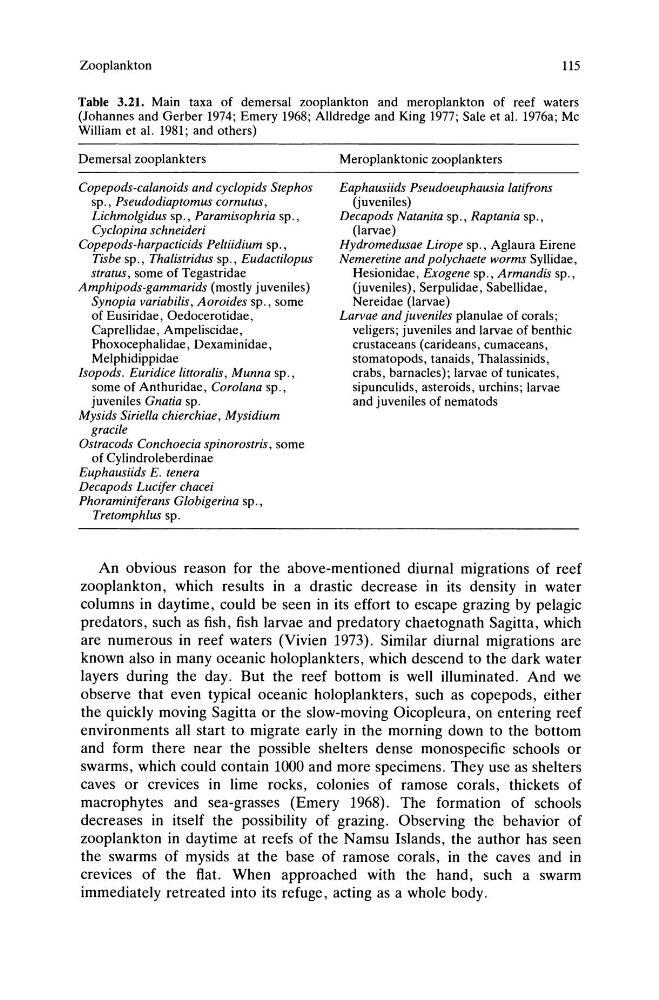
Table 3.21. Main taxa of demersal zooplankton and meroplankton of reef waters
(Johannes and Gerber 1974; Emery 1968; Alldredge and King 1977; Sale et al. 1976a; Mc
William et al. 1981; and others)
Demersal zooplankters
Copepods-calanoids and cyclopids Stephos
sp., Pseudodiaptomus cornutus,
Lichmolgidus sp., Paramisophria sp.,
Cyclopina schneideri
Copepods-harpacticids Peltiidium sp.,
Tisbe sp., Thalistridus sp., Eudactilopus
stratus, some of Tegastridae
Amphipods-gammarids (mostly juveniles)
Synopia variabilis, Aoroides sp., some
of Eusiridae, Oedocerotidae,
Caprellidae, Ampeliscidae,
Phoxocephalidae, Dexaminidae,
Melphidippidae
Isopods. Euridice littoralis, Munna sp.,
some of Anthuridae, Corolana sp.,
juveniles Gnatia sp.
Mysids Siriella chierchiae, Mysidium
gracile
Ostracods Conchoecia spinorostris, some
of Cylindroleberdinae
Euphausiids E. tenera
Decapods Lucifer chacei
Phoraminiferans Globigerina sp.,
Tretomphlus sp.
Meroplanktonic zooplankters
Eaphausiids Pseudoeuphausia latifrons
(juveniles)
Decapods Natanita sp., Raptania sp.,
(larvae)
Hydromedusae Lirope sp., Aglaura Eirene
Nemeretine and polychaete worms Syllidae,
Hesionidae, Exogene sp., Armandis sp.,
(juveniles), Serpulidae, Sabellidae,
Nereidae (larvae)
Larvae and juveniles planulae of corals;
veligers; juveniles and larvae of benthic
crustaceans (carideans, cumaceans,
stomatopods, tanaids, Thalassinids,
crabs, barnacles); larvae of tunicates,
sipunculids, asteroids, urchins; larvae
and juveniles of nematods
An obvious reason for the above-mentioned diurnal migrations of reef
zooplankton, which results in a drastic decrease in its density in water
columns in daytime, could be seen in its effort to escape grazing by pelagic
predators, such as fish, fish larvae and predatory chaetognath Sagitta, which
are numerous in reef waters (Vivien 1973). Similar diurnal migrations are
known also in many oceanic holoplankters, which descend to the dark water
layers during the day. But the reef bottom is well illuminated. And we
observe that even typical oceanic holoplankters, such as copepods, either
the quickly moving Sagitta or the slow-moving Oicopieura, on entering reef
environments all start to migrate early in the morning down to the bottom
and form there near the possible shelters dense monospecific schools or
swarms, which could contain 1000 and more specimens. They use as shelters
caves or crevices in lime rocks, colonies of ramose corals, thickets of
macrophytes and sea-grasses (Emery 1968). The formation of schools
decreases in itself the possibility of grazing. Observing the behavior of
zooplankton in daytime at reefs of the Namsu Islands, the author has seen
the swarms of mysids at the base of ramose corals, in the caves and in
crevices of the flat. When approached with the hand, such a swarm
immediately retreated into its refuge, acting as a whole body.
115
Table 3.21. Main taxa of demersal zooplankton and meroplankton of reef waters
(Johannes and Gerber 1974; Emery 1968; Alldredge and King 1977; Sale et al. 1976a; Mc
William et al. 1981; and others)
Demersal zooplankters
Copepods-calanoids and cyclopids Stephos
sp., Pseudodiaptomus cornutus,
Lichmolgidus sp., Paramisophria sp.,
Cyclopina schneideri
Copepods-harpacticids Peltiidium sp.,
Tisbe sp., Thalistridus sp., Eudactilopus
stratus, some of Tegastridae
Amphipods-gammarids (mostly juveniles)
Synopia variabilis, Aoroides sp., some
of Eusiridae, Oedocerotidae,
Caprellidae, Ampeliscidae,
Phoxocephalidae, Dexaminidae,
Melphidippidae
Isopods. Euridice littoralis, Munna sp.,
some of Anthuridae, Corolana sp.,
juveniles Gnatia sp.
Mysids Siriella chierchiae, Mysidium
gracile
Ostracods Conchoecia spinorostris, some
of Cylindroleberdinae
Euphausiids E. tenera
Decapods Lucifer chacei
Phoraminiferans Globigerina sp.,
Tretomphlus sp.
Meroplanktonic zooplankters
Eaphausiids Pseudoeuphausia latifrons
(juveniles)
Decapods Natanita sp., Raptania sp.,
(larvae)
Hydromedusae Lirope sp., Aglaura Eirene
Nemeretine and polychaete worms Syllidae,
Hesionidae, Exogene sp., Armandis sp.,
(juveniles), Serpulidae, Sabellidae,
Nereidae (larvae)
Larvae and juveniles planulae of corals;
veligers; juveniles and larvae of benthic
crustaceans (carideans, cumaceans,
stomatopods, tanaids, Thalassinids,
crabs, barnacles); larvae of tunicates,
sipunculids, asteroids, urchins; larvae
and juveniles of nematods
An obvious reason for the above-mentioned diurnal migrations of reef
zooplankton, which results in a drastic decrease in its density in water
columns in daytime, could be seen in its effort to escape grazing by pelagic
predators, such as fish, fish larvae and predatory chaetognath Sagitta, which
are numerous in reef waters (Vivien 1973). Similar diurnal migrations are
known also in many oceanic holoplankters, which descend to the dark water
layers during the day. But the reef bottom is well illuminated. And we
observe that even typical oceanic holoplankters, such as copepods, either
the quickly moving Sagitta or the slow-moving Oicopieura, on entering reef
environments all start to migrate early in the morning down to the bottom
and form there near the possible shelters dense monospecific schools or
swarms, which could contain 1000 and more specimens. They use as shelters
caves or crevices in lime rocks, colonies of ramose corals, thickets of
macrophytes and sea-grasses (Emery 1968). The formation of schools
decreases in itself the possibility of grazing. Observing the behavior of
zooplankton in daytime at reefs of the Namsu Islands, the author has seen
the swarms of mysids at the base of ramose corals, in the caves and in
crevices of the flat. When approached with the hand, such a swarm
immediately retreated into its refuge, acting as a whole body.