

Definition
Ria is a term used in Spain to refer to estuaries with
a notable tectonic nature that are subjected to significant
tides. Marine water predominates in these systems, and
the mixture interface is highly vertical. They are common
in Spain along the Cantabrian coast and in Galicia
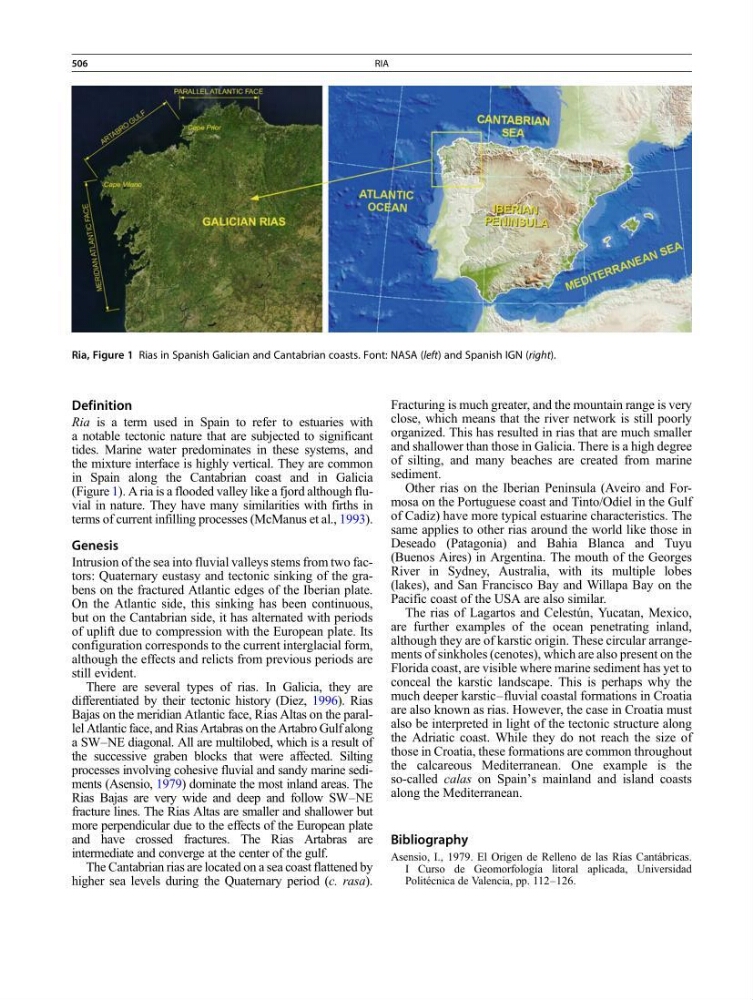
(Figure 1). A ria is a flooded valley like a fjord although fluvial in nature. They have many similarities with firths in
terms of current infilling processes (McManus et al., 1993).
Genesis
Intrusion of the sea into fluvial valleys stems from two factors: Quaternary eustasy and tectonic sinking of the grabens on the fractured Atlantic edges of the Iberian plate.
On the Atlantic side, this sinking has been continuous,
but on the Cantabrian side, it has alternated with periods
of uplift due to compression with the European plate. Its
configuration corresponds to the current interglacial form,
although the effects and relicts from previous periods are
still evident.
There are several types of rias. In Galicia, they are
differentiated by their tectonic history (Diez, 1996). Rias
Bajas on the meridian Atlantic face, Rias Altas on the parallel Atlantic face, and Rias Artabras on the Artabro Gulf along
a SW–NE diagonal. All are multilobed, which is a result of
the successive graben blocks that were affected. Silting
processes involving cohesive fluvial and sandy marine sediments (Asensio, 1979) dominate the most inland areas. The
Rias Bajas are very wide and deep and follow SW–NE
fracture lines. The Rias Altas are smaller and shallower but
more perpendicular due to the effects of the European plate
and have crossed fractures. The Rias Artabras are
intermediate and converge at the center of the gulf.
The Cantabrian rias are located on a sea coast flattened by
higher sea levels during the Quaternary period (c. rasa).
Fracturing is much greater, and the mountain range is very
close, which means that the river network is still poorly
organized. This has resulted in rias that are much smaller
and shallower than those in Galicia. There is a high degree
of silting, and many beaches are created from marine
sediment.
Other rias on the Iberian Peninsula (Aveiro and Formosa on the Portuguese coast and Tinto/Odiel in the Gulf
of Cadiz) have more typical estuarine characteristics. The
same applies to other rias around the world like those in
Deseado (Patagonia) and Bahia Blanca and Tuyu
(Buenos Aires) in Argentina. The mouth of the Georges
River in Sydney, Australia, with its multiple lobes
(lakes), and San Francisco Bay and Willapa Bay on the
Pacific coast of the USA are also similar.
The rias of Lagartos and Celestún, Yucatan, Mexico,
are further examples of the ocean penetrating inland,
although they are of karstic origin. These circular arrangements of sinkholes (cenotes), which are also present on the
Florida coast, are visible where marine sediment has yet to
conceal the karstic landscape. This is perhaps why the
much deeper karstic–fluvial coastal formations in Croatia
are also known as rias. However, the case in Croatia must
also be interpreted in light of the tectonic structure along
the Adriatic coast. While they do not reach the size of
those in Croatia, these formations are common throughout
the calcareous Mediterranean. One example is the
so-called calas on Spain’s mainland and island coasts
along the Mediterranean.
Bibliography
Asensio, I., 1979. El Origen de Relleno de las Rías Cantábricas.
I Curso de Geomorfología litoral aplicada, Universidad
Politécnica de Valencia, pp. 112–126.
Ria, Figure 1 Rias in Spanish Galician and Cantabrian coasts. Font: NASA (left) and Spanish IGN (right).
506
RIA
Ria is a term used in Spain to refer to estuaries with
a notable tectonic nature that are subjected to significant
tides. Marine water predominates in these systems, and
the mixture interface is highly vertical. They are common
in Spain along the Cantabrian coast and in Galicia
(Figure 1). A ria is a flooded valley like a fjord although fluvial in nature. They have many similarities with firths in
terms of current infilling processes (McManus et al., 1993).
Genesis
Intrusion of the sea into fluvial valleys stems from two factors: Quaternary eustasy and tectonic sinking of the grabens on the fractured Atlantic edges of the Iberian plate.
On the Atlantic side, this sinking has been continuous,
but on the Cantabrian side, it has alternated with periods
of uplift due to compression with the European plate. Its
configuration corresponds to the current interglacial form,
although the effects and relicts from previous periods are
still evident.
There are several types of rias. In Galicia, they are
differentiated by their tectonic history (Diez, 1996). Rias
Bajas on the meridian Atlantic face, Rias Altas on the parallel Atlantic face, and Rias Artabras on the Artabro Gulf along
a SW–NE diagonal. All are multilobed, which is a result of
the successive graben blocks that were affected. Silting
processes involving cohesive fluvial and sandy marine sediments (Asensio, 1979) dominate the most inland areas. The
Rias Bajas are very wide and deep and follow SW–NE
fracture lines. The Rias Altas are smaller and shallower but
more perpendicular due to the effects of the European plate
and have crossed fractures. The Rias Artabras are
intermediate and converge at the center of the gulf.
The Cantabrian rias are located on a sea coast flattened by
higher sea levels during the Quaternary period (c. rasa).
Fracturing is much greater, and the mountain range is very
close, which means that the river network is still poorly
organized. This has resulted in rias that are much smaller
and shallower than those in Galicia. There is a high degree
of silting, and many beaches are created from marine
sediment.
Other rias on the Iberian Peninsula (Aveiro and Formosa on the Portuguese coast and Tinto/Odiel in the Gulf
of Cadiz) have more typical estuarine characteristics. The
same applies to other rias around the world like those in
Deseado (Patagonia) and Bahia Blanca and Tuyu
(Buenos Aires) in Argentina. The mouth of the Georges
River in Sydney, Australia, with its multiple lobes
(lakes), and San Francisco Bay and Willapa Bay on the
Pacific coast of the USA are also similar.
The rias of Lagartos and Celestún, Yucatan, Mexico,
are further examples of the ocean penetrating inland,
although they are of karstic origin. These circular arrangements of sinkholes (cenotes), which are also present on the
Florida coast, are visible where marine sediment has yet to
conceal the karstic landscape. This is perhaps why the
much deeper karstic–fluvial coastal formations in Croatia
are also known as rias. However, the case in Croatia must
also be interpreted in light of the tectonic structure along
the Adriatic coast. While they do not reach the size of
those in Croatia, these formations are common throughout
the calcareous Mediterranean. One example is the
so-called calas on Spain’s mainland and island coasts
along the Mediterranean.
Bibliography
Asensio, I., 1979. El Origen de Relleno de las Rías Cantábricas.
I Curso de Geomorfología litoral aplicada, Universidad
Politécnica de Valencia, pp. 112–126.
Ria, Figure 1 Rias in Spanish Galician and Cantabrian coasts. Font: NASA (left) and Spanish IGN (right).
506
RIA