

Keddy, P. A., 2010. Wetland Ecology: Principles and Conservation,
2nd edn. Cambridge: Cambridge University Press.
Lehner, B., and Döll, P., 2004. Development and validation of
a global database of lakes, reservoirs and wetlands. Journal of
Hydrology, 296, 1–22.
Matthews, E., 2000. Wetlands. In Khalil, M. A. K. (ed.), Atmospheric Methane: Its role in the Global Environment. Berlin:
Springer, pp. 202–233.
McDonnell, R., Holden, N. M., Ward, S. M., Collins, J. F., Farrell,
E. P., and Hayes, M. H. B., 2001. Characteristics of humic substances in heathland and forested peat soils of the Wicklow
Mountains. Biology and Environment: Proceedings of the Royal
Irish Academy, 101B(3), 187–197.
Moore, T. A., and Shearer, J. C., 2003. Peat/coal type and depositional environment – are they related? International Journal of
Coal Geology, 56(3–4), 233–252.
Morris, J. T., 1991. Effects of nitrogen loading on wetland ecosystems with particular reference to atmospheric deposition. Review
of Ecology and Systematics, 22, 257–279.
Ours, D. P., Siegel, D. I., and Glaser, P. H., 1997. Chemical dilation
and the dual porosity of humified bog peat. Journal of Hydrology, 196, 348–360.
Parish, F., Sirin, A., Charman, D., Joosten, H., Minayeva, T., Silvius,
M., and Stringer, L., 2008. Assessment on Peatlands, Biodiversity
and Climate Change: Main Report. Wageningen: Global Environment Centre, Kuala Lumpur and Wetlands International.
Romanowicz, E. A., Siegel, D. I., Chanton, J. P., and Glaser, P. H.,
1995. Temporal variations in dissolved methane deep in the Lake
Agassiz Peatlands, Minnesota. Global Biogeochemical Cycles,
9, 197–212.
Rosenberry, D. O., Glaser, P. H., Siegel, D. I., and Weeks, E. P.,
2003. Use of hydraulic head to estimate volumetric gas content
and ebullition flux in northern peatlands. Water Resources
Research, 39(3), 1066.
Roulet, N. T., Ash, R., Quinton, W., and Moore, T., 1993. Methane
flux from drained northern peatlands: effect of a persistent water
table lowering on flux. Global Biogeochemical Cycles, 7(4),
749–770.
Scott, D. A., and Jones, T. A., 1995. Classifications and inventory of
wetlands: a global overview. Vegetatio, 118(1–2), 3–16.
Wania, R., Prentice, C., Harrison, S., Hornibrook, E., Gedney, N.,
Christensen, T., and Clymo, R., 2004. The role of natural wetlands in the global methane cycle. Eos, 85(45), 466–467.
Weber, C. A., 1902. Über die Vegetation und Entstehung des
Hochmoors von Augstumal im Memeldelta mit vergleichenden
Ausblicken auf andere Hochmoore der Erde. Berlin: Paul Parey.
Weber, C. A., 1908. Aufbau und Vegtationen der Moore
Norddeutschlands Englers. Botanische Jahrbücher fur
Systematik (Suppl), 40, 29–34.
Cross-references
Anaerobic Environments
Carbon Sequestration
Climate Change
Wetlands
pH
Ayman A. Elgamal
Marine Geology Department, Coastal Research Institute,
National Water Research Center, Alexandria, Egypt
Synonyms
Hydrogen ion concentration
Definition
pH is an expression of the intensity of the basic or acid
condition of a liquid. Mathematically, pH is the logarithm
(base 10) of the reciprocal of the hydrogen ion concentration (Ecological Dictionary, 2011).
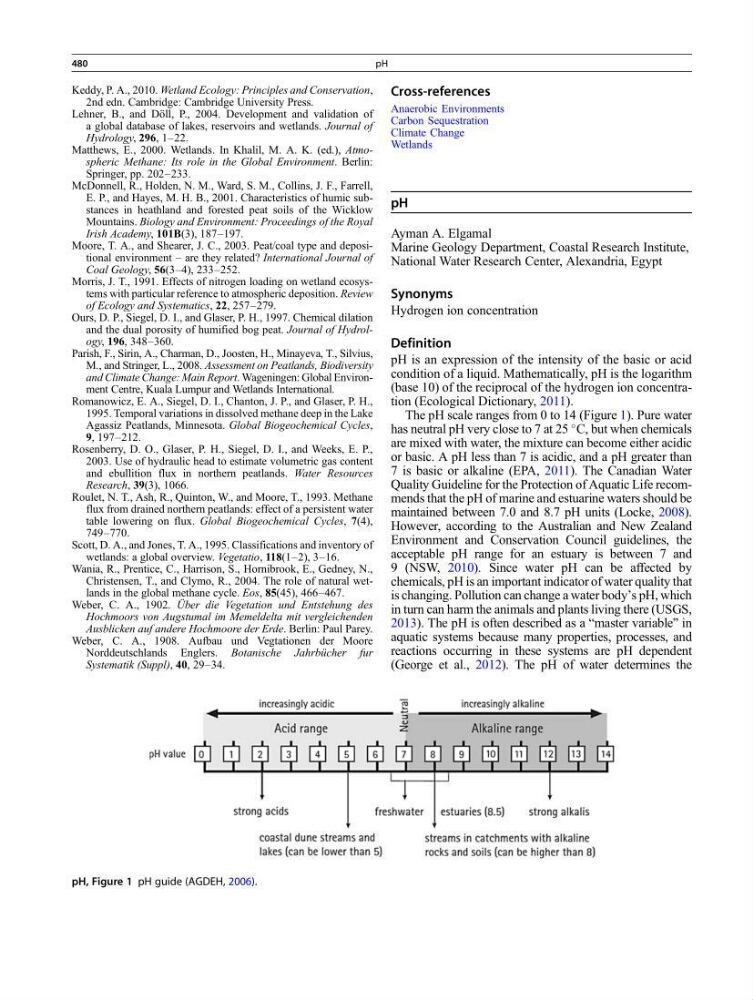
The pH scale ranges from 0 to 14 (Figure 1). Pure water
has neutral pH very close to 7 at 25
C, but when chemicals
are mixed with water, the mixture can become either acidic
or basic. A pH less than 7 is acidic, and a pH greater than
7 is basic or alkaline (EPA, 2011). The Canadian Water
Quality Guideline for the Protection of Aquatic Life recommends that the pH of marine and estuarine waters should be
maintained between 7.0 and 8.7 pH units (Locke, 2008).
However, according to the Australian and New Zealand
Environment and Conservation Council guidelines, the
acceptable pH range for an estuary is between 7 and
9 (NSW, 2010). Since water pH can be affected by
chemicals, pH is an important indicator of water quality that
is changing. Pollution can change a water body’s pH, which
in turn can harm the animals and plants living there (USGS,
2013). The pH is often described as a “master variable” in
aquatic systems because many properties, processes, and
reactions occurring in these systems are pH dependent
(George et al., 2012). The pH of water determines the
pH, Figure 1 pH guide (AGDEH, 2006).
480
pH
2nd edn. Cambridge: Cambridge University Press.
Lehner, B., and Döll, P., 2004. Development and validation of
a global database of lakes, reservoirs and wetlands. Journal of
Hydrology, 296, 1–22.
Matthews, E., 2000. Wetlands. In Khalil, M. A. K. (ed.), Atmospheric Methane: Its role in the Global Environment. Berlin:
Springer, pp. 202–233.
McDonnell, R., Holden, N. M., Ward, S. M., Collins, J. F., Farrell,
E. P., and Hayes, M. H. B., 2001. Characteristics of humic substances in heathland and forested peat soils of the Wicklow
Mountains. Biology and Environment: Proceedings of the Royal
Irish Academy, 101B(3), 187–197.
Moore, T. A., and Shearer, J. C., 2003. Peat/coal type and depositional environment – are they related? International Journal of
Coal Geology, 56(3–4), 233–252.
Morris, J. T., 1991. Effects of nitrogen loading on wetland ecosystems with particular reference to atmospheric deposition. Review
of Ecology and Systematics, 22, 257–279.
Ours, D. P., Siegel, D. I., and Glaser, P. H., 1997. Chemical dilation
and the dual porosity of humified bog peat. Journal of Hydrology, 196, 348–360.
Parish, F., Sirin, A., Charman, D., Joosten, H., Minayeva, T., Silvius,
M., and Stringer, L., 2008. Assessment on Peatlands, Biodiversity
and Climate Change: Main Report. Wageningen: Global Environment Centre, Kuala Lumpur and Wetlands International.
Romanowicz, E. A., Siegel, D. I., Chanton, J. P., and Glaser, P. H.,
1995. Temporal variations in dissolved methane deep in the Lake
Agassiz Peatlands, Minnesota. Global Biogeochemical Cycles,
9, 197–212.
Rosenberry, D. O., Glaser, P. H., Siegel, D. I., and Weeks, E. P.,
2003. Use of hydraulic head to estimate volumetric gas content
and ebullition flux in northern peatlands. Water Resources
Research, 39(3), 1066.
Roulet, N. T., Ash, R., Quinton, W., and Moore, T., 1993. Methane
flux from drained northern peatlands: effect of a persistent water
table lowering on flux. Global Biogeochemical Cycles, 7(4),
749–770.
Scott, D. A., and Jones, T. A., 1995. Classifications and inventory of
wetlands: a global overview. Vegetatio, 118(1–2), 3–16.
Wania, R., Prentice, C., Harrison, S., Hornibrook, E., Gedney, N.,
Christensen, T., and Clymo, R., 2004. The role of natural wetlands in the global methane cycle. Eos, 85(45), 466–467.
Weber, C. A., 1902. Über die Vegetation und Entstehung des
Hochmoors von Augstumal im Memeldelta mit vergleichenden
Ausblicken auf andere Hochmoore der Erde. Berlin: Paul Parey.
Weber, C. A., 1908. Aufbau und Vegtationen der Moore
Norddeutschlands Englers. Botanische Jahrbücher fur
Systematik (Suppl), 40, 29–34.
Cross-references
Anaerobic Environments
Carbon Sequestration
Climate Change
Wetlands
pH
Ayman A. Elgamal
Marine Geology Department, Coastal Research Institute,
National Water Research Center, Alexandria, Egypt
Synonyms
Hydrogen ion concentration
Definition
pH is an expression of the intensity of the basic or acid
condition of a liquid. Mathematically, pH is the logarithm
(base 10) of the reciprocal of the hydrogen ion concentration (Ecological Dictionary, 2011).
The pH scale ranges from 0 to 14 (Figure 1). Pure water
has neutral pH very close to 7 at 25
C, but when chemicals
are mixed with water, the mixture can become either acidic
or basic. A pH less than 7 is acidic, and a pH greater than
7 is basic or alkaline (EPA, 2011). The Canadian Water
Quality Guideline for the Protection of Aquatic Life recommends that the pH of marine and estuarine waters should be
maintained between 7.0 and 8.7 pH units (Locke, 2008).
However, according to the Australian and New Zealand
Environment and Conservation Council guidelines, the
acceptable pH range for an estuary is between 7 and
9 (NSW, 2010). Since water pH can be affected by
chemicals, pH is an important indicator of water quality that
is changing. Pollution can change a water body’s pH, which
in turn can harm the animals and plants living there (USGS,
2013). The pH is often described as a “master variable” in
aquatic systems because many properties, processes, and
reactions occurring in these systems are pH dependent
(George et al., 2012). The pH of water determines the
pH, Figure 1 pH guide (AGDEH, 2006).
480
pH