

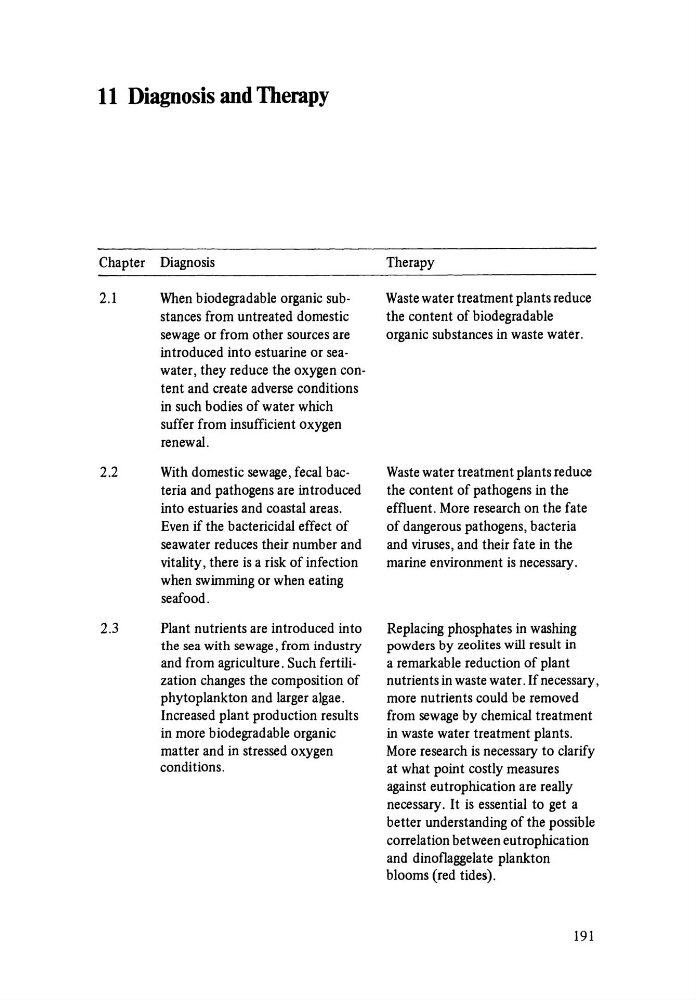
11 Diagnosis and Therapy
Chapter Diagnosis
2.1
When biodegradable organic substances from untreated domestic
Therapy
Waste water treatment plants reduce
the content of biodegradable
sewage or from other sources are
organic substances in waste water.
2.2
2.3
introduced into estuarine or seawater, they reduce the oxygen content and create adverse conditions
in such bodies of water which
suffer from insufficient oxygen
renewal.
With domestic sewage, fecal bacteria and pathogens are introduced
into estuaries and coastal areas.
Even if the bactericidal effect of
seawater reduces their number and
vitality, there is a risk of infection
when swimming or when eating
seafood.
Plant nutrients are introduced into
the sea with sewage, from industry
and from agriculture. Such fertilization changes the composition of
phytoplankton and larger algae.
Increased plant production results
in more biodegradable organic
matter and in stressed oxygen
conditions.
Waste water treatment plants reduce
the content of pathogens in the
effluent. More research on the fate
of dangerous pathogens, bacteria
and viruses, and their fate in the
marine environment is necessary.
Replacing phosphates in washing
powders by zeolites will result in
a remarkable reduction of plant
nutrients in waste water. If necessary,
more nutrients could be removed
from sewage by chemical treatment
in waste water treatment plants.
More research is necessary to clarify
at what point costly measures
against eutrophication are really
necessary. It is essential to get a
better understanding of the possible
correlation between eutrophication
and dinoflaggelate plankton
blooms (red tides).
191
Chapter Diagnosis
2.1
When biodegradable organic substances from untreated domestic
Therapy
Waste water treatment plants reduce
the content of biodegradable
sewage or from other sources are
organic substances in waste water.
2.2
2.3
introduced into estuarine or seawater, they reduce the oxygen content and create adverse conditions
in such bodies of water which
suffer from insufficient oxygen
renewal.
With domestic sewage, fecal bacteria and pathogens are introduced
into estuaries and coastal areas.
Even if the bactericidal effect of
seawater reduces their number and
vitality, there is a risk of infection
when swimming or when eating
seafood.
Plant nutrients are introduced into
the sea with sewage, from industry
and from agriculture. Such fertilization changes the composition of
phytoplankton and larger algae.
Increased plant production results
in more biodegradable organic
matter and in stressed oxygen
conditions.
Waste water treatment plants reduce
the content of pathogens in the
effluent. More research on the fate
of dangerous pathogens, bacteria
and viruses, and their fate in the
marine environment is necessary.
Replacing phosphates in washing
powders by zeolites will result in
a remarkable reduction of plant
nutrients in waste water. If necessary,
more nutrients could be removed
from sewage by chemical treatment
in waste water treatment plants.
More research is necessary to clarify
at what point costly measures
against eutrophication are really
necessary. It is essential to get a
better understanding of the possible
correlation between eutrophication
and dinoflaggelate plankton
blooms (red tides).
191