

H H
H H
H O D H
H H
H H
Biphenyl
H H H H H
C I O i - o C l
H H I H H
C1-C-C1
I
CI
p,p'-DDT
C1
Cl~CI
C1 HHH C1
0
C1
HCH
H H H H H
C 1 O i - o C I
H H I H H
C1-C-CI
h
p,p'-DDD
H H
H H
_
C1 0 C - o C I
H H " H H
CI-C-CI
p,p'-DDE
H
C1
H
CI
Dieldrin
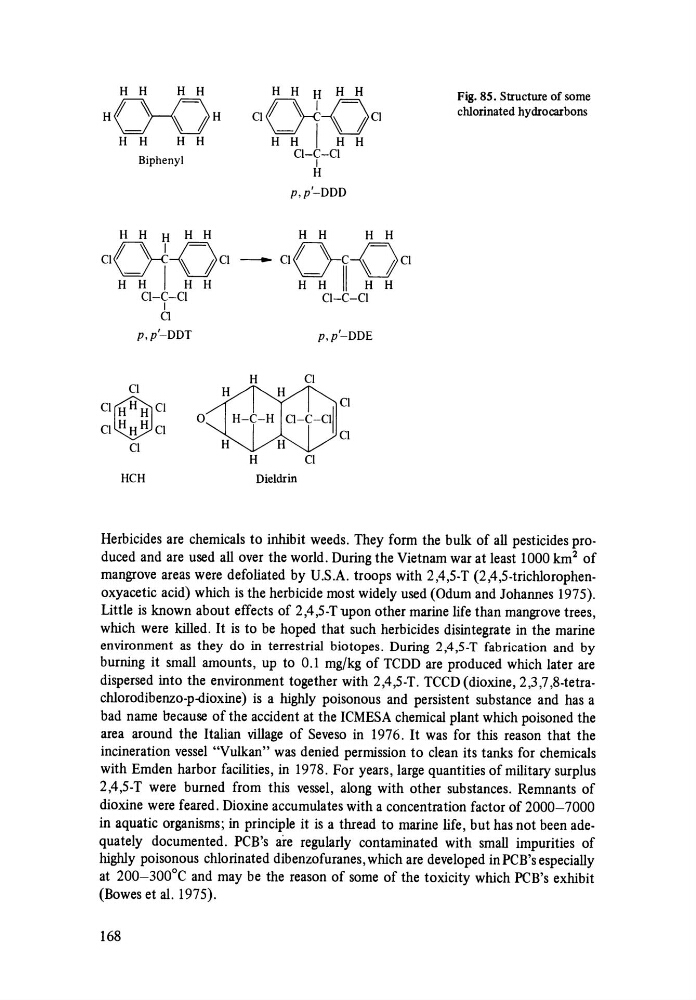
Fig. 85. Structure of some
chlorinated hydrocarbons
Herbicides are chemicals to inhibit weeds. They form the bulk of all pesticides produced and are used all over the world. During the Vietnam war at least 1000 km 2 of
mangrove areas were defoliated by U.S.A. troops with 2,4,5-T (2,4,5-trichlorophenoxyacetic acid) which is the herbicide most widely used (Odum and Johannes 1975).
Little is known about effects of 2,4,5-Tupon other marine life than mangrove trees,
which were killed. It is to be hoped that such herbicides disintegrate in the marine
environment as they do in terrestrial biotopes. During 2,4,S-T fabrication and by
burning it small amounts, up to 0.1 mg/kg of TCDD are produced which later are
dispersed into the environment together with 2,4,5-T. TCCD (dioxine, 2,3,7 ,8-tetrachlorodibenzo-p-dioxine) is a highly poisonous and persistent substance and has a
bad name because of the accident at the ICMESA chemical plant which poisoned the
area around the Italian village of Seveso in 1976. It was for this reason that the
incineration vessel "Vulkan" was denied permission to clean its tanks for chemicals
with Emden harbor facilities, in 1978. For years, large quantities of military surplus
2,4,5-T were burned from this vessel, along with other substances. Remnants of
dioxine were feared. Dioxine accumulates with a concentration factor of 2000-7000
in aquatic organisms; in principle it is a thread to marine life, but has not been adequately documented. PCB's are regularly contaminated with small impurities of
highly poisonous chlorinated dibenzofuranes, which are developed in PCB's especially
at 200-300°C and may be the reason of some of the toxicity which PCB's exhibit
(Bowes et al. 1975).
168
H H
H O D H
H H
H H
Biphenyl
H H H H H
C I O i - o C l
H H I H H
C1-C-C1
I
CI
p,p'-DDT
C1
Cl~CI
C1 HHH C1
0
C1
HCH
H H H H H
C 1 O i - o C I
H H I H H
C1-C-CI
h
p,p'-DDD
H H
H H
_
C1 0 C - o C I
H H " H H
CI-C-CI
p,p'-DDE
H
C1
H
CI
Dieldrin
Fig. 85. Structure of some
chlorinated hydrocarbons
Herbicides are chemicals to inhibit weeds. They form the bulk of all pesticides produced and are used all over the world. During the Vietnam war at least 1000 km 2 of
mangrove areas were defoliated by U.S.A. troops with 2,4,5-T (2,4,5-trichlorophenoxyacetic acid) which is the herbicide most widely used (Odum and Johannes 1975).
Little is known about effects of 2,4,5-Tupon other marine life than mangrove trees,
which were killed. It is to be hoped that such herbicides disintegrate in the marine
environment as they do in terrestrial biotopes. During 2,4,S-T fabrication and by
burning it small amounts, up to 0.1 mg/kg of TCDD are produced which later are
dispersed into the environment together with 2,4,5-T. TCCD (dioxine, 2,3,7 ,8-tetrachlorodibenzo-p-dioxine) is a highly poisonous and persistent substance and has a
bad name because of the accident at the ICMESA chemical plant which poisoned the
area around the Italian village of Seveso in 1976. It was for this reason that the
incineration vessel "Vulkan" was denied permission to clean its tanks for chemicals
with Emden harbor facilities, in 1978. For years, large quantities of military surplus
2,4,5-T were burned from this vessel, along with other substances. Remnants of
dioxine were feared. Dioxine accumulates with a concentration factor of 2000-7000
in aquatic organisms; in principle it is a thread to marine life, but has not been adequately documented. PCB's are regularly contaminated with small impurities of
highly poisonous chlorinated dibenzofuranes, which are developed in PCB's especially
at 200-300°C and may be the reason of some of the toxicity which PCB's exhibit
(Bowes et al. 1975).
168