

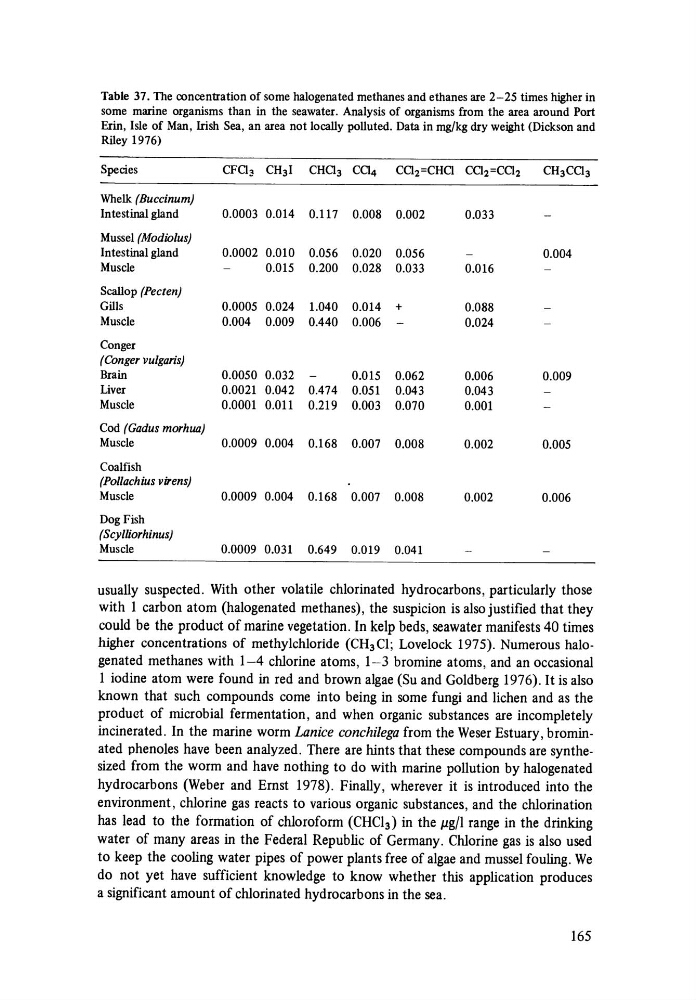
Table 37. The concentration of some halogenated methanes and ethanes are 2-25 times higher in
some marine organisms than in the seawater. Analysis of organisms from the area around Port
Erin, Isle of Man, Irish Sea, an area not locally polluted. Data in mg/kg dry weight (Dickson and
Riley 1976)
Species
CFO;! CH3I CH03 C04
COz=CHO COz=COz
CH3C03
Whelk (Buccinum)
Intestinal gland
0.0003 0.014 0.117 0.008 0.002
0.033
Mussel (Modiolus)
Intestinal gland
0.0002 0.010 0.056 0.020 0.056
0.004
Muscle
0.015 0.200 0.028 0.033
0.016
Scallop (Pecten)
Gills
0.0005 0.024 1.040 0.014 +
0.088
Muscle
0.004 0.009 0.440 0.006 -
0.024
Conger
(Conger vulgaris)
Brain
0.0050 0.032 -
0.015 0.062
0.006
0.009
Liver
0.0021 0.042 0.474 0.051 0.043
0.043
Muscle
0.0001 0.011 0.219 0.003 0.070
0.001
Cod (Gadus morhua)
Muscle
0.0009 0.004 0.168 0.007 0.008
0.002
0.005
Coalfish
(Pollachius virens)
Muscle
0.0009 0.004 0.168 0.007 0.008
0.002
0.006
Dog Fish
(Scylliorhinus)
Muscle
0.0009 0.031 0.649 0.019 0.041
usually suspected. With other volatile chlorinated hydrocarbons, particularly those
with 1 carbon atom (halogenated methanes), the suspicion is also justified that they
could be the product of marine vegetation. In kelp beds, seawater manifests 40 times
higher concentrations of methylchloride (CH3 CI; Lovelock 1975). Numerous halo·
genated methanes with 1-4 chlorine atoms, 1-3 bromine atoms, and an occasional
1 iodine atom were found in red and brown algae (Su and Goldberg 1976). It is also
known that such compounds come into being in some fungi and lichen and as the
product of microbial fermentation, and when organic substances are incompletely
incinerated. In the marine worm Lanice conchilega from the Weser Estuary, bromin·
ated phenoles have been analyzed. There are hints that these compounds are synthesized from the worm and have nothing to do with marine pollution by halogenated
hydrocarbons (Weber and Ernst 1978). Finally, wherever it is introduced into the
environment, chlorine gas reacts to various organic substances, and the chlorination
has lead to the formation of chloroform (CHCI3 ) in the /lg/l range in the drinking
water of many areas in the Federal Republic of Germany. Chlorine gas is also used
to keep the cooling water pipes of power plants free of algae and mussel fouling. We
do not yet have sufficient knowledge to know whether this application produces
a significant amount of chlorinated hydrocarbons in the sea.
165
some marine organisms than in the seawater. Analysis of organisms from the area around Port
Erin, Isle of Man, Irish Sea, an area not locally polluted. Data in mg/kg dry weight (Dickson and
Riley 1976)
Species
CFO;! CH3I CH03 C04
COz=CHO COz=COz
CH3C03
Whelk (Buccinum)
Intestinal gland
0.0003 0.014 0.117 0.008 0.002
0.033
Mussel (Modiolus)
Intestinal gland
0.0002 0.010 0.056 0.020 0.056
0.004
Muscle
0.015 0.200 0.028 0.033
0.016
Scallop (Pecten)
Gills
0.0005 0.024 1.040 0.014 +
0.088
Muscle
0.004 0.009 0.440 0.006 -
0.024
Conger
(Conger vulgaris)
Brain
0.0050 0.032 -
0.015 0.062
0.006
0.009
Liver
0.0021 0.042 0.474 0.051 0.043
0.043
Muscle
0.0001 0.011 0.219 0.003 0.070
0.001
Cod (Gadus morhua)
Muscle
0.0009 0.004 0.168 0.007 0.008
0.002
0.005
Coalfish
(Pollachius virens)
Muscle
0.0009 0.004 0.168 0.007 0.008
0.002
0.006
Dog Fish
(Scylliorhinus)
Muscle
0.0009 0.031 0.649 0.019 0.041
usually suspected. With other volatile chlorinated hydrocarbons, particularly those
with 1 carbon atom (halogenated methanes), the suspicion is also justified that they
could be the product of marine vegetation. In kelp beds, seawater manifests 40 times
higher concentrations of methylchloride (CH3 CI; Lovelock 1975). Numerous halo·
genated methanes with 1-4 chlorine atoms, 1-3 bromine atoms, and an occasional
1 iodine atom were found in red and brown algae (Su and Goldberg 1976). It is also
known that such compounds come into being in some fungi and lichen and as the
product of microbial fermentation, and when organic substances are incompletely
incinerated. In the marine worm Lanice conchilega from the Weser Estuary, bromin·
ated phenoles have been analyzed. There are hints that these compounds are synthesized from the worm and have nothing to do with marine pollution by halogenated
hydrocarbons (Weber and Ernst 1978). Finally, wherever it is introduced into the
environment, chlorine gas reacts to various organic substances, and the chlorination
has lead to the formation of chloroform (CHCI3 ) in the /lg/l range in the drinking
water of many areas in the Federal Republic of Germany. Chlorine gas is also used
to keep the cooling water pipes of power plants free of algae and mussel fouling. We
do not yet have sufficient knowledge to know whether this application produces
a significant amount of chlorinated hydrocarbons in the sea.
165