

,/
,
,
,
,
l
,
,
/~
/
/
/
.!
/
,
,
____ 4i I _ & - .
- - "
. ____ .
_ _ ..0----.- ~ -....- .-6-- ~
--::::.-. ~. -&-...
. . .-..-'
.. --...._ .. -.- .. ---. .. -&....................
..~..
--/
/-"-/--~
/
/
J ~ CI
-.A··A
0---1]
A--A
....... -11
C2
10%
20%
30%
40%
2 3 4 5 6 7 8 9 10 11 12 13 14 15 16 17 18 19 20 21 22
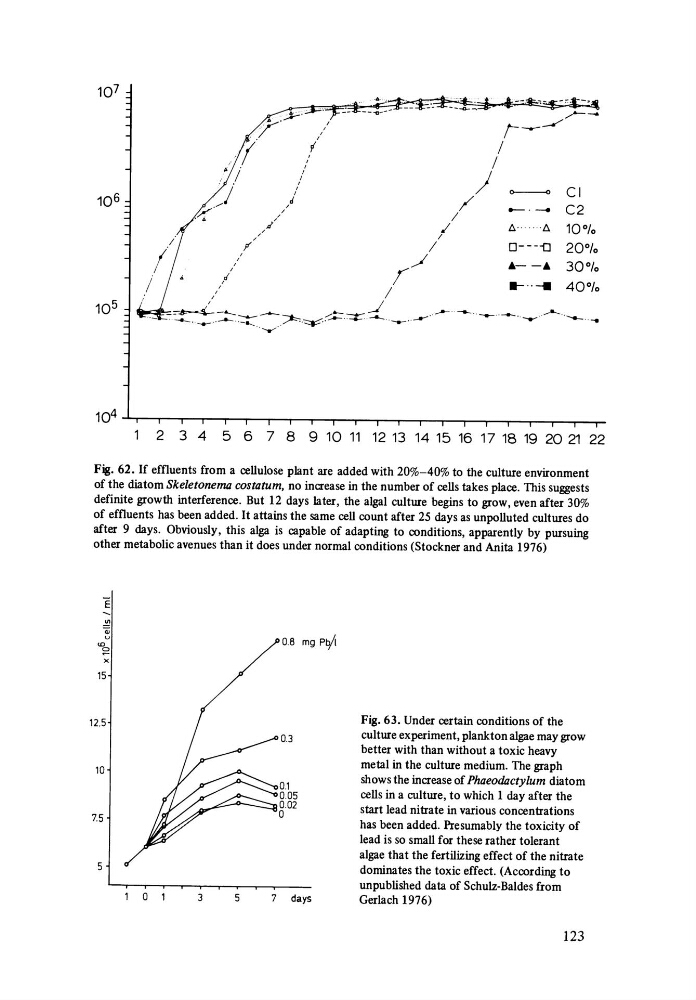
Fig. 62. If effluents from a cellulose plant are added with 20%-40% to the culture environment
of the diatom Skeletonema costatum, no increase in the number of cells takes place. This suggests
definite growth interference. But 12 days later, the algal culture begins to grow, even after 30%
of effluents has been added. It attains the same cell count after 25 days as unpolluted cultures do
after 9 days. Obviously, this alga is capable of adapting to conditions, apparently by pursuing
other metabolic avenues than it does under normal conditions (Stockner and Anita 1976)
15
12.5
10
7.5
5
o
3
5
0.8 mg Ptyl
0.3
0.1
005
002
o
7 days
Fig. 63. Under certain conditions of the
culture experiment, plankton algae may grow
better with than without a toxic heavy
metal in the culture medium. The graph
shows the increase of Phaeodactylum diatom
cells in a culture, to which 1 day after the
start lead nitrate in various concentrations
has been added. Presumably the toxicity of
lead is so small for these rather tolerant
algae that the fertilizing effect of the nitrate
dominates the toxic effect. (According to
unpublished data of Schulz-Baldes from
Gerlach 1976)
123
,
,
,
,
l
,
,
/~
/
/
/
.!
/
,
,
____ 4i I _ & - .
- - "
. ____ .
_ _ ..0----.- ~ -....- .-6-- ~
--::::.-. ~. -&-...
. . .-..-'
.. --...._ .. -.- .. ---. .. -&....................
..~..
--/
/-"-/--~
/
/
J ~ CI
-.A··A
0---1]
A--A
....... -11
C2
10%
20%
30%
40%
2 3 4 5 6 7 8 9 10 11 12 13 14 15 16 17 18 19 20 21 22
Fig. 62. If effluents from a cellulose plant are added with 20%-40% to the culture environment
of the diatom Skeletonema costatum, no increase in the number of cells takes place. This suggests
definite growth interference. But 12 days later, the algal culture begins to grow, even after 30%
of effluents has been added. It attains the same cell count after 25 days as unpolluted cultures do
after 9 days. Obviously, this alga is capable of adapting to conditions, apparently by pursuing
other metabolic avenues than it does under normal conditions (Stockner and Anita 1976)
15
12.5
10
7.5
5
o
3
5
0.8 mg Ptyl
0.3
0.1
005
002
o
7 days
Fig. 63. Under certain conditions of the
culture experiment, plankton algae may grow
better with than without a toxic heavy
metal in the culture medium. The graph
shows the increase of Phaeodactylum diatom
cells in a culture, to which 1 day after the
start lead nitrate in various concentrations
has been added. Presumably the toxicity of
lead is so small for these rather tolerant
algae that the fertilizing effect of the nitrate
dominates the toxic effect. (According to
unpublished data of Schulz-Baldes from
Gerlach 1976)
123