

Impedance Matching in Sound Production and Hearing: a Comparative Study
49
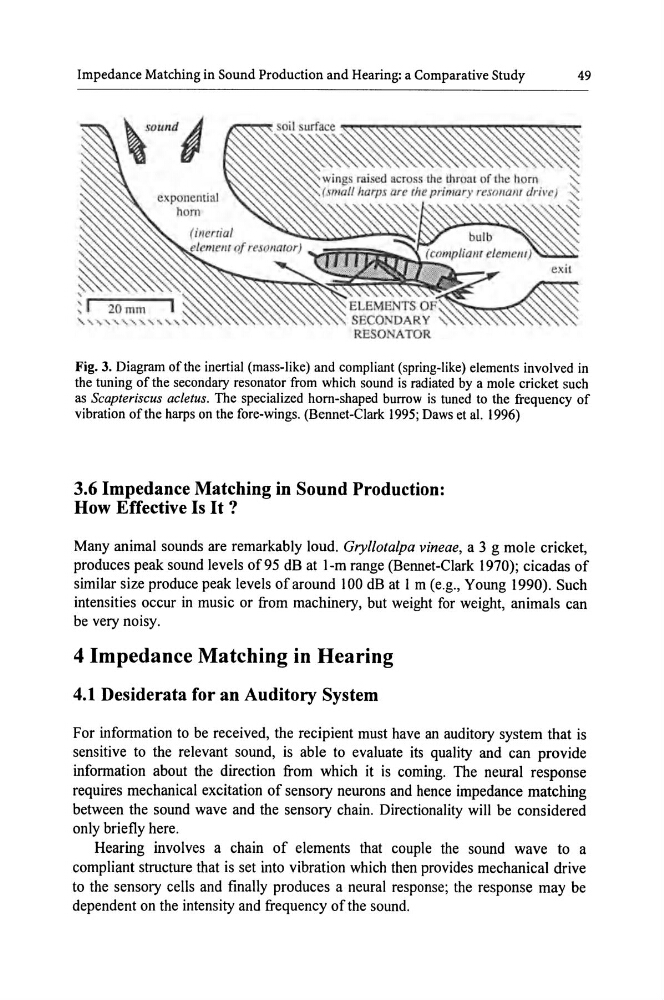
Fig. 3. Diagram of the inertial (mass-like) and compliant (spring-like) elements involved in
the tuning of the secondary resonator from which sound is radiated by a mole cricket such
as Scapteriscus acletus. The specialized hom-shaped burrow is tuned to the frequency of
vibration of the harps on the fore-wings. (Bennet-Clark 1995; Daws et al. 1996)
3.6 Impedance Matching in Sound Production:
How Effective Is It ?
Many animal sounds are remarkably loud. Gryl/otalpa vineae, a 3 g mole cricket,
produces peak sound levels of95 dB at 1-m range (Bennet-Clark 1970); cicadas of
similar size produce peak levels of around 100 dB at I m (e.g., Young 1990). Such
intensities occur in music or from machinery, but weight for weight, animals can
be very noisy.
4 Impedance Matching in Hearing
4.1 Desiderata for an Auditory System
For information to be received, the recipient must have an auditory system that is
sensitive to the relevant sound, is able to evaluate its quality and can provide
information about the direction from which it is coming. The neural response
requires mechanical excitation of sensory neurons and hence impedance matching
between the sound wave and the sensory chain. Directionality will be considered
only briefly here.
Hearing involves a chain of elements that couple the sound wave to a
compliant structure that is set into vibration which then provides mechanical drive
to the sensory cells and finally produces a neural response; the response may be
dependent on the intensity and frequency of the sound.
49
Fig. 3. Diagram of the inertial (mass-like) and compliant (spring-like) elements involved in
the tuning of the secondary resonator from which sound is radiated by a mole cricket such
as Scapteriscus acletus. The specialized hom-shaped burrow is tuned to the frequency of
vibration of the harps on the fore-wings. (Bennet-Clark 1995; Daws et al. 1996)
3.6 Impedance Matching in Sound Production:
How Effective Is It ?
Many animal sounds are remarkably loud. Gryl/otalpa vineae, a 3 g mole cricket,
produces peak sound levels of95 dB at 1-m range (Bennet-Clark 1970); cicadas of
similar size produce peak levels of around 100 dB at I m (e.g., Young 1990). Such
intensities occur in music or from machinery, but weight for weight, animals can
be very noisy.
4 Impedance Matching in Hearing
4.1 Desiderata for an Auditory System
For information to be received, the recipient must have an auditory system that is
sensitive to the relevant sound, is able to evaluate its quality and can provide
information about the direction from which it is coming. The neural response
requires mechanical excitation of sensory neurons and hence impedance matching
between the sound wave and the sensory chain. Directionality will be considered
only briefly here.
Hearing involves a chain of elements that couple the sound wave to a
compliant structure that is set into vibration which then provides mechanical drive
to the sensory cells and finally produces a neural response; the response may be
dependent on the intensity and frequency of the sound.