

Problems in Hygro- and Thermoreception
277
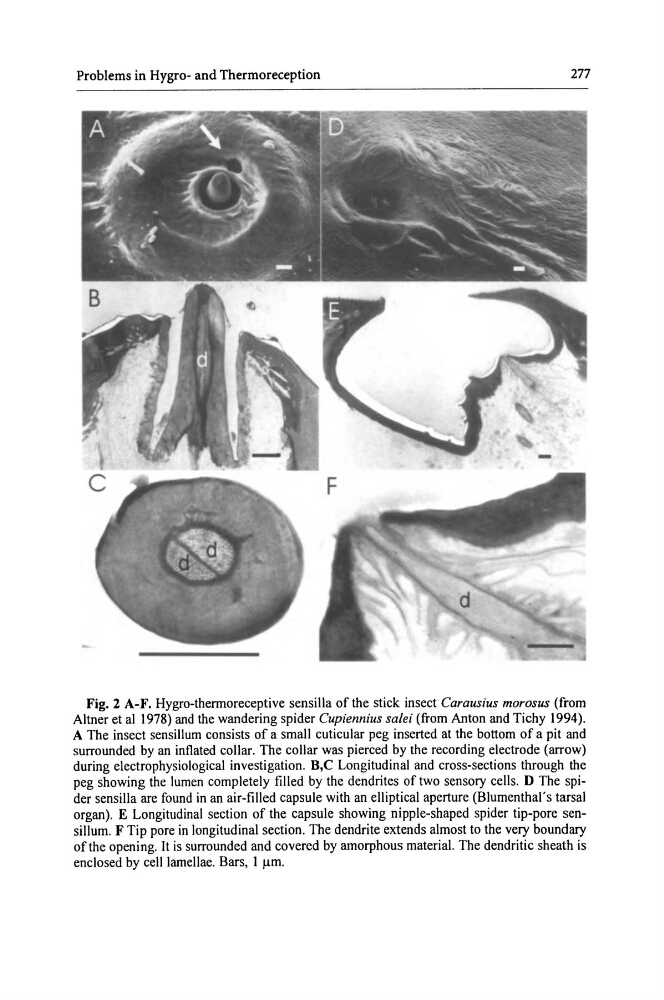
Fig. 2 A-F. Hygro-thermoreceptive sensilla of the stick insect Carausius morosus (from
Altner et al 1978) and the wandering spider Cupiennius salei (from Anton and Tichy 1994).
A The insect sensillum consists of a small cuticular peg inserted at the bottom of a pit and
surrounded by an inflated collar. The collar was pierced by the recording electrode (arrow)
during electrophysiological investigation. B,C Longitudinal and cross-sections through the
peg showing the lumen completely filled by the dendrites of two sensory cells. D The spider sensilla are found in an air-filled capsule with an elliptical aperture (Blumenthal's tarsal
organ). E Longitudinal section of the capsule showing nipple-shaped spider tip-pore sensillum. F Tip pore in longitudinal section. The dendrite extends almost to the very boundary
of the opening. It is surrounded and covered by amorphous material. The dendritic sheath is
enclosed by cell lamellae. Bars, I f.Lm.
277
Fig. 2 A-F. Hygro-thermoreceptive sensilla of the stick insect Carausius morosus (from
Altner et al 1978) and the wandering spider Cupiennius salei (from Anton and Tichy 1994).
A The insect sensillum consists of a small cuticular peg inserted at the bottom of a pit and
surrounded by an inflated collar. The collar was pierced by the recording electrode (arrow)
during electrophysiological investigation. B,C Longitudinal and cross-sections through the
peg showing the lumen completely filled by the dendrites of two sensory cells. D The spider sensilla are found in an air-filled capsule with an elliptical aperture (Blumenthal's tarsal
organ). E Longitudinal section of the capsule showing nipple-shaped spider tip-pore sensillum. F Tip pore in longitudinal section. The dendrite extends almost to the very boundary
of the opening. It is surrounded and covered by amorphous material. The dendritic sheath is
enclosed by cell lamellae. Bars, I f.Lm.