

Sensory Ecology of Arthropods Utilizing Plant Infochemicals
255
through the sequence, the number of sensory modalities and intensity of the stimuli
are increasing. The final decisions to accept or reject plant tissue, host, or prey are
based not only on sensory information, but also on the insect's physiological state
(satiety, sexual maturity, egg maturation, etc.; Barton Browne 1993). Sensory
information from the food, information on internal state, and information on
previous experiences stored in the insect's memory are integrated in the central
nervous system and in concert determine food acceptance and preference (Dethier
1982; Miller and Strickler 1984; Bell 1991; Papaj and Lewis 1993).
~ype of information l
~
0~
~
!Phase/event I I behaviour I
.,..
~ tf~ s
!! tf tl"' .!!
·~
~ 0f ~
.l;
;;~"'
Oj
(movement,
I
(dispersal)
random)
- - - - - - -
..--+ - .,...searching
oriented
habitat
movement:
I
location
kinesis and/or
• •
taxis
[plant-contact I
searching
kinesis, taxis
• • I
contactantennation
• •
()
evaluation
I
!host contact!
I
antennation
• •
0
ovipositor probing 1 0
• •
I
- - - - - - - -~-- ,.-- - 1 -
acceptance
I
•
oviposition
•
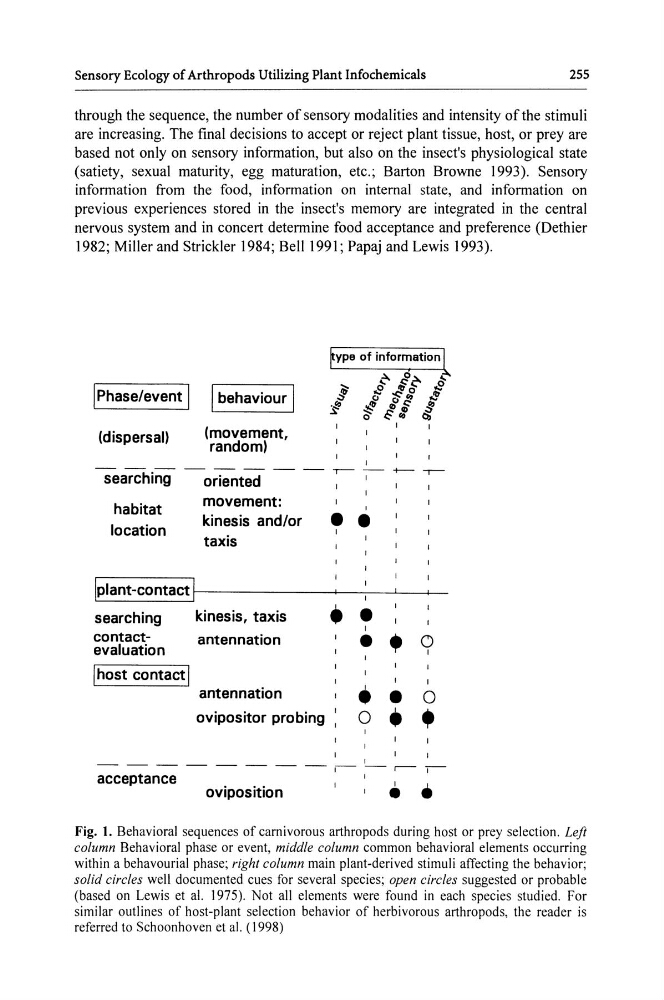
Fig. 1. Behavioral sequences of carnivorous arthropods during host or prey selection. Left
column Behavioral phase or event, middle column common behavioral elements occurring
within a behavourial phase; right column main plant-derived stimuli affecting the behavior;
solid circles well documented cues for several species; open circles suggested or probable
(based on Lewis et al. 1975). Not all elements were found in each species studied. For
similar outlines of host-plant selection behavior of herbivorous arthropods, the reader is
referred to Schoonhoven et al. ( 1998)
255
through the sequence, the number of sensory modalities and intensity of the stimuli
are increasing. The final decisions to accept or reject plant tissue, host, or prey are
based not only on sensory information, but also on the insect's physiological state
(satiety, sexual maturity, egg maturation, etc.; Barton Browne 1993). Sensory
information from the food, information on internal state, and information on
previous experiences stored in the insect's memory are integrated in the central
nervous system and in concert determine food acceptance and preference (Dethier
1982; Miller and Strickler 1984; Bell 1991; Papaj and Lewis 1993).
~ype of information l
~
0~
~
!Phase/event I I behaviour I
.,..
~ tf~ s
!! tf tl"' .!!
·~
~ 0f ~
.l;
;;~"'
Oj
(movement,
I
(dispersal)
random)
- - - - - - -
..--+ - .,...searching
oriented
habitat
movement:
I
location
kinesis and/or
• •
taxis
[plant-contact I
searching
kinesis, taxis
• • I
contactantennation
• •
()
evaluation
I
!host contact!
I
antennation
• •
0
ovipositor probing 1 0
• •
I
- - - - - - - -~-- ,.-- - 1 -
acceptance
I
•
oviposition
•
Fig. 1. Behavioral sequences of carnivorous arthropods during host or prey selection. Left
column Behavioral phase or event, middle column common behavioral elements occurring
within a behavourial phase; right column main plant-derived stimuli affecting the behavior;
solid circles well documented cues for several species; open circles suggested or probable
(based on Lewis et al. 1975). Not all elements were found in each species studied. For
similar outlines of host-plant selection behavior of herbivorous arthropods, the reader is
referred to Schoonhoven et al. ( 1998)