

Selectivity in Chemical Communication Systems of Arthropods
239
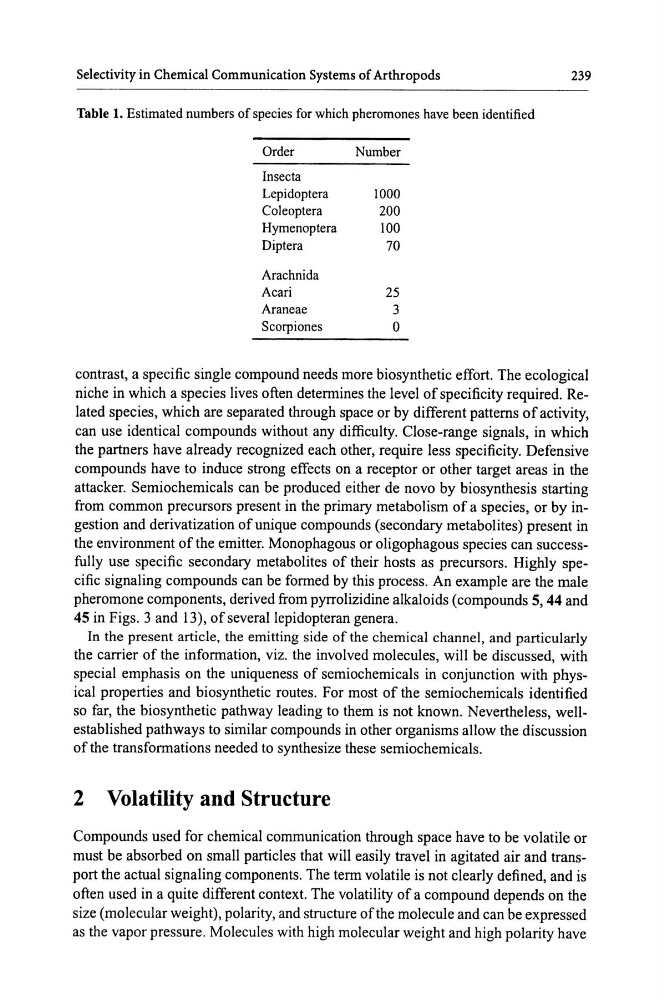
Table 1. Estimated numbers of species for which pheromones have been identified
Order
Number
Insecta
Lepidoptera
1000
Coleoptera
200
Hymenoptera
100
Diptera
70
Arachnida
Acari
25
Araneae
3
Scorpiones
0
contrast, a specific single compound needs more biosynthetic effort. The ecological
niche in which a species lives often determines the level of specificity required. Related species, which are separated through space or by different patterns of activity,
can use identical compounds without any difficulty. Close-range signals, in which
the partners have already recognized each other, require less specificity. Defensive
compounds have to induce strong effects on a receptor or other target areas in the
attacker. Semiochemicals can be produced either de novo by biosynthesis starting
from common precursors present in the primary metabolism of a species, or by ingestion and derivatization of unique compounds (secondary metabolites) present in
the environment of the emitter. Monophagous or oligophagous species can successfully use specific secondary metabolites of their hosts as precursors. Highly specific signaling compounds can be formed by this process. An example are the male
pheromone components, derived from pyrrolizidine alkaloids (compounds 5, 44 and
45 in Figs. 3 and 13), of several lepidopteran genera.
In the present article, the emitting side of the chemical channel, and particularly
the carrier of the information, viz. the involved molecules, will be discussed, with
special emphasis on the uniqueness of semiochemicals in conjunction with physical properties and biosynthetic routes. For most of the semiochemicals identified
so far, the biosynthetic pathway leading to them is not known. Nevertheless, wellestablished pathways to similar compounds in other organisms allow the discussion
of the transformations needed to synthesize these semiochemicals.
2 Volatility and Structure
Compounds used for chemical communication through space have to be volatile or
must be absorbed on small particles that will easily travel in agitated air and transport the actual signaling components. The term volatile is not clearly defined, and is
often used in a quite different context. The volatility of a compound depends on the
size (molecular weight), polarity, and structure of the molecule and can be expressed
as the vapor pressure. Molecules with high molecular weight and high polarity have
239
Table 1. Estimated numbers of species for which pheromones have been identified
Order
Number
Insecta
Lepidoptera
1000
Coleoptera
200
Hymenoptera
100
Diptera
70
Arachnida
Acari
25
Araneae
3
Scorpiones
0
contrast, a specific single compound needs more biosynthetic effort. The ecological
niche in which a species lives often determines the level of specificity required. Related species, which are separated through space or by different patterns of activity,
can use identical compounds without any difficulty. Close-range signals, in which
the partners have already recognized each other, require less specificity. Defensive
compounds have to induce strong effects on a receptor or other target areas in the
attacker. Semiochemicals can be produced either de novo by biosynthesis starting
from common precursors present in the primary metabolism of a species, or by ingestion and derivatization of unique compounds (secondary metabolites) present in
the environment of the emitter. Monophagous or oligophagous species can successfully use specific secondary metabolites of their hosts as precursors. Highly specific signaling compounds can be formed by this process. An example are the male
pheromone components, derived from pyrrolizidine alkaloids (compounds 5, 44 and
45 in Figs. 3 and 13), of several lepidopteran genera.
In the present article, the emitting side of the chemical channel, and particularly
the carrier of the information, viz. the involved molecules, will be discussed, with
special emphasis on the uniqueness of semiochemicals in conjunction with physical properties and biosynthetic routes. For most of the semiochemicals identified
so far, the biosynthetic pathway leading to them is not known. Nevertheless, wellestablished pathways to similar compounds in other organisms allow the discussion
of the transformations needed to synthesize these semiochemicals.
2 Volatility and Structure
Compounds used for chemical communication through space have to be volatile or
must be absorbed on small particles that will easily travel in agitated air and transport the actual signaling components. The term volatile is not clearly defined, and is
often used in a quite different context. The volatility of a compound depends on the
size (molecular weight), polarity, and structure of the molecule and can be expressed
as the vapor pressure. Molecules with high molecular weight and high polarity have