

160
Horst Bleckrnann et al.
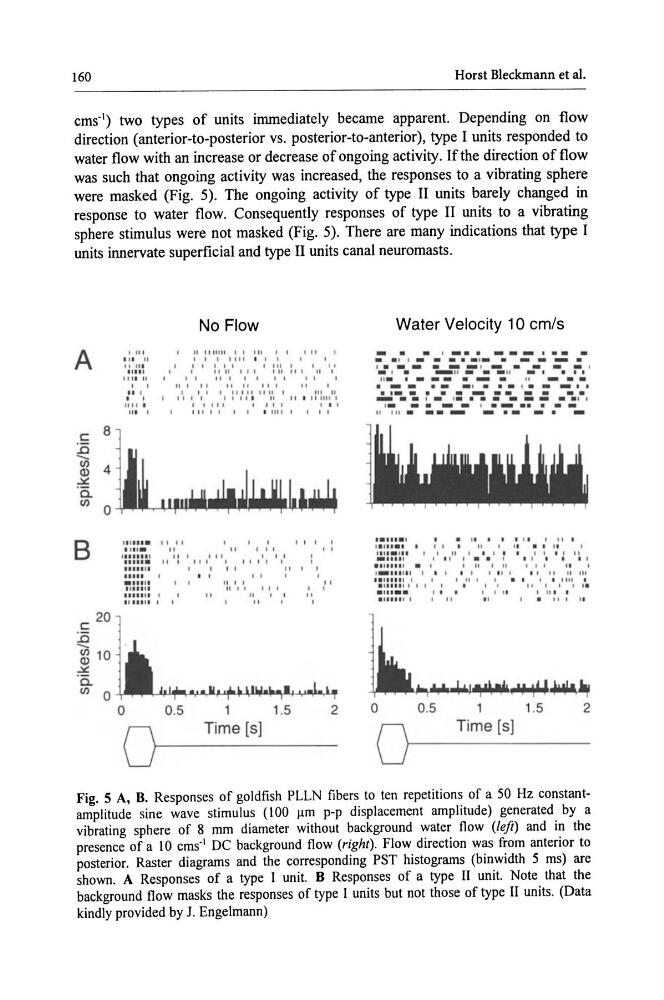
cms- 1 ) two types of units immediately became apparent. Depending on flow
direction (anterior-to-posterior vs. posterior-to-anterior), type I units responded to
water flow with an increase or decrease of ongoing activity. If the direction of flow
was such that ongoing activity was increased, the responses to a vibrating sphere
were masked (Fig. 5). The ongoing activity of type II units barely changed in
response to water flow. Consequently responses of type II units to a vibrating
sphere stimulus were not masked (Fig. 5). There are many indications that type I
units innervate superficial and type II units canal neuromasts.
A
8
I Ill
I l l
II
II I l l
IIIII
11 11 II
I
I
Il l
0
I
1111 I
I ll
I
. ......
. . .. .
11111111
...... .....
......
IIIII II
.......
II
'
No Flow
II II lUll
I I
Ill
I
I
I II
I
I
I
1111
I
I
I
1
I I
I I I
I Ill
I
I
11
I
1111
I l l
Ill I l l
II
I
I I
II I
I
I
I I
I I
I
II I
I I
I I
I I
I I I
1
I
I I
I
IIIII 1111
I
Il l
II
II I I
I I Il l
II
I I 1 1111111
I
I I l l
I
I I 1
I l l I I
I
I I
I
I I
I
I
II
II
I I I
I I
II I
I I I
I
I I
:
I
I I I
I
I I I I
I
I
"
I
I
I
I
I I
I
I
I
I
II I I
Ill
II I I
I I I
I
II
'
I
II
"
I
I
t: ~ ' • ' + - ~ · · · · ~ " ' " " ' ' ' ' ,.,.I •. •,
0
0.5
1
1.5
2
0
Time[s]
r - - - - -
Water Velocity 10 cm/s
-
•
•
I - · .
- - - I • .
•
. , I -
•
•
e · ·a
-
-
-
•
I. -- . --I - . - - -1
-
I
•
-
II -
-
- II - I • I I
11 •
I
-
-
-
•
-
•
II
-
•
-
•
-
-
•
-
-
1
•
•
-
I •
-
-
I
I
. ·- .... - .. -. -.
-
-
•
I -
1• • -
-
-
-
•
• 1 I
· -
-
•
-
-
I
•
-
• •
•
-
-
II
Ill .
- - -
-
• -
-
•
...... , I . " . . . "
I
II
•
. ...... I I I I II I " •
I
II
. .. ..... I '
II
I
. I . . I I I I "
...... I II I • •
I
I I
. . I I
... ..... . I I II I II I I I II I
,_, .... , I I I I I I II I I I II II Ill
........ I I I II I I . . I . 1111 I
.I IIII I I I I
I
. I ' "
I
' ' ..
. . .... ' . . ' ' "
I Il l
I
'
"
. "
I
"
ll I
J) . . . , .... ~,'l'\'1''1'' 1.,~
0
0.5
1
1.5
2
0
Time[s]
~Fig. 5 A, B. Responses of goldfish PLLN fibers to ten repetitions of a 50 Hz constantamplitude sine wave stimulus (I 00 ~m p-p displacement amplitude) generated by a
vibrating sphere of 8 mm diameter without background water flow (left) and in the
presence of a 10 cms- 1 DC background flow (right) . Flow direction was from anterior to
posterior. Raster diagrams and the corresponding PST histograms (binwidth 5 ms) are
shown. A Responses of a type I unit. B Responses of a type II unit. Note that the
background flow masks the responses of type I units but not those of type II units. (Data
kindly provided by J. Engelmann)
Horst Bleckrnann et al.
cms- 1 ) two types of units immediately became apparent. Depending on flow
direction (anterior-to-posterior vs. posterior-to-anterior), type I units responded to
water flow with an increase or decrease of ongoing activity. If the direction of flow
was such that ongoing activity was increased, the responses to a vibrating sphere
were masked (Fig. 5). The ongoing activity of type II units barely changed in
response to water flow. Consequently responses of type II units to a vibrating
sphere stimulus were not masked (Fig. 5). There are many indications that type I
units innervate superficial and type II units canal neuromasts.
A
8
I Ill
I l l
II
II I l l
IIIII
11 11 II
I
I
Il l
0
I
1111 I
I ll
I
. ......
. . .. .
11111111
...... .....
......
IIIII II
.......
II
'
No Flow
II II lUll
I I
Ill
I
I
I II
I
I
I
1111
I
I
I
1
I I
I I I
I Ill
I
I
11
I
1111
I l l
Ill I l l
II
I
I I
II I
I
I
I I
I I
I
II I
I I
I I
I I
I I I
1
I
I I
I
IIIII 1111
I
Il l
II
II I I
I I Il l
II
I I 1 1111111
I
I I l l
I
I I 1
I l l I I
I
I I
I
I I
I
I
II
II
I I I
I I
II I
I I I
I
I I
:
I
I I I
I
I I I I
I
I
"
I
I
I
I
I I
I
I
I
I
II I I
Ill
II I I
I I I
I
II
'
I
II
"
I
I
t: ~ ' • ' + - ~ · · · · ~ " ' " " ' ' ' ' ,.,.I •. •,
0
0.5
1
1.5
2
0
Time[s]
r - - - - -
Water Velocity 10 cm/s
-
•
•
I - · .
- - - I • .
•
. , I -
•
•
e · ·a
-
-
-
•
I. -- . --I - . - - -1
-
I
•
-
II -
-
- II - I • I I
11 •
I
-
-
-
•
-
•
II
-
•
-
•
-
-
•
-
-
1
•
•
-
I •
-
-
I
I
. ·- .... - .. -. -.
-
-
•
I -
1• • -
-
-
-
•
• 1 I
· -
-
•
-
-
I
•
-
• •
•
-
-
II
Ill .
- - -
-
• -
-
•
...... , I . " . . . "
I
II
•
. ...... I I I I II I " •
I
II
. .. ..... I '
II
I
. I . . I I I I "
...... I II I • •
I
I I
. . I I
... ..... . I I II I II I I I II I
,_, .... , I I I I I I II I I I II II Ill
........ I I I II I I . . I . 1111 I
.I IIII I I I I
I
. I ' "
I
' ' ..
. . .... ' . . ' ' "
I Il l
I
'
"
. "
I
"
ll I
J) . . . , .... ~,'l'\'1''1'' 1.,~
0
0.5
1
1.5
2
0
Time[s]
~Fig. 5 A, B. Responses of goldfish PLLN fibers to ten repetitions of a 50 Hz constantamplitude sine wave stimulus (I 00 ~m p-p displacement amplitude) generated by a
vibrating sphere of 8 mm diameter without background water flow (left) and in the
presence of a 10 cms- 1 DC background flow (right) . Flow direction was from anterior to
posterior. Raster diagrams and the corresponding PST histograms (binwidth 5 ms) are
shown. A Responses of a type I unit. B Responses of a type II unit. Note that the
background flow masks the responses of type I units but not those of type II units. (Data
kindly provided by J. Engelmann)