

Marine Dinoflagellate-Associated Human Poisoning 33.5 Toxigenic Dinoflagellate-Associated Human Poisoning 799
Part F | 33.5
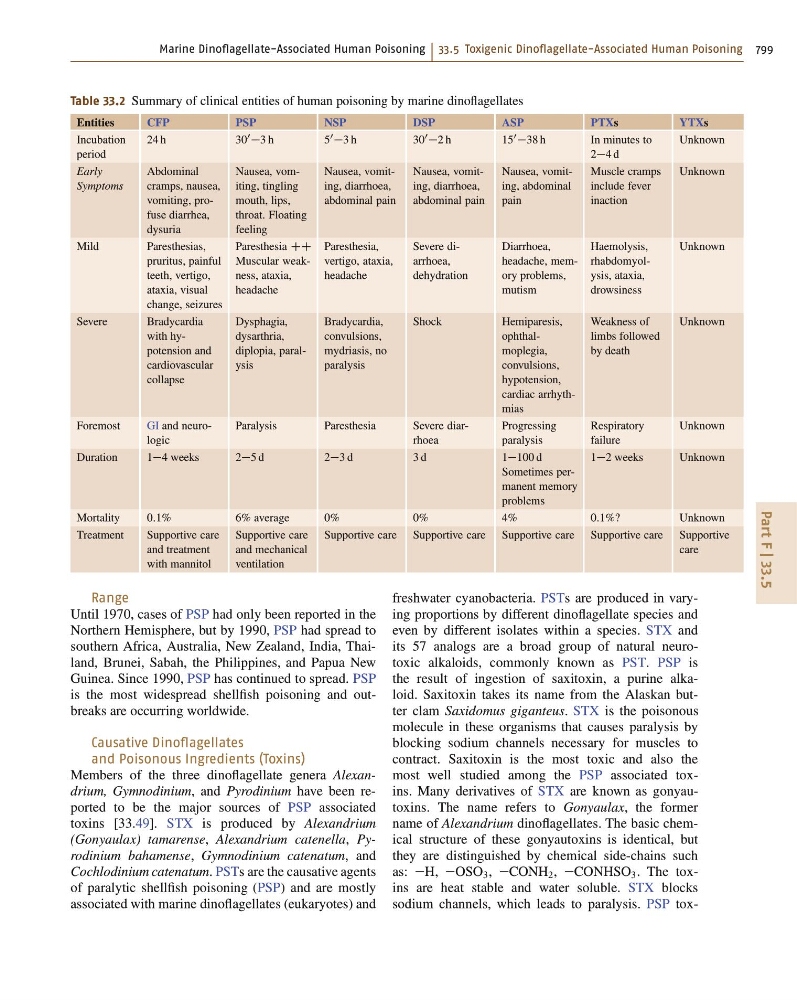
Table 33.2 Summary of clinical entities of human poisoning by marine dinoflagellates
Entities
CFP
PSP
NSP
DSP
ASP
PTXs
YTXs
Incubation
period
24 h
30 0 3 h
5 0 3 h
30 0 2 h
15 0 38 h
In minutes to
24 d
Unknown
Early
Symptoms
Abdominal
cramps, nausea,
vomiting, profuse diarrhea,
dysuria
Nausea, vomiting, tingling
mouth, lips,
throat. Floating
feeling
Nausea, vomiting, diarrhoea,
abdominal pain
Nausea, vomiting, diarrhoea,
abdominal pain
Nausea, vomiting, abdominal
pain
Muscle cramps
include fever
inaction
Unknown
Mild
Paresthesias,
pruritus, painful
teeth, vertigo,
ataxia, visual
change, seizures
Paresthesia CC
Muscular weakness, ataxia,
headache
Paresthesia,
vertigo, ataxia,
headache
Severe diarrhoea,
dehydration
Diarrhoea,
headache, memory problems,
mutism
Haemolysis,
rhabdomyolysis, ataxia,
drowsiness
Unknown
Severe
Bradycardia
with hypotension and
cardiovascular
collapse
Dysphagia,
dysarthria,
diplopia, paralysis
Bradycardia,
convulsions,
mydriasis, no
paralysis
Shock
Hemiparesis,
ophthalmoplegia,
convulsions,
hypotension,
cardiac arrhythmias
Weakness of
limbs followed
by death
Unknown
Foremost
GI and neurologic
Paralysis
Paresthesia
Severe diarrhoea
Progressing
paralysis
Respiratory
failure
Unknown
Duration
14 weeks
25 d
23 d
3 d
1100 d
Sometimes permanent memory
problems
12 weeks
Unknown
Mortality
0:1%
6% average
0%
0%
4%
0:1%?
Unknown
Treatment
Supportive care
and treatment
with mannitol
Supportive care
and mechanical
ventilation
Supportive care Supportive care Supportive care Supportive care Supportive
care
Range
Until 1970, cases of PSP had only been reported in the
Northern Hemisphere, but by 1990, PSP had spread to
southern Africa, Australia, New Zealand, India, Thailand, Brunei, Sabah, the Philippines, and Papua New
Guinea. Since 1990, PSP has continued to spread. PSP
is the most widespread shellfish poisoning and outbreaks are occurring worldwide.
Causative Dinoflagellates
and Poisonous Ingredients (Toxins)
Members of the three dinoflagellate genera Alexandrium, Gymnodinium, and Pyrodinium have been reported to be the major sources of PSP associated
toxins [33.49]. STX is produced by Alexandrium
(Gonyaulax) tamarense, Alexandrium catenella, Pyrodinium bahamense, Gymnodinium catenatum, and
Cochlodinium catenatum. PSTs are the causative agents
of paralytic shellfish poisoning (PSP) and are mostly
associated with marine dinoflagellates (eukaryotes) and
freshwater cyanobacteria. PSTs are produced in varying proportions by different dinoflagellate species and
even by different isolates within a species. STX and
its 57 analogs are a broad group of natural neurotoxic alkaloids, commonly known as PST. PSP is
the result of ingestion of saxitoxin, a purine alkaloid. Saxitoxin takes its name from the Alaskan butter clam Saxidomus giganteus. STX is the poisonous
molecule in these organisms that causes paralysis by
blocking sodium channels necessary for muscles to
contract. Saxitoxin is the most toxic and also the
most well studied among the PSP associated toxins. Many derivatives of STX are known as gonyautoxins. The name refers to Gonyaulax, the former
name of Alexandrium dinoflagellates. The basic chemical structure of these gonyautoxins is identical, but
they are distinguished by chemical side-chains such
as: H, OSO 3 , CONH 2 , CONHSO 3 . The toxins are heat stable and water soluble. STX blocks
sodium channels, which leads to paralysis. PSP tox-