

Part E | 28.2
694 Part E Marine Microbiology and Biotechnology
A. sydowii
CBMAI 934
Mycelia
discarded
Culture
broth
Extraction with EtOAc (3 × 100 mL)
1. Anhydrous Na 2 SO 4 added
2. Filtration
3. Evaporation of the solvent
Aqueous phase
discarded
a
4-Fluorophenylacetonitrile 2 and 4-chlorophenylacetonitrile 3;
b 4-Methylphenylacetonitrile 4
GC-MS,
NMR
1 H and
13 C
Pure products of
biotransformation
CC-flash
4-fluorophenylacetic acid 2a,
(206.75 mg, 51%)
4-chlorophenylacetic acid 3a,
(235.62 mg, 55%)
4-methoxyphenylacetic acid 4a,
(167.9 mg; 43%)
Organic
phase
Mass of extract obtained:
4-fluorophenylacetonitrile 2, (m = 726 mg)
4-chlorophenylacetonitrile 3, (m = 455 mg)
4-methoxyphenylacetonitrile 4, (m = 255 mg)
1. Fungus induced on solid medium by phenylacetonitrile 1
2. Liquid mineral medium (100 mL/Erlenmeyer 250 mL) inoculated with induced fungus
3. Growth of the fungus in the presence of phenylacetonitrile 1 (60 µL) by 96 h
4. Addition of nitriles 2–4 (60 µL) to be biotransformed
5. Aliquots taken every 24 h for 4 days and analyzed by GC-FID
6. Reactions of nitriles 2–4 stopped after 24 h
a and 96 h
b
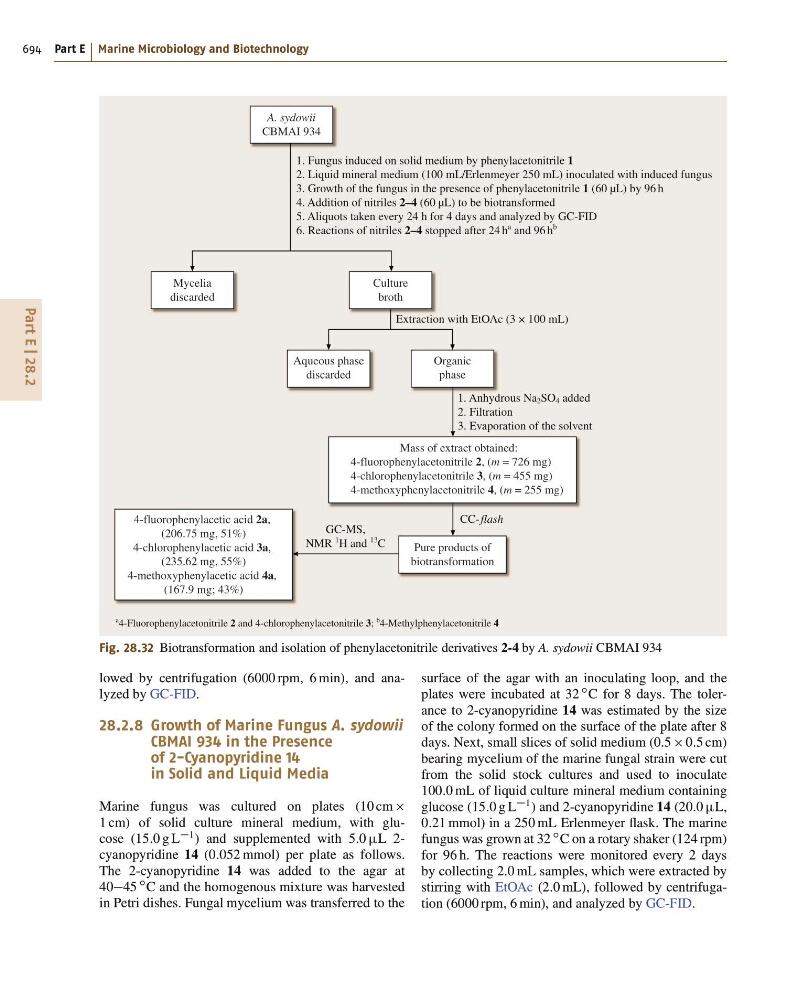
Fig. 28.32 Biotransformation and isolation of phenylacetonitrile derivatives 2-4 by A. sydowii CBMAI 934
lowed by centrifugation (6000 rpm, 6 min), and analyzed by GC-FID.
28.2.8 Growth of Marine Fungus A. sydowii
CBMAI 934 in the Presence
of 2-Cyanopyridine 14
in Solid and Liquid Media
Marine fungus was cultured on plates (10 cm
1 cm) of solid culture mineral medium, with glucose (15:0 g L
1 ) and supplemented with 5:0 L 2cyanopyridine 14 (0:052 mmol) per plate as follows.
The 2-cyanopyridine 14 was added to the agar at
4045
ı C and the homogenous mixture was harvested
in Petri dishes. Fungal mycelium was transferred to the
surface of the agar with an inoculating loop, and the
plates were incubated at 32
ı C for 8 days. The tolerance to 2-cyanopyridine 14 was estimated by the size
of the colony formed on the surface of the plate after 8
days. Next, small slices of solid medium (0:5 0:5 cm)
bearing mycelium of the marine fungal strain were cut
from the solid stock cultures and used to inoculate
100:0 mL of liquid culture mineral medium containing
glucose (15:0 g L
1 ) and 2-cyanopyridine 14 (20:0 L,
0:21 mmol) in a 250 mL Erlenmeyer flask. The marine
fungus was grown at 32
ı C on a rotary shaker (124 rpm)
for 96 h. The reactions were monitored every 2 days
by collecting 2:0 mL samples, which were extracted by
stirring with EtOAc (2:0 mL), followed by centrifugation (6000 rpm, 6 min), and analyzed by GC-FID.