

Biotechnological Potential of Marine Microbes 26.2 Why Do Marine Microbes Matter in Biotechnology? 653
Part E | 26.2
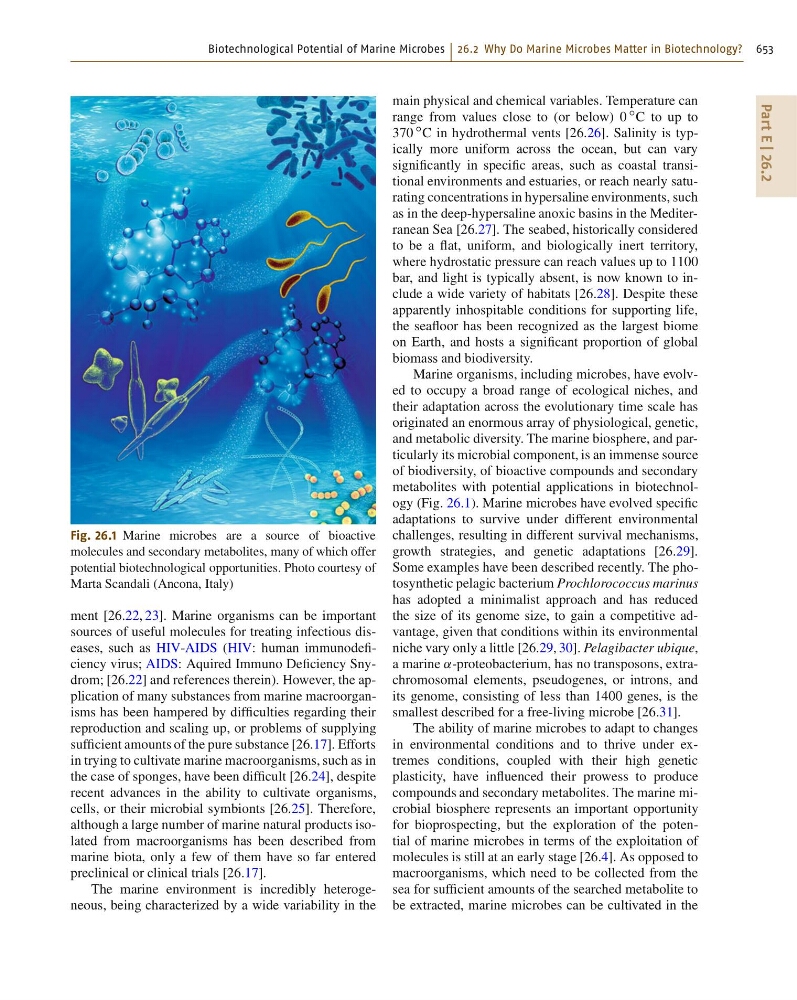
Fig. 26.1 Marine microbes are a source of bioactive
molecules and secondary metabolites, many of which offer
potential biotechnological opportunities. Photo courtesy of
Marta Scandali (Ancona, Italy)
ment [26.22, 23]. Marine organisms can be important
sources of useful molecules for treating infectious diseases, such as HIV-AIDS (HIV: human immunodeficiency virus; AIDS: Aquired Immuno Deficiency Snydrom; [26.22] and references therein). However, the application of many substances from marine macroorganisms has been hampered by difficulties regarding their
reproduction and scaling up, or problems of supplying
sufficient amounts of the pure substance [26.17]. Efforts
in trying to cultivate marine macroorganisms, such as in
the case of sponges, have been difficult [26.24], despite
recent advances in the ability to cultivate organisms,
cells, or their microbial symbionts [26.25]. Therefore,
although a large number of marine natural products isolated from macroorganisms has been described from
marine biota, only a few of them have so far entered
preclinical or clinical trials [26.17].
The marine environment is incredibly heterogeneous, being characterized by a wide variability in the
main physical and chemical variables. Temperature can
range from values close to (or below) 0
ı C to up to
370
ı C in hydrothermal vents [26.26]. Salinity is typically more uniform across the ocean, but can vary
significantly in specific areas, such as coastal transitional environments and estuaries, or reach nearly saturating concentrations in hypersaline environments, such
as in the deep-hypersaline anoxic basins in the Mediterranean Sea [26.27]. The seabed, historically considered
to be a flat, uniform, and biologically inert territory,
where hydrostatic pressure can reach values up to 1100
bar, and light is typically absent, is now known to include a wide variety of habitats [26.28]. Despite these
apparently inhospitable conditions for supporting life,
the seafloor has been recognized as the largest biome
on Earth, and hosts a significant proportion of global
biomass and biodiversity.
Marine organisms, including microbes, have evolved to occupy a broad range of ecological niches, and
their adaptation across the evolutionary time scale has
originated an enormous array of physiological, genetic,
and metabolic diversity. The marine biosphere, and particularly its microbial component, is an immense source
of biodiversity, of bioactive compounds and secondary
metabolites with potential applications in biotechnology (Fig. 26.1). Marine microbes have evolved specific
adaptations to survive under different environmental
challenges, resulting in different survival mechanisms,
growth strategies, and genetic adaptations [26.29].
Some examples have been described recently. The photosynthetic pelagic bacterium Prochlorococcus marinus
has adopted a minimalist approach and has reduced
the size of its genome size, to gain a competitive advantage, given that conditions within its environmental
niche vary only a little [26.29, 30]. Pelagibacter ubique,
a marine ˛-proteobacterium, has no transposons, extrachromosomal elements, pseudogenes, or introns, and
its genome, consisting of less than 1400 genes, is the
smallest described for a free-living microbe [26.31].
The ability of marine microbes to adapt to changes
in environmental conditions and to thrive under extremes conditions, coupled with their high genetic
plasticity, have influenced their prowess to produce
compounds and secondary metabolites. The marine microbial biosphere represents an important opportunity
for bioprospecting, but the exploration of the potential of marine microbes in terms of the exploitation of
molecules is still at an early stage [26.4]. As opposed to
macroorganisms, which need to be collected from the
sea for sufficient amounts of the searched metabolite to
be extracted, marine microbes can be cultivated in the