

Part D | 24.3
604 Part D Marine Algal Biotechnology
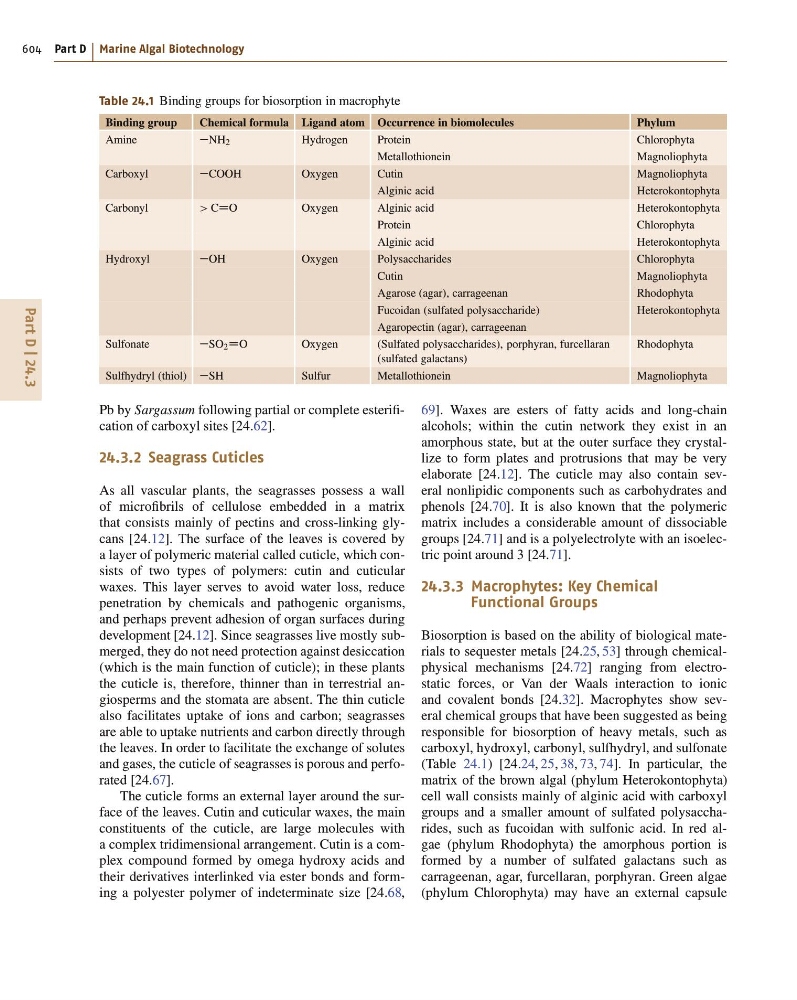
Table 24.1 Binding groups for biosorption in macrophyte
Binding group
Chemical formula Ligand atom Occurrence in biomolecules
Phylum
Amine
NH 2
Hydrogen
Protein
Chlorophyta
Metallothionein
Magnoliophyta
Carboxyl
COOH
Oxygen
Cutin
Magnoliophyta
Alginic acid
Heterokontophyta
Carbonyl
> CDO
Oxygen
Alginic acid
Heterokontophyta
Protein
Chlorophyta
Alginic acid
Heterokontophyta
Hydroxyl
OH
Oxygen
Polysaccharides
Chlorophyta
Cutin
Magnoliophyta
Agarose (agar), carrageenan
Rhodophyta
Fucoidan (sulfated polysaccharide)
Heterokontophyta
Agaropectin (agar), carrageenan
Sulfonate
SO 2 DO
Oxygen
(Sulfated polysaccharides), porphyran, furcellaran
(sulfated galactans)
Rhodophyta
Sulfhydryl (thiol) SH
Sulfur
Metallothionein
Magnoliophyta
Pb by Sargassum following partial or complete esterification of carboxyl sites [24.62].
24.3.2 Seagrass Cuticles
As all vascular plants, the seagrasses possess a wall
of microfibrils of cellulose embedded in a matrix
that consists mainly of pectins and cross-linking glycans [24.12]. The surface of the leaves is covered by
a layer of polymeric material called cuticle, which consists of two types of polymers: cutin and cuticular
waxes. This layer serves to avoid water loss, reduce
penetration by chemicals and pathogenic organisms,
and perhaps prevent adhesion of organ surfaces during
development [24.12]. Since seagrasses live mostly submerged, they do not need protection against desiccation
(which is the main function of cuticle); in these plants
the cuticle is, therefore, thinner than in terrestrial angiosperms and the stomata are absent. The thin cuticle
also facilitates uptake of ions and carbon; seagrasses
are able to uptake nutrients and carbon directly through
the leaves. In order to facilitate the exchange of solutes
and gases, the cuticle of seagrasses is porous and perforated [24.67].
The cuticle forms an external layer around the surface of the leaves. Cutin and cuticular waxes, the main
constituents of the cuticle, are large molecules with
a complex tridimensional arrangement. Cutin is a complex compound formed by omega hydroxy acids and
their derivatives interlinked via ester bonds and forming a polyester polymer of indeterminate size [24.68,
69]. Waxes are esters of fatty acids and long-chain
alcohols; within the cutin network they exist in an
amorphous state, but at the outer surface they crystallize to form plates and protrusions that may be very
elaborate [24.12]. The cuticle may also contain several nonlipidic components such as carbohydrates and
phenols [24.70]. It is also known that the polymeric
matrix includes a considerable amount of dissociable
groups [24.71] and is a polyelectrolyte with an isoelectric point around 3 [24.71].
24.3.3 Macrophytes: Key Chemical
Functional Groups
Biosorption is based on the ability of biological materials to sequester metals [24.25, 53] through chemicalphysical mechanisms [24.72] ranging from electrostatic forces, or Van der Waals interaction to ionic
and covalent bonds [24.32]. Macrophytes show several chemical groups that have been suggested as being
responsible for biosorption of heavy metals, such as
carboxyl, hydroxyl, carbonyl, sulfhydryl, and sulfonate
(Table 24.1) [24.24, 25, 38, 73, 74]. In particular, the
matrix of the brown algal (phylum Heterokontophyta)
cell wall consists mainly of alginic acid with carboxyl
groups and a smaller amount of sulfated polysaccharides, such as fucoidan with sulfonic acid. In red algae (phylum Rhodophyta) the amorphous portion is
formed by a number of sulfated galactans such as
carrageenan, agar, furcellaran, porphyran. Green algae
(phylum Chlorophyta) may have an external capsule