

Part D | 22.5
570 Part D Marine Algal Biotechnology
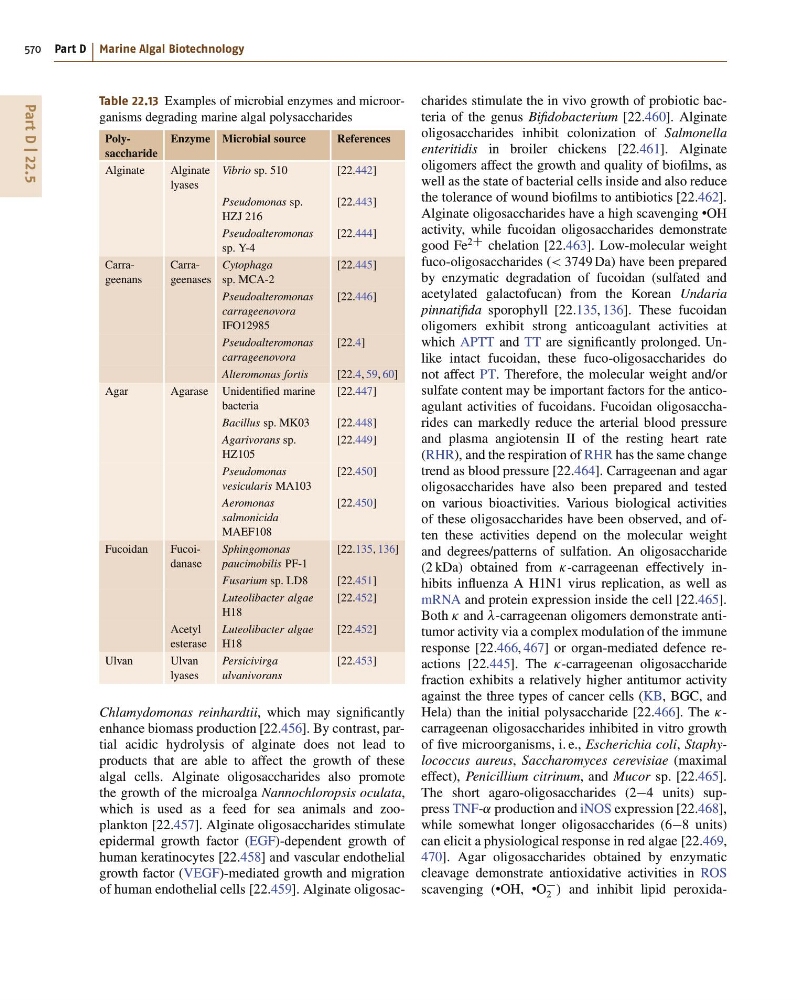
Table 22.13 Examples of microbial enzymes and microorganisms degrading marine algal polysaccharides
Polysaccharide
Enzyme Microbial source
References
Alginate
Alginate
lyases
Vibrio sp. 510
[22.442]
Pseudomonas sp.
HZJ 216
[22.443]
Pseudoalteromonas
sp. Y-4
[22.444]
Carrageenans
Carrageenases
Cytophaga
sp. MCA-2
[22.445]
Pseudoalteromonas
carrageenovora
IFO12985
[22.446]
Pseudoalteromonas
carrageenovora
[22.4]
Alteromonas fortis
[22.4, 59, 60]
Agar
Agarase Unidentified marine
bacteria
[22.447]
Bacillus sp. MK03
[22.448]
Agarivorans sp.
HZ105
[22.449]
Pseudomonas
vesicularis MA103
[22.450]
Aeromonas
salmonicida
MAEF108
[22.450]
Fucoidan
Fucoidanase
Sphingomonas
paucimobilis PF-1
[22.135, 136]
Fusarium sp. LD8
[22.451]
Luteolibacter algae
H18
[22.452]
Acetyl
esterase
Luteolibacter algae
H18
[22.452]
Ulvan
Ulvan
lyases
Persicivirga
ulvanivorans
[22.453]
Chlamydomonas reinhardtii, which may significantly
enhance biomass production [22.456]. By contrast, partial acidic hydrolysis of alginate does not lead to
products that are able to affect the growth of these
algal cells. Alginate oligosaccharides also promote
the growth of the microalga Nannochloropsis oculata,
which is used as a feed for sea animals and zooplankton [22.457]. Alginate oligosaccharides stimulate
epidermal growth factor (EGF)-dependent growth of
human keratinocytes [22.458] and vascular endothelial
growth factor (VEGF)-mediated growth and migration
of human endothelial cells [22.459]. Alginate oligosaccharides stimulate the in vivo growth of probiotic bacteria of the genus Bifidobacterium [22.460]. Alginate
oligosaccharides inhibit colonization of Salmonella
enteritidis in broiler chickens [22.461]. Alginate
oligomers affect the growth and quality of biofilms, as
well as the state of bacterial cells inside and also reduce
the tolerance of wound biofilms to antibiotics [22.462].
Alginate oligosaccharides have a high scavenging OH
activity, while fucoidan oligosaccharides demonstrate
good Fe
2C chelation [22.463]. Low-molecular weight
fuco-oligosaccharides (< 3749 Da) have been prepared
by enzymatic degradation of fucoidan (sulfated and
acetylated galactofucan) from the Korean Undaria
pinnatifida sporophyll [22.135, 136]. These fucoidan
oligomers exhibit strong anticoagulant activities at
which APTT and TT are significantly prolonged. Unlike intact fucoidan, these fuco-oligosaccharides do
not affect PT. Therefore, the molecular weight and/or
sulfate content may be important factors for the anticoagulant activities of fucoidans. Fucoidan oligosaccharides can markedly reduce the arterial blood pressure
and plasma angiotensin II of the resting heart rate
(RHR), and the respiration of RHR has the same change
trend as blood pressure [22.464]. Carrageenan and agar
oligosaccharides have also been prepared and tested
on various bioactivities. Various biological activities
of these oligosaccharides have been observed, and often these activities depend on the molecular weight
and degrees/patterns of sulfation. An oligosaccharide
(2 kDa) obtained from Ä-carrageenan effectively inhibits influenza A H1N1 virus replication, as well as
mRNA and protein expression inside the cell [22.465].
Both Ä and -carrageenan oligomers demonstrate antitumor activity via a complex modulation of the immune
response [22.466, 467] or organ-mediated defence reactions [22.445]. The Ä-carrageenan oligosaccharide
fraction exhibits a relatively higher antitumor activity
against the three types of cancer cells (KB, BGC, and
Hela) than the initial polysaccharide [22.466]. The Äcarrageenan oligosaccharides inhibited in vitro growth
of five microorganisms, i. e., Escherichia coli, Staphylococcus aureus, Saccharomyces cerevisiae (maximal
effect), Penicillium citrinum, and Mucor sp. [22.465].
The short agaro-oligosaccharides (24 units) suppress TNF-˛ production and iNOS expression [22.468],
while somewhat longer oligosaccharides (68 units)
can elicit a physiological response in red algae [22.469,
470]. Agar oligosaccharides obtained by enzymatic
cleavage demonstrate antioxidative activities in ROS
scavenging ( OH, O
2 ) and inhibit lipid peroxida-