

Genome Mining for Bioactive Compounds 21.5 Marine Pharmaceuticals Under Clinical Trials 537
Part C | 21.5
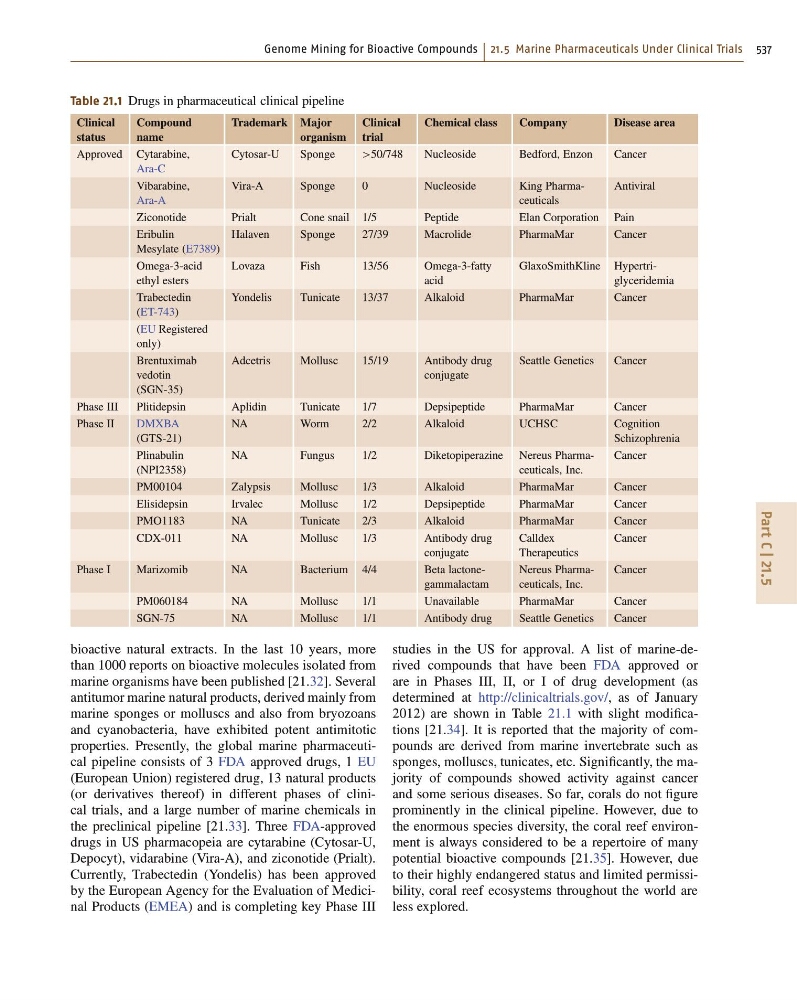
Table 21.1 Drugs in pharmaceutical clinical pipeline
Clinical
status
Compound
name
Trademark Major
organism
Clinical
trial
Chemical class
Company
Disease area
Approved Cytarabine,
Ara-C
Cytosar-U
Sponge
>50/748
Nucleoside
Bedford, Enzon
Cancer
Vibarabine,
Ara-A
Vira-A
Sponge
0
Nucleoside
King Pharmaceuticals
Antiviral
Ziconotide
Prialt
Cone snail 1/5
Peptide
Elan Corporation Pain
Eribulin
Mesylate (E7389)
Halaven
Sponge
27/39
Macrolide
PharmaMar
Cancer
Omega-3-acid
ethyl esters
Lovaza
Fish
13/56
Omega-3-fatty
acid
GlaxoSmithKline Hypertriglyceridemia
Trabectedin
(ET-743)
Yondelis
Tunicate
13/37
Alkaloid
PharmaMar
Cancer
(EU Registered
only)
Brentuximab
vedotin
(SGN-35)
Adcetris
Mollusc
15/19
Antibody drug
conjugate
Seattle Genetics
Cancer
Phase III
Plitidepsin
Aplidin
Tunicate
1/7
Depsipeptide
PharmaMar
Cancer
Phase II
DMXBA
(GTS-21)
NA
Worm
2/2
Alkaloid
UCHSC
Cognition
Schizophrenia
Plinabulin
(NPI2358)
NA
Fungus
1/2
Diketopiperazine Nereus Pharmaceuticals, Inc.
Cancer
PM00104
Zalypsis
Mollusc
1/3
Alkaloid
PharmaMar
Cancer
Elisidepsin
Irvalec
Mollusc
1/2
Depsipeptide
PharmaMar
Cancer
PMO1183
NA
Tunicate
2/3
Alkaloid
PharmaMar
Cancer
CDX-011
NA
Mollusc
1/3
Antibody drug
conjugate
Calldex
Therapeutics
Cancer
Phase I
Marizomib
NA
Bacterium 4/4
Beta lactonegammalactam
Nereus Pharmaceuticals, Inc.
Cancer
PM060184
NA
Mollusc
1/1
Unavailable
PharmaMar
Cancer
SGN-75
NA
Mollusc
1/1
Antibody drug
Seattle Genetics
Cancer
bioactive natural extracts. In the last 10 years, more
than 1000 reports on bioactive molecules isolated from
marine organisms have been published [21.32]. Several
antitumor marine natural products, derived mainly from
marine sponges or molluscs and also from bryozoans
and cyanobacteria, have exhibited potent antimitotic
properties. Presently, the global marine pharmaceutical pipeline consists of 3 FDA approved drugs, 1 EU
(European Union) registered drug, 13 natural products
(or derivatives thereof) in different phases of clinical trials, and a large number of marine chemicals in
the preclinical pipeline [21.33]. Three FDA-approved
drugs in US pharmacopeia are cytarabine (Cytosar-U,
Depocyt), vidarabine (Vira-A), and ziconotide (Prialt).
Currently, Trabectedin (Yondelis) has been approved
by the European Agency for the Evaluation of Medicinal Products (EMEA) and is completing key Phase III
studies in the US for approval. A list of marine-derived compounds that have been FDA approved or
are in Phases III, II, or I of drug development (as
determined at http://clinicaltrials.gov/, as of January
2012) are shown in Table 21.1 with slight modifications [21.34]. It is reported that the majority of compounds are derived from marine invertebrate such as
sponges, molluscs, tunicates, etc. Significantly, the majority of compounds showed activity against cancer
and some serious diseases. So far, corals do not figure
prominently in the clinical pipeline. However, due to
the enormous species diversity, the coral reef environment is always considered to be a repertoire of many
potential bioactive compounds [21.35]. However, due
to their highly endangered status and limited permissibility, coral reef ecosystems throughout the world are
less explored.
Part C | 21.5
Table 21.1 Drugs in pharmaceutical clinical pipeline
Clinical
status
Compound
name
Trademark Major
organism
Clinical
trial
Chemical class
Company
Disease area
Approved Cytarabine,
Ara-C
Cytosar-U
Sponge
>50/748
Nucleoside
Bedford, Enzon
Cancer
Vibarabine,
Ara-A
Vira-A
Sponge
0
Nucleoside
King Pharmaceuticals
Antiviral
Ziconotide
Prialt
Cone snail 1/5
Peptide
Elan Corporation Pain
Eribulin
Mesylate (E7389)
Halaven
Sponge
27/39
Macrolide
PharmaMar
Cancer
Omega-3-acid
ethyl esters
Lovaza
Fish
13/56
Omega-3-fatty
acid
GlaxoSmithKline Hypertriglyceridemia
Trabectedin
(ET-743)
Yondelis
Tunicate
13/37
Alkaloid
PharmaMar
Cancer
(EU Registered
only)
Brentuximab
vedotin
(SGN-35)
Adcetris
Mollusc
15/19
Antibody drug
conjugate
Seattle Genetics
Cancer
Phase III
Plitidepsin
Aplidin
Tunicate
1/7
Depsipeptide
PharmaMar
Cancer
Phase II
DMXBA
(GTS-21)
NA
Worm
2/2
Alkaloid
UCHSC
Cognition
Schizophrenia
Plinabulin
(NPI2358)
NA
Fungus
1/2
Diketopiperazine Nereus Pharmaceuticals, Inc.
Cancer
PM00104
Zalypsis
Mollusc
1/3
Alkaloid
PharmaMar
Cancer
Elisidepsin
Irvalec
Mollusc
1/2
Depsipeptide
PharmaMar
Cancer
PMO1183
NA
Tunicate
2/3
Alkaloid
PharmaMar
Cancer
CDX-011
NA
Mollusc
1/3
Antibody drug
conjugate
Calldex
Therapeutics
Cancer
Phase I
Marizomib
NA
Bacterium 4/4
Beta lactonegammalactam
Nereus Pharmaceuticals, Inc.
Cancer
PM060184
NA
Mollusc
1/1
Unavailable
PharmaMar
Cancer
SGN-75
NA
Mollusc
1/1
Antibody drug
Seattle Genetics
Cancer
bioactive natural extracts. In the last 10 years, more
than 1000 reports on bioactive molecules isolated from
marine organisms have been published [21.32]. Several
antitumor marine natural products, derived mainly from
marine sponges or molluscs and also from bryozoans
and cyanobacteria, have exhibited potent antimitotic
properties. Presently, the global marine pharmaceutical pipeline consists of 3 FDA approved drugs, 1 EU
(European Union) registered drug, 13 natural products
(or derivatives thereof) in different phases of clinical trials, and a large number of marine chemicals in
the preclinical pipeline [21.33]. Three FDA-approved
drugs in US pharmacopeia are cytarabine (Cytosar-U,
Depocyt), vidarabine (Vira-A), and ziconotide (Prialt).
Currently, Trabectedin (Yondelis) has been approved
by the European Agency for the Evaluation of Medicinal Products (EMEA) and is completing key Phase III
studies in the US for approval. A list of marine-derived compounds that have been FDA approved or
are in Phases III, II, or I of drug development (as
determined at http://clinicaltrials.gov/, as of January
2012) are shown in Table 21.1 with slight modifications [21.34]. It is reported that the majority of compounds are derived from marine invertebrate such as
sponges, molluscs, tunicates, etc. Significantly, the majority of compounds showed activity against cancer
and some serious diseases. So far, corals do not figure
prominently in the clinical pipeline. However, due to
the enormous species diversity, the coral reef environment is always considered to be a repertoire of many
potential bioactive compounds [21.35]. However, due
to their highly endangered status and limited permissibility, coral reef ecosystems throughout the world are
less explored.