

1.6 Organization of the Handbook 7
Introduction
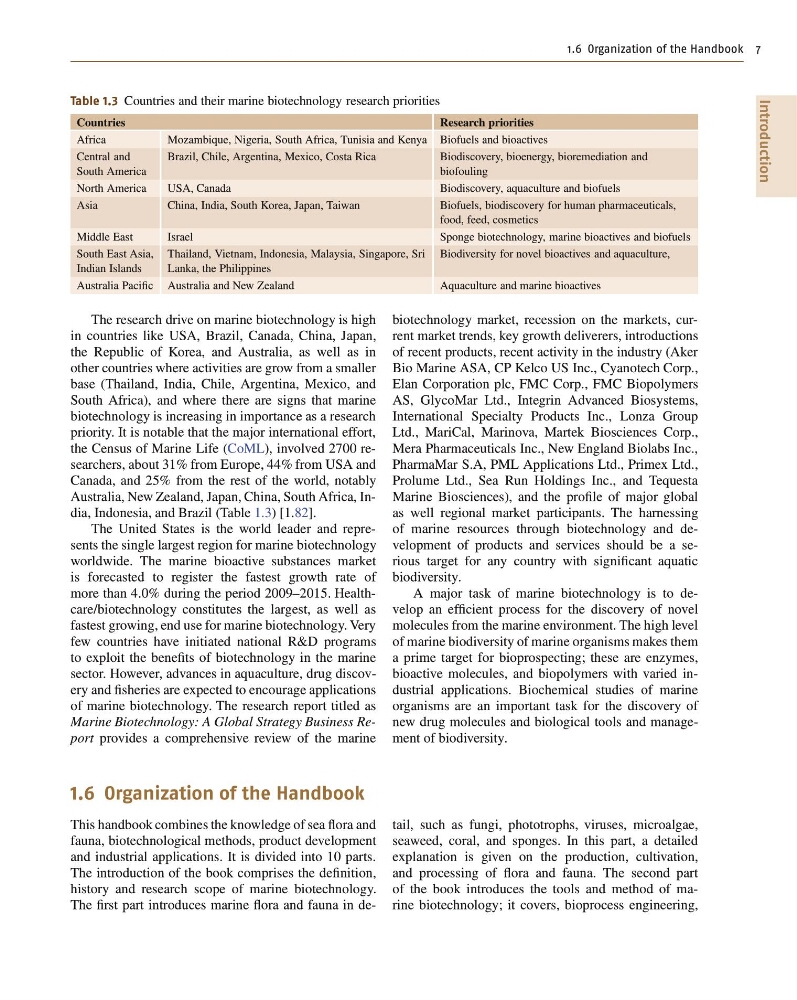
Table 1.3 Countries and their marine biotechnology research priorities
Countries
Research priorities
Africa
Mozambique, Nigeria, South Africa, Tunisia and Kenya Biofuels and bioactives
Central and
South America
Brazil, Chile, Argentina, Mexico, Costa Rica
Biodiscovery, bioenergy, bioremediation and
biofouling
North America
USA, Canada
Biodiscovery, aquaculture and biofuels
Asia
China, India, South Korea, Japan, Taiwan
Biofuels, biodiscovery for human pharmaceuticals,
food, feed, cosmetics
Middle East
Israel
Sponge biotechnology, marine bioactives and biofuels
South East Asia,
Indian Islands
Thailand, Vietnam, Indonesia, Malaysia, Singapore, Sri
Lanka, the Philippines
Biodiversity for novel bioactives and aquaculture,
Australia Pacific Australia and New Zealand
Aquaculture and marine bioactives
The research drive on marine biotechnology is high
in countries like USA, Brazil, Canada, China, Japan,
the Republic of Korea, and Australia, as well as in
other countries where activities are grow from a smaller
base (Thailand, India, Chile, Argentina, Mexico, and
South Africa), and where there are signs that marine
biotechnology is increasing in importance as a research
priority. It is notable that the major international effort,
the Census of Marine Life (CoML), involved 2700 researchers, about 31% from Europe, 44% from USA and
Canada, and 25% from the rest of the world, notably
Australia, New Zealand, Japan, China, South Africa, India, Indonesia, and Brazil (Table 1.3) [1.82].
The United States is the world leader and represents the single largest region for marine biotechnology
worldwide. The marine bioactive substances market
is forecasted to register the fastest growth rate of
more than 4:0% during the period 2009–2015. Healthcare/biotechnology constitutes the largest, as well as
fastest growing, end use for marine biotechnology. Very
few countries have initiated national R&D programs
to exploit the benefits of biotechnology in the marine
sector. However, advances in aquaculture, drug discovery and fisheries are expected to encourage applications
of marine biotechnology. The research report titled as
Marine Biotechnology: A Global Strategy Business Report provides a comprehensive review of the marine
biotechnology market, recession on the markets, current market trends, key growth deliverers, introductions
of recent products, recent activity in the industry (Aker
Bio Marine ASA, CP Kelco US Inc., Cyanotech Corp.,
Elan Corporation plc, FMC Corp., FMC Biopolymers
AS, GlycoMar Ltd., Integrin Advanced Biosystems,
International Specialty Products Inc., Lonza Group
Ltd., MariCal, Marinova, Martek Biosciences Corp.,
Mera Pharmaceuticals Inc., New England Biolabs Inc.,
PharmaMar S.A, PML Applications Ltd., Primex Ltd.,
Prolume Ltd., Sea Run Holdings Inc., and Tequesta
Marine Biosciences), and the profile of major global
as well regional market participants. The harnessing
of marine resources through biotechnology and development of products and services should be a serious target for any country with significant aquatic
biodiversity.
A major task of marine biotechnology is to develop an efficient process for the discovery of novel
molecules from the marine environment. The high level
of marine biodiversity of marine organisms makes them
a prime target for bioprospecting; these are enzymes,
bioactive molecules, and biopolymers with varied industrial applications. Biochemical studies of marine
organisms are an important task for the discovery of
new drug molecules and biological tools and management of biodiversity.
1.6 Organization of the Handbook
This handbook combines the knowledge of sea flora and
fauna, biotechnological methods, product development
and industrial applications. It is divided into 10 parts.
The introduction of the book comprises the definition,
history and research scope of marine biotechnology.
The first part introduces marine flora and fauna in detail, such as fungi, phototrophs, viruses, microalgae,
seaweed, coral, and sponges. In this part, a detailed
explanation is given on the production, cultivation,
and processing of flora and fauna. The second part
of the book introduces the tools and method of marine biotechnology; it covers, bioprocess engineering,
Introduction
Table 1.3 Countries and their marine biotechnology research priorities
Countries
Research priorities
Africa
Mozambique, Nigeria, South Africa, Tunisia and Kenya Biofuels and bioactives
Central and
South America
Brazil, Chile, Argentina, Mexico, Costa Rica
Biodiscovery, bioenergy, bioremediation and
biofouling
North America
USA, Canada
Biodiscovery, aquaculture and biofuels
Asia
China, India, South Korea, Japan, Taiwan
Biofuels, biodiscovery for human pharmaceuticals,
food, feed, cosmetics
Middle East
Israel
Sponge biotechnology, marine bioactives and biofuels
South East Asia,
Indian Islands
Thailand, Vietnam, Indonesia, Malaysia, Singapore, Sri
Lanka, the Philippines
Biodiversity for novel bioactives and aquaculture,
Australia Pacific Australia and New Zealand
Aquaculture and marine bioactives
The research drive on marine biotechnology is high
in countries like USA, Brazil, Canada, China, Japan,
the Republic of Korea, and Australia, as well as in
other countries where activities are grow from a smaller
base (Thailand, India, Chile, Argentina, Mexico, and
South Africa), and where there are signs that marine
biotechnology is increasing in importance as a research
priority. It is notable that the major international effort,
the Census of Marine Life (CoML), involved 2700 researchers, about 31% from Europe, 44% from USA and
Canada, and 25% from the rest of the world, notably
Australia, New Zealand, Japan, China, South Africa, India, Indonesia, and Brazil (Table 1.3) [1.82].
The United States is the world leader and represents the single largest region for marine biotechnology
worldwide. The marine bioactive substances market
is forecasted to register the fastest growth rate of
more than 4:0% during the period 2009–2015. Healthcare/biotechnology constitutes the largest, as well as
fastest growing, end use for marine biotechnology. Very
few countries have initiated national R&D programs
to exploit the benefits of biotechnology in the marine
sector. However, advances in aquaculture, drug discovery and fisheries are expected to encourage applications
of marine biotechnology. The research report titled as
Marine Biotechnology: A Global Strategy Business Report provides a comprehensive review of the marine
biotechnology market, recession on the markets, current market trends, key growth deliverers, introductions
of recent products, recent activity in the industry (Aker
Bio Marine ASA, CP Kelco US Inc., Cyanotech Corp.,
Elan Corporation plc, FMC Corp., FMC Biopolymers
AS, GlycoMar Ltd., Integrin Advanced Biosystems,
International Specialty Products Inc., Lonza Group
Ltd., MariCal, Marinova, Martek Biosciences Corp.,
Mera Pharmaceuticals Inc., New England Biolabs Inc.,
PharmaMar S.A, PML Applications Ltd., Primex Ltd.,
Prolume Ltd., Sea Run Holdings Inc., and Tequesta
Marine Biosciences), and the profile of major global
as well regional market participants. The harnessing
of marine resources through biotechnology and development of products and services should be a serious target for any country with significant aquatic
biodiversity.
A major task of marine biotechnology is to develop an efficient process for the discovery of novel
molecules from the marine environment. The high level
of marine biodiversity of marine organisms makes them
a prime target for bioprospecting; these are enzymes,
bioactive molecules, and biopolymers with varied industrial applications. Biochemical studies of marine
organisms are an important task for the discovery of
new drug molecules and biological tools and management of biodiversity.
1.6 Organization of the Handbook
This handbook combines the knowledge of sea flora and
fauna, biotechnological methods, product development
and industrial applications. It is divided into 10 parts.
The introduction of the book comprises the definition,
history and research scope of marine biotechnology.
The first part introduces marine flora and fauna in detail, such as fungi, phototrophs, viruses, microalgae,
seaweed, coral, and sponges. In this part, a detailed
explanation is given on the production, cultivation,
and processing of flora and fauna. The second part
of the book introduces the tools and method of marine biotechnology; it covers, bioprocess engineering,