

Marine Enzymes – Production and Applications 14.5 Downstream Processing of Marine Enzymes 423
Part B | 14.5
Fermentation broth
Cell separation
Cell disintegration
Removal of cell debris
Primary separation
Purification
Polishing
Packaging
Intracellular product
Supernatant
(containing extracellular enzyme)
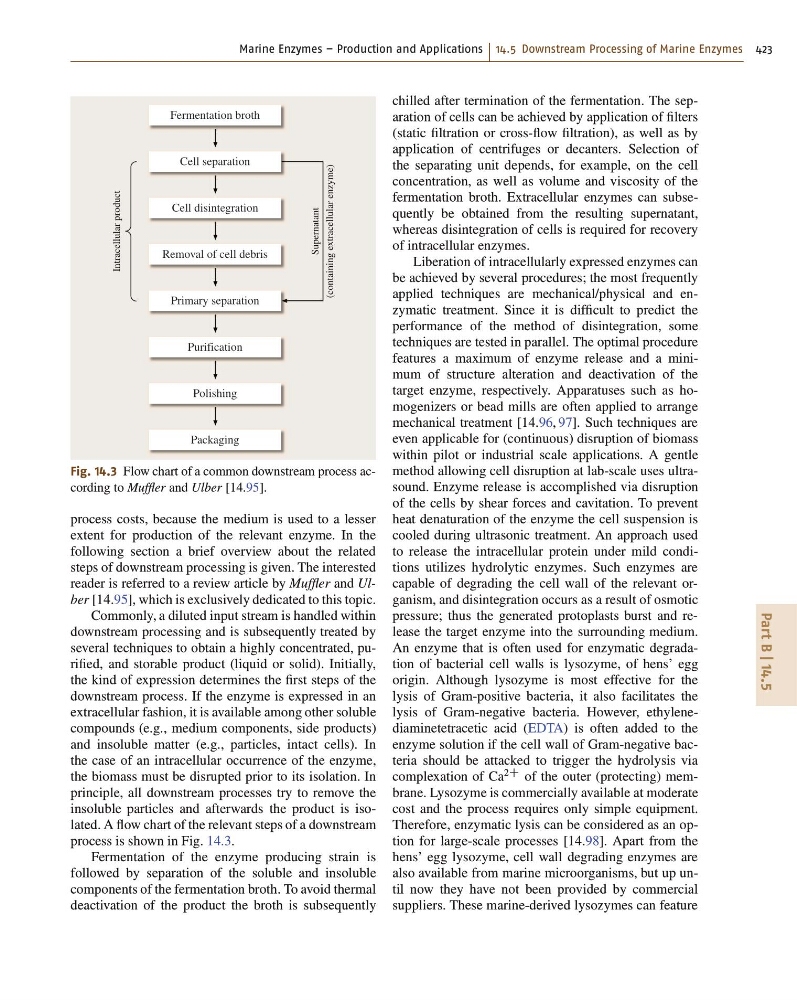
Fig. 14.3 Flow chart of a common downstream process according to Muffler and Ulber [14.95].
process costs, because the medium is used to a lesser
extent for production of the relevant enzyme. In the
following section a brief overview about the related
steps of downstream processing is given. The interested
reader is referred to a review article by Muffler and Ulber [14.95], which is exclusively dedicated to this topic.
Commonly, a diluted input stream is handled within
downstream processing and is subsequently treated by
several techniques to obtain a highly concentrated, purified, and storable product (liquid or solid). Initially,
the kind of expression determines the first steps of the
downstream process. If the enzyme is expressed in an
extracellular fashion, it is available among other soluble
compounds (e.g., medium components, side products)
and insoluble matter (e.g., particles, intact cells). In
the case of an intracellular occurrence of the enzyme,
the biomass must be disrupted prior to its isolation. In
principle, all downstream processes try to remove the
insoluble particles and afterwards the product is isolated. A flow chart of the relevant steps of a downstream
process is shown in Fig. 14.3.
Fermentation of the enzyme producing strain is
followed by separation of the soluble and insoluble
components of the fermentation broth. To avoid thermal
deactivation of the product the broth is subsequently
chilled after termination of the fermentation. The separation of cells can be achieved by application of filters
(static filtration or cross-flow filtration), as well as by
application of centrifuges or decanters. Selection of
the separating unit depends, for example, on the cell
concentration, as well as volume and viscosity of the
fermentation broth. Extracellular enzymes can subsequently be obtained from the resulting supernatant,
whereas disintegration of cells is required for recovery
of intracellular enzymes.
Liberation of intracellularly expressed enzymes can
be achieved by several procedures; the most frequently
applied techniques are mechanical/physical and enzymatic treatment. Since it is difficult to predict the
performance of the method of disintegration, some
techniques are tested in parallel. The optimal procedure
features a maximum of enzyme release and a minimum of structure alteration and deactivation of the
target enzyme, respectively. Apparatuses such as homogenizers or bead mills are often applied to arrange
mechanical treatment [14.96, 97]. Such techniques are
even applicable for (continuous) disruption of biomass
within pilot or industrial scale applications. A gentle
method allowing cell disruption at lab-scale uses ultrasound. Enzyme release is accomplished via disruption
of the cells by shear forces and cavitation. To prevent
heat denaturation of the enzyme the cell suspension is
cooled during ultrasonic treatment. An approach used
to release the intracellular protein under mild conditions utilizes hydrolytic enzymes. Such enzymes are
capable of degrading the cell wall of the relevant organism, and disintegration occurs as a result of osmotic
pressure; thus the generated protoplasts burst and release the target enzyme into the surrounding medium.
An enzyme that is often used for enzymatic degradation of bacterial cell walls is lysozyme, of hens’ egg
origin. Although lysozyme is most effective for the
lysis of Gram-positive bacteria, it also facilitates the
lysis of Gram-negative bacteria. However, ethylenediaminetetracetic acid (EDTA) is often added to the
enzyme solution if the cell wall of Gram-negative bacteria should be attacked to trigger the hydrolysis via
complexation of Ca
2C of the outer (protecting) membrane. Lysozyme is commercially available at moderate
cost and the process requires only simple equipment.
Therefore, enzymatic lysis can be considered as an option for large-scale processes [14.98]. Apart from the
hens’ egg lysozyme, cell wall degrading enzymes are
also available from marine microorganisms, but up until now they have not been provided by commercial
suppliers. These marine-derived lysozymes can feature
Part B | 14.5
Fermentation broth
Cell separation
Cell disintegration
Removal of cell debris
Primary separation
Purification
Polishing
Packaging
Intracellular product
Supernatant
(containing extracellular enzyme)
Fig. 14.3 Flow chart of a common downstream process according to Muffler and Ulber [14.95].
process costs, because the medium is used to a lesser
extent for production of the relevant enzyme. In the
following section a brief overview about the related
steps of downstream processing is given. The interested
reader is referred to a review article by Muffler and Ulber [14.95], which is exclusively dedicated to this topic.
Commonly, a diluted input stream is handled within
downstream processing and is subsequently treated by
several techniques to obtain a highly concentrated, purified, and storable product (liquid or solid). Initially,
the kind of expression determines the first steps of the
downstream process. If the enzyme is expressed in an
extracellular fashion, it is available among other soluble
compounds (e.g., medium components, side products)
and insoluble matter (e.g., particles, intact cells). In
the case of an intracellular occurrence of the enzyme,
the biomass must be disrupted prior to its isolation. In
principle, all downstream processes try to remove the
insoluble particles and afterwards the product is isolated. A flow chart of the relevant steps of a downstream
process is shown in Fig. 14.3.
Fermentation of the enzyme producing strain is
followed by separation of the soluble and insoluble
components of the fermentation broth. To avoid thermal
deactivation of the product the broth is subsequently
chilled after termination of the fermentation. The separation of cells can be achieved by application of filters
(static filtration or cross-flow filtration), as well as by
application of centrifuges or decanters. Selection of
the separating unit depends, for example, on the cell
concentration, as well as volume and viscosity of the
fermentation broth. Extracellular enzymes can subsequently be obtained from the resulting supernatant,
whereas disintegration of cells is required for recovery
of intracellular enzymes.
Liberation of intracellularly expressed enzymes can
be achieved by several procedures; the most frequently
applied techniques are mechanical/physical and enzymatic treatment. Since it is difficult to predict the
performance of the method of disintegration, some
techniques are tested in parallel. The optimal procedure
features a maximum of enzyme release and a minimum of structure alteration and deactivation of the
target enzyme, respectively. Apparatuses such as homogenizers or bead mills are often applied to arrange
mechanical treatment [14.96, 97]. Such techniques are
even applicable for (continuous) disruption of biomass
within pilot or industrial scale applications. A gentle
method allowing cell disruption at lab-scale uses ultrasound. Enzyme release is accomplished via disruption
of the cells by shear forces and cavitation. To prevent
heat denaturation of the enzyme the cell suspension is
cooled during ultrasonic treatment. An approach used
to release the intracellular protein under mild conditions utilizes hydrolytic enzymes. Such enzymes are
capable of degrading the cell wall of the relevant organism, and disintegration occurs as a result of osmotic
pressure; thus the generated protoplasts burst and release the target enzyme into the surrounding medium.
An enzyme that is often used for enzymatic degradation of bacterial cell walls is lysozyme, of hens’ egg
origin. Although lysozyme is most effective for the
lysis of Gram-positive bacteria, it also facilitates the
lysis of Gram-negative bacteria. However, ethylenediaminetetracetic acid (EDTA) is often added to the
enzyme solution if the cell wall of Gram-negative bacteria should be attacked to trigger the hydrolysis via
complexation of Ca
2C of the outer (protecting) membrane. Lysozyme is commercially available at moderate
cost and the process requires only simple equipment.
Therefore, enzymatic lysis can be considered as an option for large-scale processes [14.98]. Apart from the
hens’ egg lysozyme, cell wall degrading enzymes are
also available from marine microorganisms, but up until now they have not been provided by commercial
suppliers. These marine-derived lysozymes can feature