

Part B | 11.3
312 Part B Tools and Methods in Marine Biotechnology
Environmental sample
Enrichment - SIP
FISH
Community structure
(diversity, composition)
Phylogenetic identification
quantification,
spatial information
Metabolic potential
Phylogenetic/functional
information
qPCR
Quantification of functional guilds
Identification of suitable
sites for bioprospection
Environmental biotechnology
(e.g. site assessment and monitoring,
wastewater treatment)
Omics
Genes and pathways
expression /
heterologous expression
Bioproducts
Targeted culture
16S rRNA
amplicon pyrosequencing
PCR of
functional genes
2937372
2942372
2947372
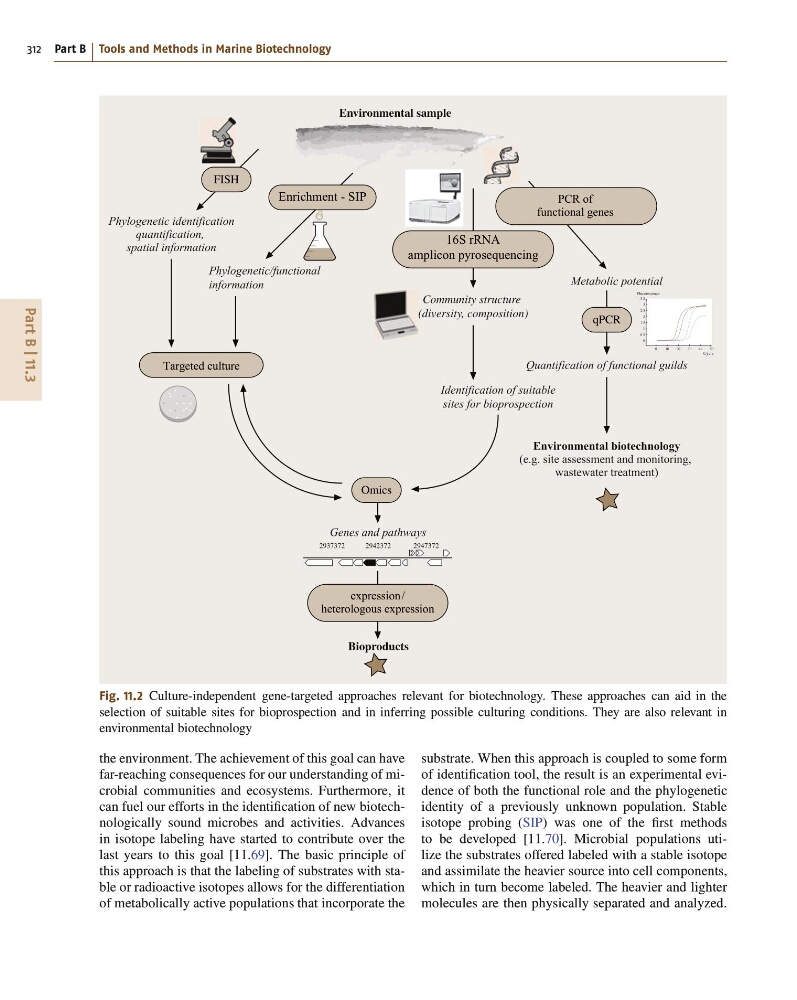
Fig. 11.2 Culture-independent gene-targeted approaches relevant for biotechnology. These approaches can aid in the
selection of suitable sites for bioprospection and in inferring possible culturing conditions. They are also relevant in
environmental biotechnology
the environment. The achievement of this goal can have
far-reaching consequences for our understanding of microbial communities and ecosystems. Furthermore, it
can fuel our efforts in the identification of new biotechnologically sound microbes and activities. Advances
in isotope labeling have started to contribute over the
last years to this goal [11.69]. The basic principle of
this approach is that the labeling of substrates with stable or radioactive isotopes allows for the differentiation
of metabolically active populations that incorporate the
substrate. When this approach is coupled to some form
of identification tool, the result is an experimental evidence of both the functional role and the phylogenetic
identity of a previously unknown population. Stable
isotope probing (SIP) was one of the first methods
to be developed [11.70]. Microbial populations utilize the substrates offered labeled with a stable isotope
and assimilate the heavier source into cell components,
which in turn become labeled. The heavier and lighter
molecules are then physically separated and analyzed.
312 Part B Tools and Methods in Marine Biotechnology
Environmental sample
Enrichment - SIP
FISH
Community structure
(diversity, composition)
Phylogenetic identification
quantification,
spatial information
Metabolic potential
Phylogenetic/functional
information
qPCR
Quantification of functional guilds
Identification of suitable
sites for bioprospection
Environmental biotechnology
(e.g. site assessment and monitoring,
wastewater treatment)
Omics
Genes and pathways
expression /
heterologous expression
Bioproducts
Targeted culture
16S rRNA
amplicon pyrosequencing
PCR of
functional genes
2937372
2942372
2947372
Fig. 11.2 Culture-independent gene-targeted approaches relevant for biotechnology. These approaches can aid in the
selection of suitable sites for bioprospection and in inferring possible culturing conditions. They are also relevant in
environmental biotechnology
the environment. The achievement of this goal can have
far-reaching consequences for our understanding of microbial communities and ecosystems. Furthermore, it
can fuel our efforts in the identification of new biotechnologically sound microbes and activities. Advances
in isotope labeling have started to contribute over the
last years to this goal [11.69]. The basic principle of
this approach is that the labeling of substrates with stable or radioactive isotopes allows for the differentiation
of metabolically active populations that incorporate the
substrate. When this approach is coupled to some form
of identification tool, the result is an experimental evidence of both the functional role and the phylogenetic
identity of a previously unknown population. Stable
isotope probing (SIP) was one of the first methods
to be developed [11.70]. Microbial populations utilize the substrates offered labeled with a stable isotope
and assimilate the heavier source into cell components,
which in turn become labeled. The heavier and lighter
molecules are then physically separated and analyzed.