

Part B | 11.3
310 Part B Tools and Methods in Marine Biotechnology
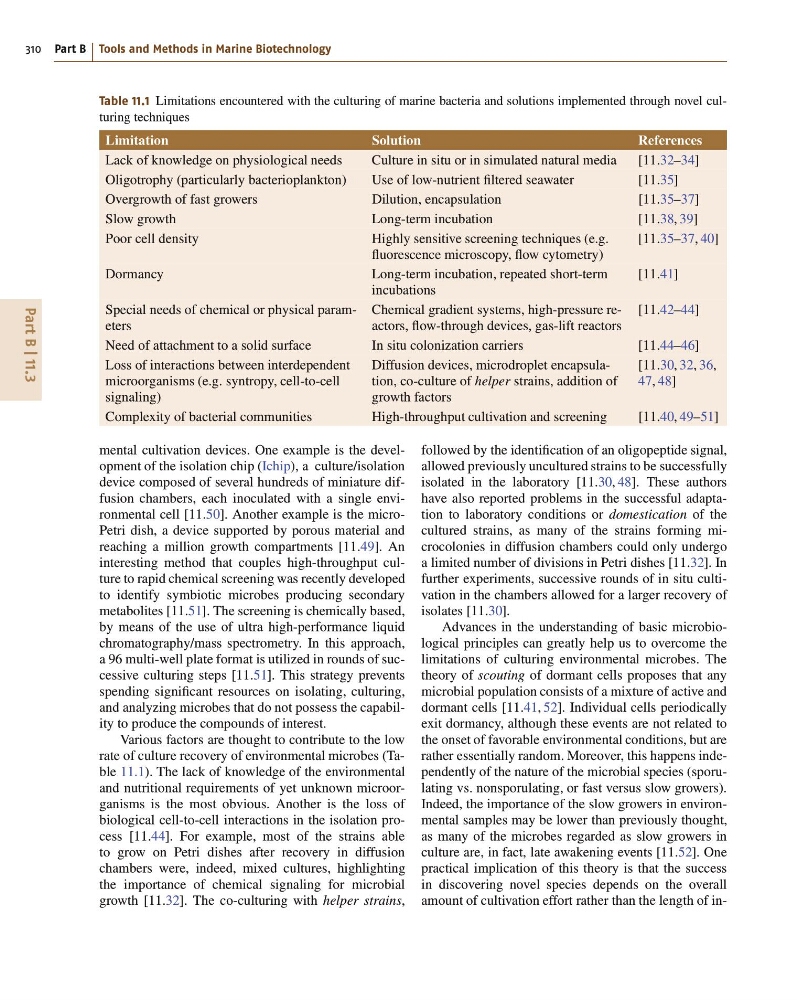
Table 11.1 Limitations encountered with the culturing of marine bacteria and solutions implemented through novel culturing techniques
Limitation
Solution
References
Lack of knowledge on physiological needs
Culture in situ or in simulated natural media
[11.32–34]
Oligotrophy (particularly bacterioplankton)
Use of low-nutrient filtered seawater
[11.35]
Overgrowth of fast growers
Dilution, encapsulation
[11.35–37]
Slow growth
Long-term incubation
[11.38, 39]
Poor cell density
Highly sensitive screening techniques (e.g.
fluorescence microscopy, flow cytometry)
[11.35–37, 40]
Dormancy
Long-term incubation, repeated short-term
incubations
[11.41]
Special needs of chemical or physical parameters
Chemical gradient systems, high-pressure reactors, flow-through devices, gas-lift reactors
[11.42–44]
Need of attachment to a solid surface
In situ colonization carriers
[11.44–46]
Loss of interactions between interdependent
microorganisms (e.g. syntropy, cell-to-cell
signaling)
Diffusion devices, microdroplet encapsulation, co-culture of helper strains, addition of
growth factors
[11.30, 32, 36,
47, 48]
Complexity of bacterial communities
High-throughput cultivation and screening
[11.40, 49–51]
mental cultivation devices. One example is the development of the isolation chip (Ichip), a culture/isolation
device composed of several hundreds of miniature diffusion chambers, each inoculated with a single environmental cell [11.50]. Another example is the microPetri dish, a device supported by porous material and
reaching a million growth compartments [11.49]. An
interesting method that couples high-throughput culture to rapid chemical screening was recently developed
to identify symbiotic microbes producing secondary
metabolites [11.51]. The screening is chemically based,
by means of the use of ultra high-performance liquid
chromatography/mass spectrometry. In this approach,
a 96 multi-well plate format is utilized in rounds of successive culturing steps [11.51]. This strategy prevents
spending significant resources on isolating, culturing,
and analyzing microbes that do not possess the capability to produce the compounds of interest.
Various factors are thought to contribute to the low
rate of culture recovery of environmental microbes (Table 11.1). The lack of knowledge of the environmental
and nutritional requirements of yet unknown microorganisms is the most obvious. Another is the loss of
biological cell-to-cell interactions in the isolation process [11.44]. For example, most of the strains able
to grow on Petri dishes after recovery in diffusion
chambers were, indeed, mixed cultures, highlighting
the importance of chemical signaling for microbial
growth [11.32]. The co-culturing with helper strains,
followed by the identification of an oligopeptide signal,
allowed previously uncultured strains to be successfully
isolated in the laboratory [11.30, 48]. These authors
have also reported problems in the successful adaptation to laboratory conditions or domestication of the
cultured strains, as many of the strains forming microcolonies in diffusion chambers could only undergo
a limited number of divisions in Petri dishes [11.32]. In
further experiments, successive rounds of in situ cultivation in the chambers allowed for a larger recovery of
isolates [11.30].
Advances in the understanding of basic microbiological principles can greatly help us to overcome the
limitations of culturing environmental microbes. The
theory of scouting of dormant cells proposes that any
microbial population consists of a mixture of active and
dormant cells [11.41, 52]. Individual cells periodically
exit dormancy, although these events are not related to
the onset of favorable environmental conditions, but are
rather essentially random. Moreover, this happens independently of the nature of the microbial species (sporulating vs. nonsporulating, or fast versus slow growers).
Indeed, the importance of the slow growers in environmental samples may be lower than previously thought,
as many of the microbes regarded as slow growers in
culture are, in fact, late awakening events [11.52]. One
practical implication of this theory is that the success
in discovering novel species depends on the overall
amount of cultivation effort rather than the length of in-
310 Part B Tools and Methods in Marine Biotechnology
Table 11.1 Limitations encountered with the culturing of marine bacteria and solutions implemented through novel culturing techniques
Limitation
Solution
References
Lack of knowledge on physiological needs
Culture in situ or in simulated natural media
[11.32–34]
Oligotrophy (particularly bacterioplankton)
Use of low-nutrient filtered seawater
[11.35]
Overgrowth of fast growers
Dilution, encapsulation
[11.35–37]
Slow growth
Long-term incubation
[11.38, 39]
Poor cell density
Highly sensitive screening techniques (e.g.
fluorescence microscopy, flow cytometry)
[11.35–37, 40]
Dormancy
Long-term incubation, repeated short-term
incubations
[11.41]
Special needs of chemical or physical parameters
Chemical gradient systems, high-pressure reactors, flow-through devices, gas-lift reactors
[11.42–44]
Need of attachment to a solid surface
In situ colonization carriers
[11.44–46]
Loss of interactions between interdependent
microorganisms (e.g. syntropy, cell-to-cell
signaling)
Diffusion devices, microdroplet encapsulation, co-culture of helper strains, addition of
growth factors
[11.30, 32, 36,
47, 48]
Complexity of bacterial communities
High-throughput cultivation and screening
[11.40, 49–51]
mental cultivation devices. One example is the development of the isolation chip (Ichip), a culture/isolation
device composed of several hundreds of miniature diffusion chambers, each inoculated with a single environmental cell [11.50]. Another example is the microPetri dish, a device supported by porous material and
reaching a million growth compartments [11.49]. An
interesting method that couples high-throughput culture to rapid chemical screening was recently developed
to identify symbiotic microbes producing secondary
metabolites [11.51]. The screening is chemically based,
by means of the use of ultra high-performance liquid
chromatography/mass spectrometry. In this approach,
a 96 multi-well plate format is utilized in rounds of successive culturing steps [11.51]. This strategy prevents
spending significant resources on isolating, culturing,
and analyzing microbes that do not possess the capability to produce the compounds of interest.
Various factors are thought to contribute to the low
rate of culture recovery of environmental microbes (Table 11.1). The lack of knowledge of the environmental
and nutritional requirements of yet unknown microorganisms is the most obvious. Another is the loss of
biological cell-to-cell interactions in the isolation process [11.44]. For example, most of the strains able
to grow on Petri dishes after recovery in diffusion
chambers were, indeed, mixed cultures, highlighting
the importance of chemical signaling for microbial
growth [11.32]. The co-culturing with helper strains,
followed by the identification of an oligopeptide signal,
allowed previously uncultured strains to be successfully
isolated in the laboratory [11.30, 48]. These authors
have also reported problems in the successful adaptation to laboratory conditions or domestication of the
cultured strains, as many of the strains forming microcolonies in diffusion chambers could only undergo
a limited number of divisions in Petri dishes [11.32]. In
further experiments, successive rounds of in situ cultivation in the chambers allowed for a larger recovery of
isolates [11.30].
Advances in the understanding of basic microbiological principles can greatly help us to overcome the
limitations of culturing environmental microbes. The
theory of scouting of dormant cells proposes that any
microbial population consists of a mixture of active and
dormant cells [11.41, 52]. Individual cells periodically
exit dormancy, although these events are not related to
the onset of favorable environmental conditions, but are
rather essentially random. Moreover, this happens independently of the nature of the microbial species (sporulating vs. nonsporulating, or fast versus slow growers).
Indeed, the importance of the slow growers in environmental samples may be lower than previously thought,
as many of the microbes regarded as slow growers in
culture are, in fact, late awakening events [11.52]. One
practical implication of this theory is that the success
in discovering novel species depends on the overall
amount of cultivation effort rather than the length of in-