

Part A | 8.6
240 Part A Marine Flora and Fauna
WH009pksB8
WH009pksC7
WH009pksB11
AEH57203 polyketide synthase Prochloron didemni P1-Palau
AAX44134 polyketide sythase Planktothrix agardhii
AAS98784 JamM Lyngbya majuscula
ADA69241 cis-AT polyketide synthase Nostoc sp. Peltigera membranacea cyanobiont
AAW55356 polyketide synthase ketosynthase domain Gloeothece membranacea PCC 6501
WH009pksD2
WH009pksD5
AAX44127 polyketide sythase Anabaena variabilis ATCC 29413
gi|390438436|ref|ZP 10226901.1| Beta-ketoacyl synthase Microcystis sp. T1-4
ACC99565 type I polyketide synthase uncultured bacterium
ZP 06414074 Methyltransferase type 11 Frankia sp. EUN1f
62
100
70
100
100
88
54
45
56
96
100
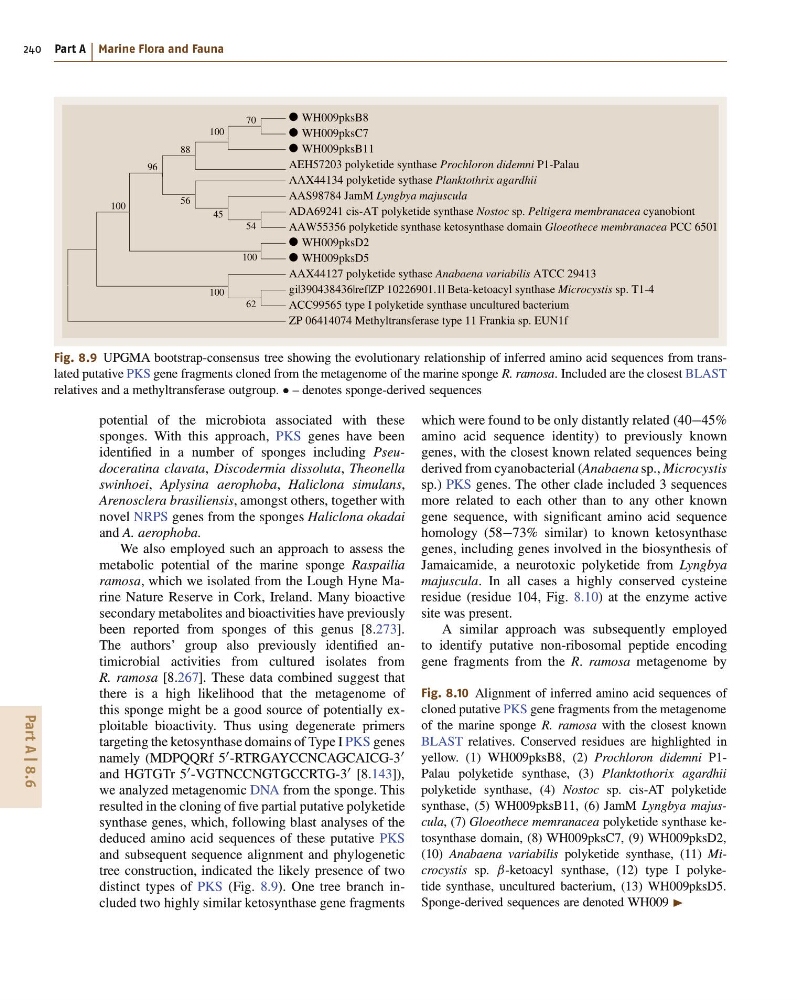
Fig. 8.9 UPGMA bootstrap-consensus tree showing the evolutionary relationship of inferred amino acid sequences from translated putative PKS gene fragments cloned from the metagenome of the marine sponge R. ramosa. Included are the closest BLAST
relatives and a methyltransferase outgroup. – denotes sponge-derived sequences
potential of the microbiota associated with these
sponges. With this approach, PKS genes have been
identified in a number of sponges including Pseudoceratina clavata, Discodermia dissoluta, Theonella
swinhoei, Aplysina aerophoba, Haliclona simulans,
Arenosclera brasiliensis, amongst others, together with
novel NRPS genes from the sponges Haliclona okadai
and A. aerophoba.
We also employed such an approach to assess the
metabolic potential of the marine sponge Raspailia
ramosa, which we isolated from the Lough Hyne Marine Nature Reserve in Cork, Ireland. Many bioactive
secondary metabolites and bioactivities have previously
been reported from sponges of this genus [8.273].
The authors’ group also previously identified antimicrobial activities from cultured isolates from
R. ramosa [8.267]. These data combined suggest that
there is a high likelihood that the metagenome of
this sponge might be a good source of potentially exploitable bioactivity. Thus using degenerate primers
targeting the ketosynthase domains of Type I PKS genes
namely (MDPQQRf 5
0 -RTRGAYCCNCAGCAICG-3
0
and HGTGTr 5
0 -VGTNCCNGTGCCRTG-3
0 [8.143]),
we analyzed metagenomic DNA from the sponge. This
resulted in the cloning of five partial putative polyketide
synthase genes, which, following blast analyses of the
deduced amino acid sequences of these putative PKS
and subsequent sequence alignment and phylogenetic
tree construction, indicated the likely presence of two
distinct types of PKS (Fig. 8.9). One tree branch included two highly similar ketosynthase gene fragments
which were found to be only distantly related (4045%
amino acid sequence identity) to previously known
genes, with the closest known related sequences being
derived from cyanobacterial (Anabaena sp., Microcystis
sp.) PKS genes. The other clade included 3 sequences
more related to each other than to any other known
gene sequence, with significant amino acid sequence
homology (5873% similar) to known ketosynthase
genes, including genes involved in the biosynthesis of
Jamaicamide, a neurotoxic polyketide from Lyngbya
majuscula. In all cases a highly conserved cysteine
residue (residue 104, Fig. 8.10) at the enzyme active
site was present.
A similar approach was subsequently employed
to identify putative non-ribosomal peptide encoding
gene fragments from the R. ramosa metagenome by
Fig. 8.10 Alignment of inferred amino acid sequences of
cloned putative PKS gene fragments from the metagenome
of the marine sponge R. ramosa with the closest known
BLAST relatives. Conserved residues are highlighted in
yellow. (1) WH009pksB8, (2) Prochloron didemni P1Palau polyketide synthase, (3) Planktothorix agardhii
polyketide synthase, (4) Nostoc sp. cis-AT polyketide
synthase, (5) WH009pksB11, (6) JamM Lyngbya majuscula, (7) Gloeothece memranacea polyketide synthase ketosynthase domain, (8) WH009pksC7, (9) WH009pksD2,
(10) Anabaena variabilis polyketide synthase, (11) Microcystis sp. ˇ-ketoacyl synthase, (12) type I polyketide synthase, uncultured bacterium, (13) WH009pksD5.
Sponge-derived sequences are denoted WH009 I
240 Part A Marine Flora and Fauna
WH009pksB8
WH009pksC7
WH009pksB11
AEH57203 polyketide synthase Prochloron didemni P1-Palau
AAX44134 polyketide sythase Planktothrix agardhii
AAS98784 JamM Lyngbya majuscula
ADA69241 cis-AT polyketide synthase Nostoc sp. Peltigera membranacea cyanobiont
AAW55356 polyketide synthase ketosynthase domain Gloeothece membranacea PCC 6501
WH009pksD2
WH009pksD5
AAX44127 polyketide sythase Anabaena variabilis ATCC 29413
gi|390438436|ref|ZP 10226901.1| Beta-ketoacyl synthase Microcystis sp. T1-4
ACC99565 type I polyketide synthase uncultured bacterium
ZP 06414074 Methyltransferase type 11 Frankia sp. EUN1f
62
100
70
100
100
88
54
45
56
96
100
Fig. 8.9 UPGMA bootstrap-consensus tree showing the evolutionary relationship of inferred amino acid sequences from translated putative PKS gene fragments cloned from the metagenome of the marine sponge R. ramosa. Included are the closest BLAST
relatives and a methyltransferase outgroup. – denotes sponge-derived sequences
potential of the microbiota associated with these
sponges. With this approach, PKS genes have been
identified in a number of sponges including Pseudoceratina clavata, Discodermia dissoluta, Theonella
swinhoei, Aplysina aerophoba, Haliclona simulans,
Arenosclera brasiliensis, amongst others, together with
novel NRPS genes from the sponges Haliclona okadai
and A. aerophoba.
We also employed such an approach to assess the
metabolic potential of the marine sponge Raspailia
ramosa, which we isolated from the Lough Hyne Marine Nature Reserve in Cork, Ireland. Many bioactive
secondary metabolites and bioactivities have previously
been reported from sponges of this genus [8.273].
The authors’ group also previously identified antimicrobial activities from cultured isolates from
R. ramosa [8.267]. These data combined suggest that
there is a high likelihood that the metagenome of
this sponge might be a good source of potentially exploitable bioactivity. Thus using degenerate primers
targeting the ketosynthase domains of Type I PKS genes
namely (MDPQQRf 5
0 -RTRGAYCCNCAGCAICG-3
0
and HGTGTr 5
0 -VGTNCCNGTGCCRTG-3
0 [8.143]),
we analyzed metagenomic DNA from the sponge. This
resulted in the cloning of five partial putative polyketide
synthase genes, which, following blast analyses of the
deduced amino acid sequences of these putative PKS
and subsequent sequence alignment and phylogenetic
tree construction, indicated the likely presence of two
distinct types of PKS (Fig. 8.9). One tree branch included two highly similar ketosynthase gene fragments
which were found to be only distantly related (4045%
amino acid sequence identity) to previously known
genes, with the closest known related sequences being
derived from cyanobacterial (Anabaena sp., Microcystis
sp.) PKS genes. The other clade included 3 sequences
more related to each other than to any other known
gene sequence, with significant amino acid sequence
homology (5873% similar) to known ketosynthase
genes, including genes involved in the biosynthesis of
Jamaicamide, a neurotoxic polyketide from Lyngbya
majuscula. In all cases a highly conserved cysteine
residue (residue 104, Fig. 8.10) at the enzyme active
site was present.
A similar approach was subsequently employed
to identify putative non-ribosomal peptide encoding
gene fragments from the R. ramosa metagenome by
Fig. 8.10 Alignment of inferred amino acid sequences of
cloned putative PKS gene fragments from the metagenome
of the marine sponge R. ramosa with the closest known
BLAST relatives. Conserved residues are highlighted in
yellow. (1) WH009pksB8, (2) Prochloron didemni P1Palau polyketide synthase, (3) Planktothorix agardhii
polyketide synthase, (4) Nostoc sp. cis-AT polyketide
synthase, (5) WH009pksB11, (6) JamM Lyngbya majuscula, (7) Gloeothece memranacea polyketide synthase ketosynthase domain, (8) WH009pksC7, (9) WH009pksD2,
(10) Anabaena variabilis polyketide synthase, (11) Microcystis sp. ˇ-ketoacyl synthase, (12) type I polyketide synthase, uncultured bacterium, (13) WH009pksD5.
Sponge-derived sequences are denoted WH009 I