

Part A | 7.2
186 Part A Marine Flora and Fauna
O
O
Pseudopterosin A
OH
HO
HO
HO
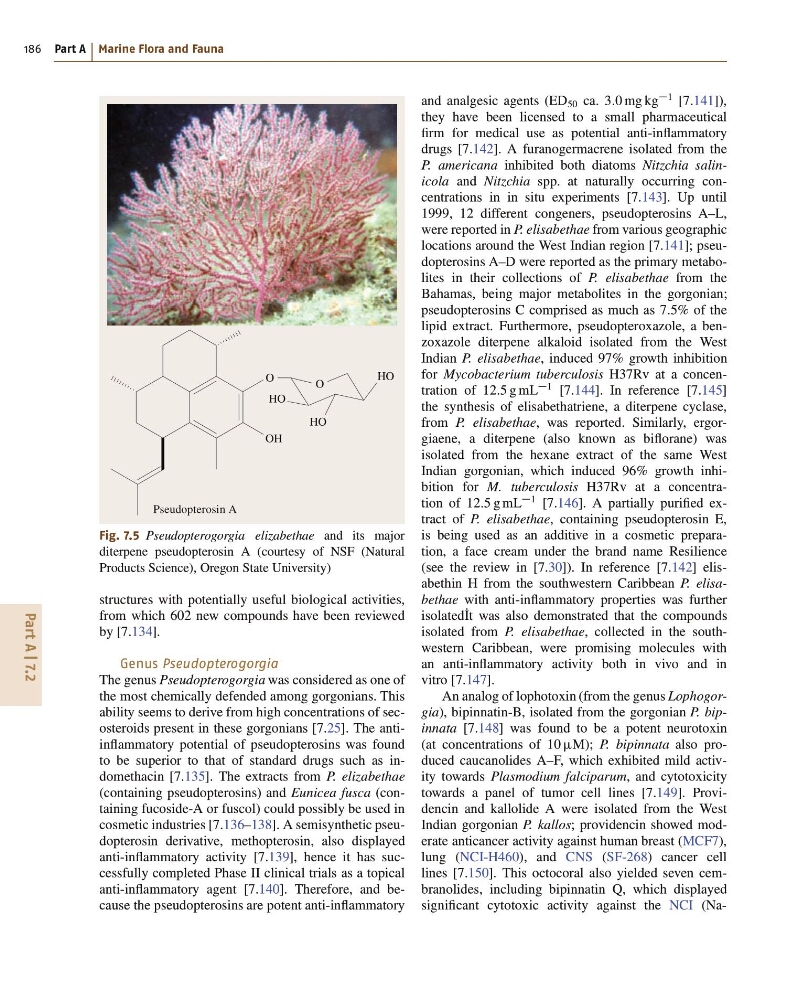
Fig. 7.5 Pseudopterogorgia elizabethae and its major
diterpene pseudopterosin A (courtesy of NSF (Natural
Products Science), Oregon State University)
structures with potentially useful biological activities,
from which 602 new compounds have been reviewed
by [7.134].
Genus Pseudopterogorgia
The genus Pseudopterogorgia was considered as one of
the most chemically defended among gorgonians. This
ability seems to derive from high concentrations of secosteroids present in these gorgonians [7.25]. The antiinflammatory potential of pseudopterosins was found
to be superior to that of standard drugs such as indomethacin [7.135]. The extracts from P. elizabethae
(containing pseudopterosins) and Eunicea fusca (containing fucoside-A or fuscol) could possibly be used in
cosmetic industries [7.136–138]. A semisynthetic pseudopterosin derivative, methopterosin, also displayed
anti-inflammatory activity [7.139], hence it has successfully completed Phase II clinical trials as a topical
anti-inflammatory agent [7.140]. Therefore, and because the pseudopterosins are potent anti-inflammatory
and analgesic agents (ED 50 ca. 3:0 mg kg
1 [7.141]),
they have been licensed to a small pharmaceutical
firm for medical use as potential anti-inflammatory
drugs [7.142]. A furanogermacrene isolated from the
P. americana inhibited both diatoms Nitzchia salinicola and Nitzchia spp. at naturally occurring concentrations in in situ experiments [7.143]. Up until
1999, 12 different congeners, pseudopterosins A–L,
were reported in P. elisabethae from various geographic
locations around the West Indian region [7.141]; pseudopterosins A–D were reported as the primary metabolites in their collections of P. elisabethae from the
Bahamas, being major metabolites in the gorgonian;
pseudopterosins C comprised as much as 7:5% of the
lipid extract. Furthermore, pseudopteroxazole, a benzoxazole diterpene alkaloid isolated from the West
Indian P. elisabethae, induced 97% growth inhibition
for Mycobacterium tuberculosis H37Rv at a concentration of 12:5 g mL
1 [7.144]. In reference [7.145]
the synthesis of elisabethatriene, a diterpene cyclase,
from P. elisabethae, was reported. Similarly, ergorgiaene, a diterpene (also known as biflorane) was
isolated from the hexane extract of the same West
Indian gorgonian, which induced 96% growth inhibition for M. tuberculosis H37Rv at a concentration of 12:5 g mL
1 [7.146]. A partially purified extract of P. elisabethae, containing pseudopterosin E,
is being used as an additive in a cosmetic preparation, a face cream under the brand name Resilience
(see the review in [7.30]). In reference [7.142] elisabethin H from the southwestern Caribbean P. elisabethae with anti-inflammatory properties was further
isolated ˙ It was also demonstrated that the compounds
isolated from P. elisabethae, collected in the southwestern Caribbean, were promising molecules with
an anti-inflammatory activity both in vivo and in
vitro [7.147].
An analog of lophotoxin (from the genus Lophogorgia), bipinnatin-B, isolated from the gorgonian P. bipinnata [7.148] was found to be a potent neurotoxin
(at concentrations of 10 M); P. bipinnata also produced caucanolides A–F, which exhibited mild activity towards Plasmodium falciparum, and cytotoxicity
towards a panel of tumor cell lines [7.149]. Providencin and kallolide A were isolated from the West
Indian gorgonian P. kallos; providencin showed moderate anticancer activity against human breast (MCF7),
lung (NCI-H460), and CNS (SF-268) cancer cell
lines [7.150]. This octocoral also yielded seven cembranolides, including bipinnatin Q, which displayed
significant cytotoxic activity against the NCI (Na-
186 Part A Marine Flora and Fauna
O
O
Pseudopterosin A
OH
HO
HO
HO
Fig. 7.5 Pseudopterogorgia elizabethae and its major
diterpene pseudopterosin A (courtesy of NSF (Natural
Products Science), Oregon State University)
structures with potentially useful biological activities,
from which 602 new compounds have been reviewed
by [7.134].
Genus Pseudopterogorgia
The genus Pseudopterogorgia was considered as one of
the most chemically defended among gorgonians. This
ability seems to derive from high concentrations of secosteroids present in these gorgonians [7.25]. The antiinflammatory potential of pseudopterosins was found
to be superior to that of standard drugs such as indomethacin [7.135]. The extracts from P. elizabethae
(containing pseudopterosins) and Eunicea fusca (containing fucoside-A or fuscol) could possibly be used in
cosmetic industries [7.136–138]. A semisynthetic pseudopterosin derivative, methopterosin, also displayed
anti-inflammatory activity [7.139], hence it has successfully completed Phase II clinical trials as a topical
anti-inflammatory agent [7.140]. Therefore, and because the pseudopterosins are potent anti-inflammatory
and analgesic agents (ED 50 ca. 3:0 mg kg
1 [7.141]),
they have been licensed to a small pharmaceutical
firm for medical use as potential anti-inflammatory
drugs [7.142]. A furanogermacrene isolated from the
P. americana inhibited both diatoms Nitzchia salinicola and Nitzchia spp. at naturally occurring concentrations in in situ experiments [7.143]. Up until
1999, 12 different congeners, pseudopterosins A–L,
were reported in P. elisabethae from various geographic
locations around the West Indian region [7.141]; pseudopterosins A–D were reported as the primary metabolites in their collections of P. elisabethae from the
Bahamas, being major metabolites in the gorgonian;
pseudopterosins C comprised as much as 7:5% of the
lipid extract. Furthermore, pseudopteroxazole, a benzoxazole diterpene alkaloid isolated from the West
Indian P. elisabethae, induced 97% growth inhibition
for Mycobacterium tuberculosis H37Rv at a concentration of 12:5 g mL
1 [7.144]. In reference [7.145]
the synthesis of elisabethatriene, a diterpene cyclase,
from P. elisabethae, was reported. Similarly, ergorgiaene, a diterpene (also known as biflorane) was
isolated from the hexane extract of the same West
Indian gorgonian, which induced 96% growth inhibition for M. tuberculosis H37Rv at a concentration of 12:5 g mL
1 [7.146]. A partially purified extract of P. elisabethae, containing pseudopterosin E,
is being used as an additive in a cosmetic preparation, a face cream under the brand name Resilience
(see the review in [7.30]). In reference [7.142] elisabethin H from the southwestern Caribbean P. elisabethae with anti-inflammatory properties was further
isolated ˙ It was also demonstrated that the compounds
isolated from P. elisabethae, collected in the southwestern Caribbean, were promising molecules with
an anti-inflammatory activity both in vivo and in
vitro [7.147].
An analog of lophotoxin (from the genus Lophogorgia), bipinnatin-B, isolated from the gorgonian P. bipinnata [7.148] was found to be a potent neurotoxin
(at concentrations of 10 M); P. bipinnata also produced caucanolides A–F, which exhibited mild activity towards Plasmodium falciparum, and cytotoxicity
towards a panel of tumor cell lines [7.149]. Providencin and kallolide A were isolated from the West
Indian gorgonian P. kallos; providencin showed moderate anticancer activity against human breast (MCF7),
lung (NCI-H460), and CNS (SF-268) cancer cell
lines [7.150]. This octocoral also yielded seven cembranolides, including bipinnatin Q, which displayed
significant cytotoxic activity against the NCI (Na-