

Seaweed Flora of the European North Atlantic and Mediterranean 6.3 Seaweeds Biodiversity and Potential 107
Part A | 6.3
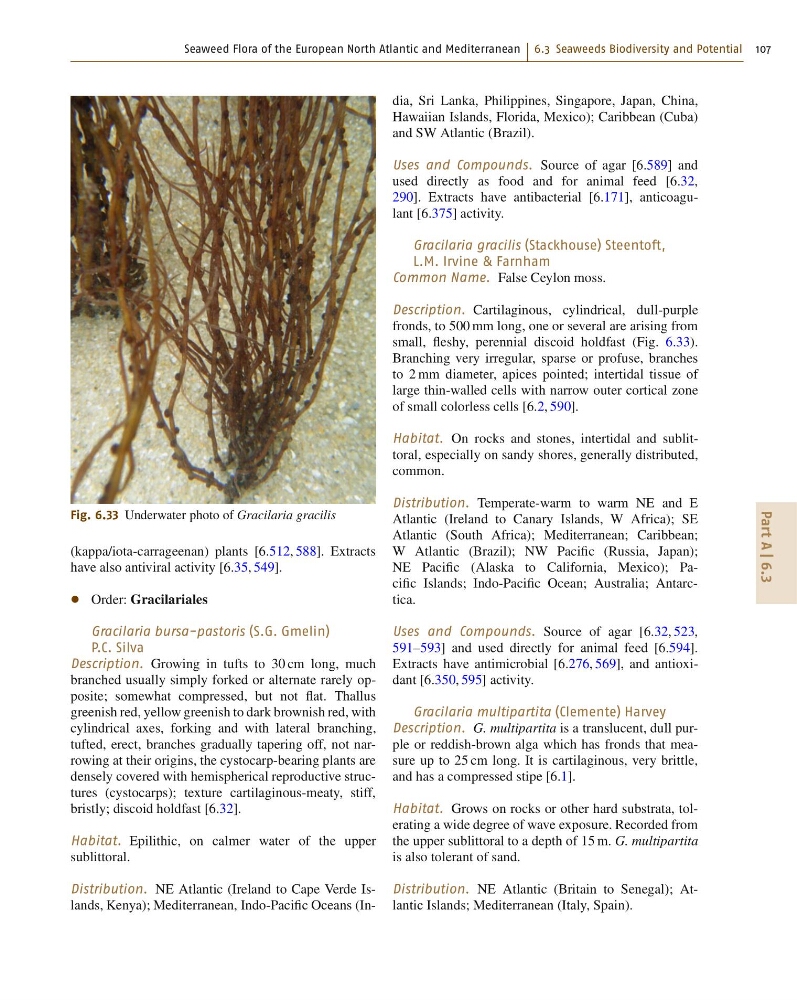
Fig. 6.33 Underwater photo of Gracilaria gracilis
(kappa/iota-carrageenan) plants [6.512, 588]. Extracts
have also antiviral activity [6.35, 549].
Order: Gracilariales
Gracilaria bursa-pastoris (S.G. Gmelin)
P.C. Silva
Description. Growing in tufts to 30 cm long, much
branched usually simply forked or alternate rarely opposite; somewhat compressed, but not flat. Thallus
greenish red, yellow greenish to dark brownish red, with
cylindrical axes, forking and with lateral branching,
tufted, erect, branches gradually tapering off, not narrowing at their origins, the cystocarp-bearing plants are
densely covered with hemispherical reproductive structures (cystocarps); texture cartilaginous-meaty, stiff,
bristly; discoid holdfast [6.32].
Habitat. Epilithic, on calmer water of the upper
sublittoral.
Distribution. NE Atlantic (Ireland to Cape Verde Islands, Kenya); Mediterranean, Indo-Pacific Oceans (India, Sri Lanka, Philippines, Singapore, Japan, China,
Hawaiian Islands, Florida, Mexico); Caribbean (Cuba)
and SW Atlantic (Brazil).
Uses and Compounds. Source of agar [6.589] and
used directly as food and for animal feed [6.32,
290]. Extracts have antibacterial [6.171], anticoagulant [6.375] activity.
Gracilaria gracilis (Stackhouse) Steentoft,
L.M. Irvine & Farnham
Common Name. False Ceylon moss.
Description. Cartilaginous, cylindrical, dull-purple
fronds, to 500 mm long, one or several are arising from
small, fleshy, perennial discoid holdfast (Fig. 6.33).
Branching very irregular, sparse or profuse, branches
to 2 mm diameter, apices pointed; intertidal tissue of
large thin-walled cells with narrow outer cortical zone
of small colorless cells [6.2, 590].
Habitat. On rocks and stones, intertidal and sublittoral, especially on sandy shores, generally distributed,
common.
Distribution. Temperate-warm to warm NE and E
Atlantic (Ireland to Canary Islands, W Africa); SE
Atlantic (South Africa); Mediterranean; Caribbean;
W Atlantic (Brazil); NW Pacific (Russia, Japan);
NE Pacific (Alaska to California, Mexico); Pacific Islands; Indo-Pacific Ocean; Australia; Antarctica.
Uses and Compounds. Source of agar [6.32, 523,
591–593] and used directly for animal feed [6.594].
Extracts have antimicrobial [6.276, 569], and antioxidant [6.350, 595] activity.
Gracilaria multipartita (Clemente) Harvey
Description. G. multipartita is a translucent, dull purple or reddish-brown alga which has fronds that measure up to 25 cm long. It is cartilaginous, very brittle,
and has a compressed stipe [6.1].
Habitat. Grows on rocks or other hard substrata, tolerating a wide degree of wave exposure. Recorded from
the upper sublittoral to a depth of 15 m. G. multipartita
is also tolerant of sand.
Distribution. NE Atlantic (Britain to Senegal); Atlantic Islands; Mediterranean (Italy, Spain).
Part A | 6.3
Fig. 6.33 Underwater photo of Gracilaria gracilis
(kappa/iota-carrageenan) plants [6.512, 588]. Extracts
have also antiviral activity [6.35, 549].
Order: Gracilariales
Gracilaria bursa-pastoris (S.G. Gmelin)
P.C. Silva
Description. Growing in tufts to 30 cm long, much
branched usually simply forked or alternate rarely opposite; somewhat compressed, but not flat. Thallus
greenish red, yellow greenish to dark brownish red, with
cylindrical axes, forking and with lateral branching,
tufted, erect, branches gradually tapering off, not narrowing at their origins, the cystocarp-bearing plants are
densely covered with hemispherical reproductive structures (cystocarps); texture cartilaginous-meaty, stiff,
bristly; discoid holdfast [6.32].
Habitat. Epilithic, on calmer water of the upper
sublittoral.
Distribution. NE Atlantic (Ireland to Cape Verde Islands, Kenya); Mediterranean, Indo-Pacific Oceans (India, Sri Lanka, Philippines, Singapore, Japan, China,
Hawaiian Islands, Florida, Mexico); Caribbean (Cuba)
and SW Atlantic (Brazil).
Uses and Compounds. Source of agar [6.589] and
used directly as food and for animal feed [6.32,
290]. Extracts have antibacterial [6.171], anticoagulant [6.375] activity.
Gracilaria gracilis (Stackhouse) Steentoft,
L.M. Irvine & Farnham
Common Name. False Ceylon moss.
Description. Cartilaginous, cylindrical, dull-purple
fronds, to 500 mm long, one or several are arising from
small, fleshy, perennial discoid holdfast (Fig. 6.33).
Branching very irregular, sparse or profuse, branches
to 2 mm diameter, apices pointed; intertidal tissue of
large thin-walled cells with narrow outer cortical zone
of small colorless cells [6.2, 590].
Habitat. On rocks and stones, intertidal and sublittoral, especially on sandy shores, generally distributed,
common.
Distribution. Temperate-warm to warm NE and E
Atlantic (Ireland to Canary Islands, W Africa); SE
Atlantic (South Africa); Mediterranean; Caribbean;
W Atlantic (Brazil); NW Pacific (Russia, Japan);
NE Pacific (Alaska to California, Mexico); Pacific Islands; Indo-Pacific Ocean; Australia; Antarctica.
Uses and Compounds. Source of agar [6.32, 523,
591–593] and used directly for animal feed [6.594].
Extracts have antimicrobial [6.276, 569], and antioxidant [6.350, 595] activity.
Gracilaria multipartita (Clemente) Harvey
Description. G. multipartita is a translucent, dull purple or reddish-brown alga which has fronds that measure up to 25 cm long. It is cartilaginous, very brittle,
and has a compressed stipe [6.1].
Habitat. Grows on rocks or other hard substrata, tolerating a wide degree of wave exposure. Recorded from
the upper sublittoral to a depth of 15 m. G. multipartita
is also tolerant of sand.
Distribution. NE Atlantic (Britain to Senegal); Atlantic Islands; Mediterranean (Italy, Spain).