

Part A | 6.3
100 Part A Marine Flora and Fauna
or ovate lobe that expands into a dichotomous or irregularly divided blade up to 7 cm broad and 30 cm long
and 350650 m thick. Small branches arise from the
main blade. It can vary considerably in blade width
and degree of subdivision. In southeastern England its
blades are often only 1015 m thick. The branchlets
(proliferations) that arise from the margins of the blade
are either pointed or rounded. Patches of encrusting
bryozoans are very common on old specimens [6.518,
519].
Habitat. In larger lower intertidal pools and sublittoral (025 m) on stones, maerl, and shells, widely
distributed, common in south and west, sometimes frequent in drift.
Distribution. NE Atlantic (Ireland and Britain to
Mauritania); W Mediterranean.
Uses and Compounds. Source of carrageenan [6.520,
521], and hemagglutinins [6.375].
Calliblepharis jubata
(Goodenough & Woodward) Kützing
Description. C. jubata is brownish red in color. It has
a thallus consisting of a branched holdfast that gives
rise to an erect frond that expands into a dichotomous
or irregularly divided blade (Fig. 6.27). The outline of
the frond is variable but it commonly has a cylindrical
or very slightly compressed stipe. Its blades are about
Fig. 6.27 Calliblepharis jubata specimen
6 mm broad and 30 cm long with narrow branches. The
branches appear long and tendril like. Long branchlets
(proliferations) arise from the blade surface and margins of the branches [6.1].
Habitat. On rocks and epiphytic, especially on C. officinalis in large open pools, mid-littoral to shallow
sublittoral (5 m).
Distribution. NE Atlantic (Ireland to Mauritania); W
Mediterranean.
Uses and Compounds. Source of carrageenan
[6.514–516, 521–523], and hemagglutinins [6.375].
Extracts have antimycobacterial [6.317], anticoagulant [6.524], antiprotozoal, and cytotoxic [6.525]
activity.
Caulacanthus ustulatus
(Mertens ex Turner) Kützing
Description. Thalli forming small dense entangled
tufts of up to 5 cm, reddish-brown color, which blackens
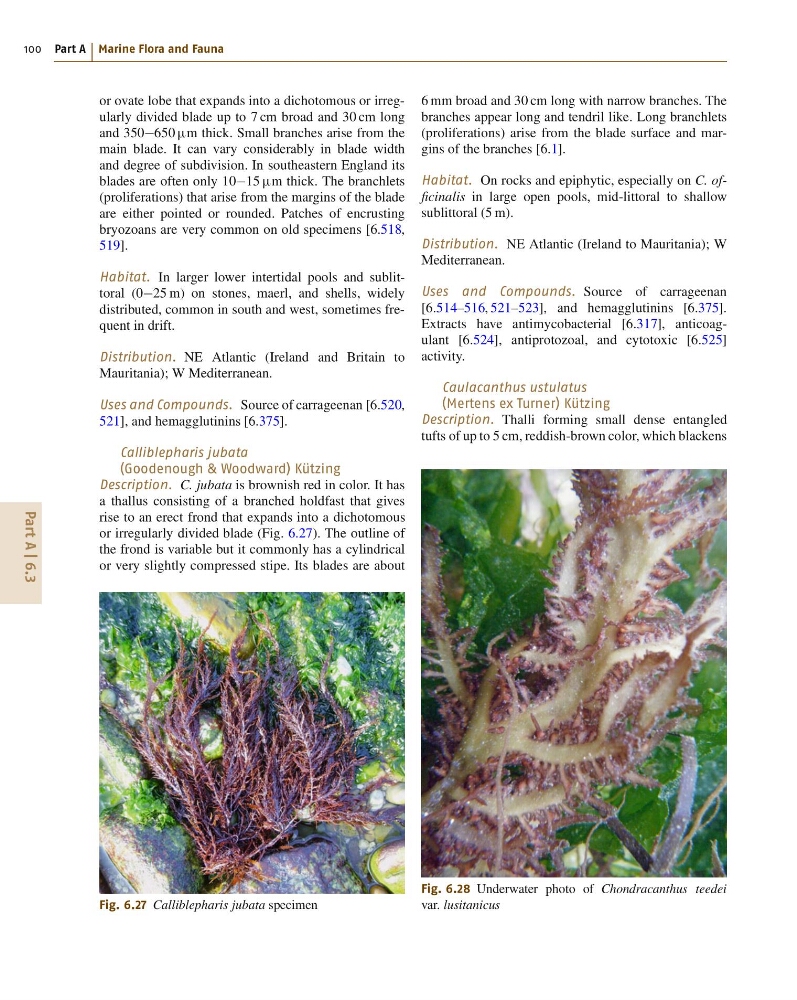
Fig. 6.28 Underwater photo of Chondracanthus teedei
var. lusitanicus
100 Part A Marine Flora and Fauna
or ovate lobe that expands into a dichotomous or irregularly divided blade up to 7 cm broad and 30 cm long
and 350650 m thick. Small branches arise from the
main blade. It can vary considerably in blade width
and degree of subdivision. In southeastern England its
blades are often only 1015 m thick. The branchlets
(proliferations) that arise from the margins of the blade
are either pointed or rounded. Patches of encrusting
bryozoans are very common on old specimens [6.518,
519].
Habitat. In larger lower intertidal pools and sublittoral (025 m) on stones, maerl, and shells, widely
distributed, common in south and west, sometimes frequent in drift.
Distribution. NE Atlantic (Ireland and Britain to
Mauritania); W Mediterranean.
Uses and Compounds. Source of carrageenan [6.520,
521], and hemagglutinins [6.375].
Calliblepharis jubata
(Goodenough & Woodward) Kützing
Description. C. jubata is brownish red in color. It has
a thallus consisting of a branched holdfast that gives
rise to an erect frond that expands into a dichotomous
or irregularly divided blade (Fig. 6.27). The outline of
the frond is variable but it commonly has a cylindrical
or very slightly compressed stipe. Its blades are about
Fig. 6.27 Calliblepharis jubata specimen
6 mm broad and 30 cm long with narrow branches. The
branches appear long and tendril like. Long branchlets
(proliferations) arise from the blade surface and margins of the branches [6.1].
Habitat. On rocks and epiphytic, especially on C. officinalis in large open pools, mid-littoral to shallow
sublittoral (5 m).
Distribution. NE Atlantic (Ireland to Mauritania); W
Mediterranean.
Uses and Compounds. Source of carrageenan
[6.514–516, 521–523], and hemagglutinins [6.375].
Extracts have antimycobacterial [6.317], anticoagulant [6.524], antiprotozoal, and cytotoxic [6.525]
activity.
Caulacanthus ustulatus
(Mertens ex Turner) Kützing
Description. Thalli forming small dense entangled
tufts of up to 5 cm, reddish-brown color, which blackens
Fig. 6.28 Underwater photo of Chondracanthus teedei
var. lusitanicus