

42
5 Comparisons of Fronts with Other Boundaries at Sea
also tend to mark the transition of other biologically relevant properties, such as
light intensity and nutrient concentration. In most cases the upper layer is more
illuminated, warmer, fresher and poorer in nutrients. Moreover, pycnoclines frequently separate layers moving at different speeds and in different directions.
Consequently, the ecological changes across a few meters to tens of meters thick
pycnoclines are greater than those across any known front which intersects the sea
surface (Longhurst 1998).
The pycnocline presents special conditions, and its ecological characteristics
differ from that of layers above and below (Longhurst 1998). Pycnoclines are frequently characterized by high nutrient concentrations and low light intensities, and
are inhabited by a diverse “shade flora” encompassing diatoms, dynoflagellates,
and other groups (Longhurst 1998). Internal waves 1 traveling along the pycnocline
are observed in some regions. Internal waves are likely to increase turbulent transport of nutrients across the pycnocline and to cause vertical oscillations of phytoplankton, thereby increasing the average light intensity they are exposed to (Mann
and Lazier 2006). Zooplankton herbivores are often concentrated as dense thin
layers foraging in these strata of enhanced phytoplankton biomass, though the vertical distribution of zooplankton is complicated by the vertical migrations of some
species across the pycnocline. Such migrant species utilize to their advantage the
contrasting ecological conditions of both levels (Longhurst 1998). Zooplanktonfeeder fishes (e.g. sardines and anchovies) may also be attracted to zooplankton
thin layers because of better feeding opportunities (McManus and Woodson 2012).
There are frequently steep gradients in flow velocity and even reversals in flow
direction associated with pycnoclines; consequently pycnoclines are frequently
layers of no motion or greatly reduced flow (McManus and Woodson 2012).
1 In some cases tidal currents may cause oscillations of the pycnocline and waves that propagate
along the interface.
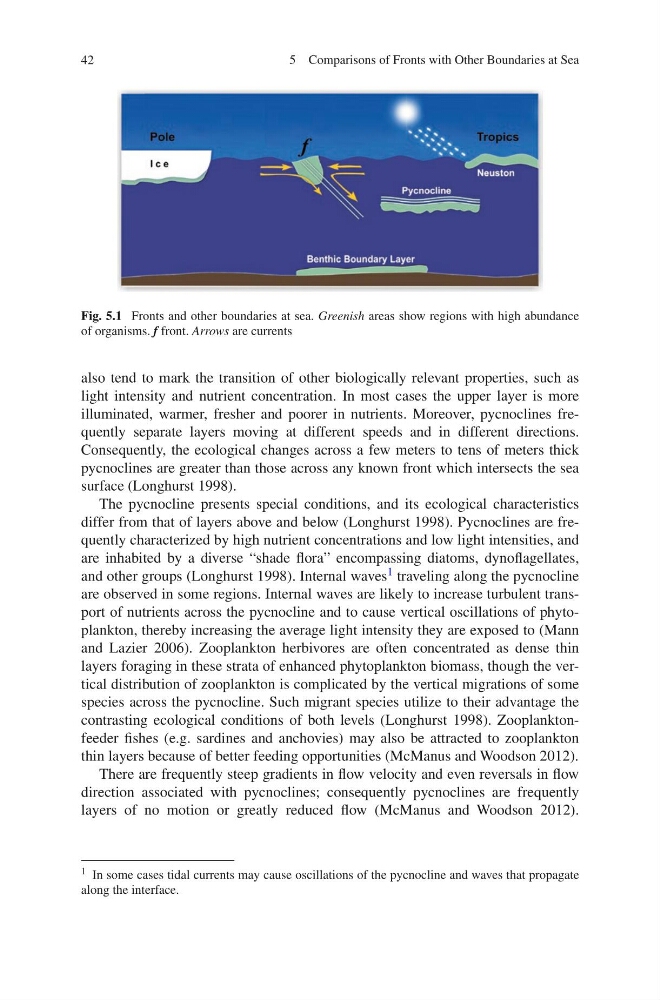
Fig. 5.1 Fronts and other boundaries at sea. Greenish areas show regions with high abundance
of organisms. f front. Arrows are currents
5 Comparisons of Fronts with Other Boundaries at Sea
also tend to mark the transition of other biologically relevant properties, such as
light intensity and nutrient concentration. In most cases the upper layer is more
illuminated, warmer, fresher and poorer in nutrients. Moreover, pycnoclines frequently separate layers moving at different speeds and in different directions.
Consequently, the ecological changes across a few meters to tens of meters thick
pycnoclines are greater than those across any known front which intersects the sea
surface (Longhurst 1998).
The pycnocline presents special conditions, and its ecological characteristics
differ from that of layers above and below (Longhurst 1998). Pycnoclines are frequently characterized by high nutrient concentrations and low light intensities, and
are inhabited by a diverse “shade flora” encompassing diatoms, dynoflagellates,
and other groups (Longhurst 1998). Internal waves 1 traveling along the pycnocline
are observed in some regions. Internal waves are likely to increase turbulent transport of nutrients across the pycnocline and to cause vertical oscillations of phytoplankton, thereby increasing the average light intensity they are exposed to (Mann
and Lazier 2006). Zooplankton herbivores are often concentrated as dense thin
layers foraging in these strata of enhanced phytoplankton biomass, though the vertical distribution of zooplankton is complicated by the vertical migrations of some
species across the pycnocline. Such migrant species utilize to their advantage the
contrasting ecological conditions of both levels (Longhurst 1998). Zooplanktonfeeder fishes (e.g. sardines and anchovies) may also be attracted to zooplankton
thin layers because of better feeding opportunities (McManus and Woodson 2012).
There are frequently steep gradients in flow velocity and even reversals in flow
direction associated with pycnoclines; consequently pycnoclines are frequently
layers of no motion or greatly reduced flow (McManus and Woodson 2012).
1 In some cases tidal currents may cause oscillations of the pycnocline and waves that propagate
along the interface.
Fig. 5.1 Fronts and other boundaries at sea. Greenish areas show regions with high abundance
of organisms. f front. Arrows are currents