

54
2.4 Proxies to Identify Human Intervention
2.4.1 Foraminifera
Foraminifera are protists, single-celled marine organisms that consist of a soft body
(protoplasm) enclosed within a test (Lowe and Walker 1997). This test makes them
geologically important, because it is preserved in the sedimentary record and can be
used to study past environmental conditions. Foraminiferal tests are composed of a
secreted organic material called tectin, secreted minerals (calcite, aragonite or
quartz) or agglutinated particles (Armstrong and Brasier 2005). Agglutinated species are adapted to all marine environments from supratidal to deep oceans, although
they are a minority in comparison with other wall types except in salt marshes and
below the carbonate compensation depth (CCD) in the ocean. On the contrary, calcareous forms are generally dominant in modern neritic, bathyal and shallower
abyssal assemblages, and their distribution is limited to the availability of calcium
carbonate (Murray and Alve 2011).
Most foraminiferal species are benthic, except for a fewer number of planktonic
taxa. They are mostly marine, covering a wide range of saline environments, from
brackish to hypersaline locations. Their distribution in salt marshes is primarily
determined by elevation, as a function of subaerial exposure, and a range of additional environmental variables such as salinity or pH (Edwards and Wright 2015).
Due to their ecological sensitivity, foraminifera can be used in a variety of paleoenvironmental reconstructions, which require an understanding of the influence
of infaunal populations and taphonomic loss on the foraminiferal assemblage found
in the sedimentary record. Deep infaunal habitats have been reported in North
American salt marshes (Goldstein and Watkins 1999; Patterson et al. 1999), even
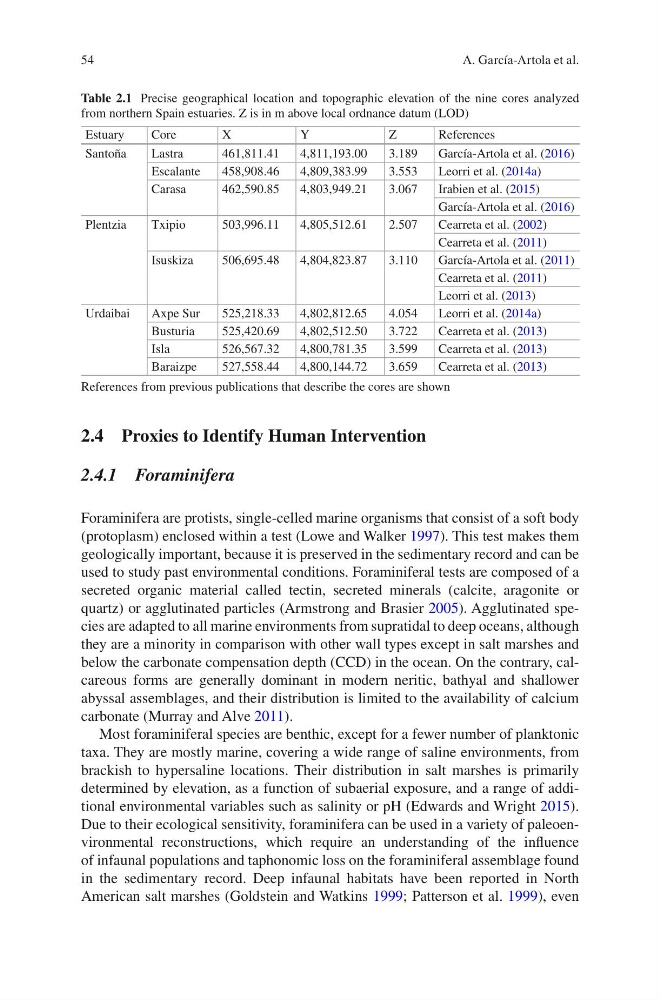
Table 2.1 Precise geographical location and topographic elevation of the nine cores analyzed
from northern Spain estuaries. Z is in m above local ordnance datum (LOD)
Estuary
Core
X
Y
Z
References
Santoña
Lastra
461,811.41
4,811,193.00
3.189
García-Artola et al. (2016)
Escalante
458,908.46
4,809,383.99
3.553
Leorri et al. (2014a)
Carasa
462,590.85
4,803,949.21
3.067
Irabien et al. (2015)
García-Artola et al. (2016)
Plentzia
Txipio
503,996.11
4,805,512.61
2.507
Cearreta et al. (2002)
Cearreta et al. (2011)
Isuskiza
506,695.48
4,804,823.87
3.110
García-Artola et al. (2011)
Cearreta et al. (2011)
Leorri et al. (2013)
Urdaibai
Axpe Sur
525,218.33
4,802,812.65
4.054
Leorri et al. (2014a)
Busturia
525,420.69
4,802,512.50
3.722
Cearreta et al. (2013)
Isla
526,567.32
4,800,781.35
3.599
Cearreta et al. (2013)
Baraizpe
527,558.44
4,800,144.72
3.659
Cearreta et al. (2013)
References from previous publications that describe the cores are shown
A. García-Artola et al.
2.4 Proxies to Identify Human Intervention
2.4.1 Foraminifera
Foraminifera are protists, single-celled marine organisms that consist of a soft body
(protoplasm) enclosed within a test (Lowe and Walker 1997). This test makes them
geologically important, because it is preserved in the sedimentary record and can be
used to study past environmental conditions. Foraminiferal tests are composed of a
secreted organic material called tectin, secreted minerals (calcite, aragonite or
quartz) or agglutinated particles (Armstrong and Brasier 2005). Agglutinated species are adapted to all marine environments from supratidal to deep oceans, although
they are a minority in comparison with other wall types except in salt marshes and
below the carbonate compensation depth (CCD) in the ocean. On the contrary, calcareous forms are generally dominant in modern neritic, bathyal and shallower
abyssal assemblages, and their distribution is limited to the availability of calcium
carbonate (Murray and Alve 2011).
Most foraminiferal species are benthic, except for a fewer number of planktonic
taxa. They are mostly marine, covering a wide range of saline environments, from
brackish to hypersaline locations. Their distribution in salt marshes is primarily
determined by elevation, as a function of subaerial exposure, and a range of additional environmental variables such as salinity or pH (Edwards and Wright 2015).
Due to their ecological sensitivity, foraminifera can be used in a variety of paleoenvironmental reconstructions, which require an understanding of the influence
of infaunal populations and taphonomic loss on the foraminiferal assemblage found
in the sedimentary record. Deep infaunal habitats have been reported in North
American salt marshes (Goldstein and Watkins 1999; Patterson et al. 1999), even
Table 2.1 Precise geographical location and topographic elevation of the nine cores analyzed
from northern Spain estuaries. Z is in m above local ordnance datum (LOD)
Estuary
Core
X
Y
Z
References
Santoña
Lastra
461,811.41
4,811,193.00
3.189
García-Artola et al. (2016)
Escalante
458,908.46
4,809,383.99
3.553
Leorri et al. (2014a)
Carasa
462,590.85
4,803,949.21
3.067
Irabien et al. (2015)
García-Artola et al. (2016)
Plentzia
Txipio
503,996.11
4,805,512.61
2.507
Cearreta et al. (2002)
Cearreta et al. (2011)
Isuskiza
506,695.48
4,804,823.87
3.110
García-Artola et al. (2011)
Cearreta et al. (2011)
Leorri et al. (2013)
Urdaibai
Axpe Sur
525,218.33
4,802,812.65
4.054
Leorri et al. (2014a)
Busturia
525,420.69
4,802,512.50
3.722
Cearreta et al. (2013)
Isla
526,567.32
4,800,781.35
3.599
Cearreta et al. (2013)
Baraizpe
527,558.44
4,800,144.72
3.659
Cearreta et al. (2013)
References from previous publications that describe the cores are shown
A. García-Artola et al.