

671
Of the many fishing gear used in the region, gillnets are the most important
(Fig. 20.19a–b). Also present are handlines, trawls (near the coast), falling nets,
artisanal longline (“groseira”), traps (“covos”) (Fig. 20.19c), among others.
Artisanal fishers combine small business for income and subsistence, employing
small to medium-sizedwood boats, acquired from small shipyards, with power
engine or not (Oliveira 2012), as well as boats built by themselves using natural
materials (Fig. 20.20a, b) (Santos et al. 2005).
Motorized fishing in northeast states of Brazil is focused on shrimp because this
region has one of the largest shrimp banks (Tonial 2011). The shrimp fishery operates along the coast, where the estuarine main channel provides organic matter for
the development of these organisms, usually where finer sediments deposit to form
wide muddy bottoms. Evaluating the main catches in the estuary and adjacent areas
during 2014 and 2015, there is a greater representation of penaeid shrimp, highlighting the Atlantic seabob shrimp (Xiphopenaeus kroyeri), with 45% (649.3 tons)
of landed biomass. The Atlantic sea bob shrimp had higher catches in the dry period
(August–November) (Fig. 20.24a and Table 20.3).
Whereas less representative, 71.68 tons (5%) landed at Piaçabuçu between 2014
and 2015, the white shrimp (L. schmitti) is the most profitable fishery resource per
kg (Fig. 20.24b and Table 20.3). Their highest production occurred in May–July in
2014 (14.61 tons) and July–September in 2015 (18.91 tons), presenting higher
catches during the rainy season (Fig. 20.24b). February was the less productive
month in both years for both species, sea bob and white shrimps, corroborating the
previous results (Coelho and Santos 1995).
Freshwater shrimps (Macrobrachium spp.) represent ~2% of the landings in the
region (Fig. 20.24c and Table 20.3). They are caught using mobile traps called
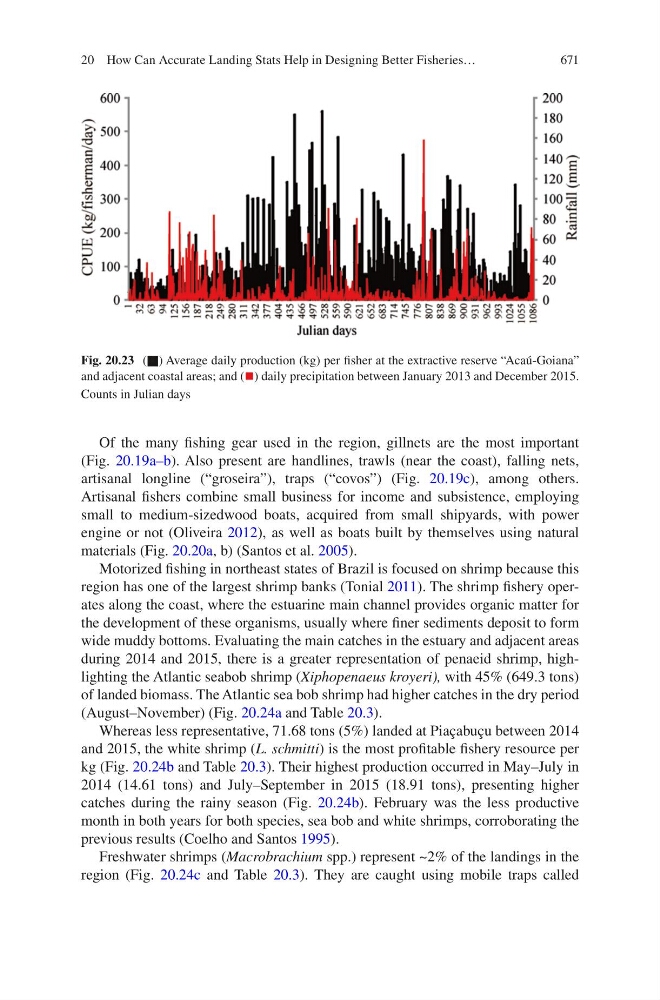
Fig. 20.23 (■) Average daily production (kg) per fisher at the extractive reserve “Acaú-Goiana”
and adjacent coastal areas; and (■) daily precipitation between January 2013 and December 2015.
Counts in Julian days
20 How Can Accurate Landing Stats Help in Designing Better Fisheries…