

501
to compile the most relevant information remains a challenge in aquatic ecosystems
conservation. The time elapsed from generation of information by the scientific
community and the establishment of management plans is the main concerning. In
Brazil, the longest coastal zone facing the Western Atlantic, only recently estuaries
have received attention with the creation of the first Marine Protected Area (MPA)
in the early 1980s (Diegues 2008), and despite the number and variety of coastal
ecosystems including estuaries, the number of officially and effectively protected
areas is still insufficient. MPAs are important, among other things, to conserve biodiversity, promote eco-tourism in areas where this talent can be developed and to
ensure the replenishment of fisheries stocks (Diegues 2008; Jennings 2009).
However, MPAs are only one of the many coastal conservation options, and could
be regarded as exceptions in terms of territory covered. Ideally, conservation measures should also, and principally, be in place outside these specially protected
areas. Such measures, although less severe, could guarantee the conservation of
much wider coastal areas.
The main concern for estuarine conservation issues is that estuaries (and other
transitional waters) were ignored for many years by freshwater and marine scientists due to the confusing natural processes that rule the ecosystem (Elliot and
Whitefield 2011). Only recently, over the past four decades, estuaries are regarded
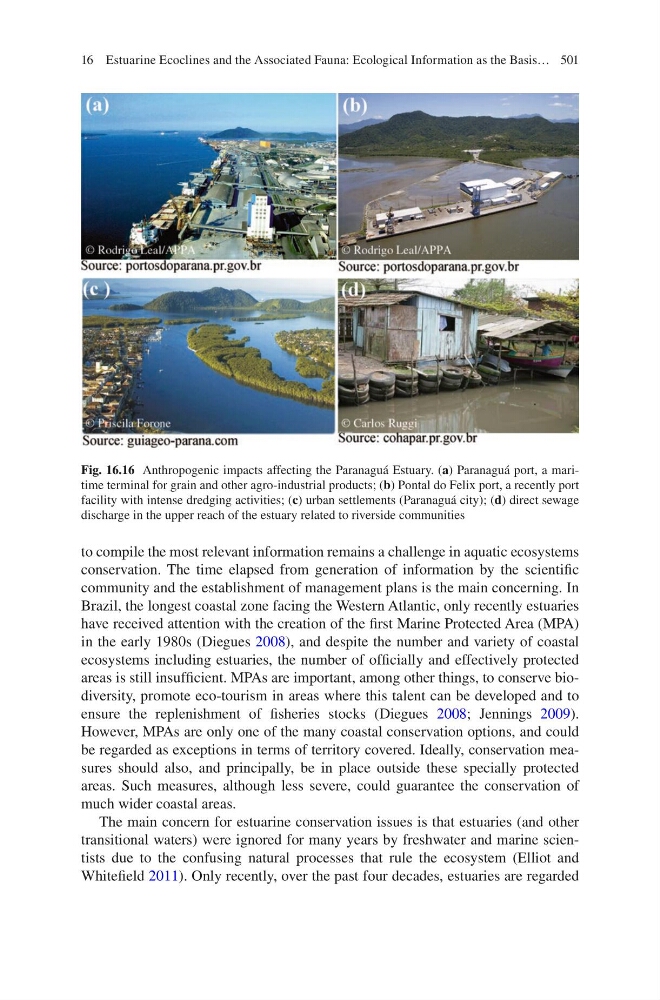
Fig. 16.16 Anthropogenic impacts affecting the Paranaguá Estuary. (a) Paranaguá port, a maritime terminal for grain and other agro-industrial products; (b) Pontal do Felix port, a recently port
facility with intense dredging activities; (c) urban settlements (Paranaguá city); (d) direct sewage
discharge in the upper reach of the estuary related to riverside communities
16 Estuarine Ecoclines and the Associated Fauna: Ecological Information as the Basis…
to compile the most relevant information remains a challenge in aquatic ecosystems
conservation. The time elapsed from generation of information by the scientific
community and the establishment of management plans is the main concerning. In
Brazil, the longest coastal zone facing the Western Atlantic, only recently estuaries
have received attention with the creation of the first Marine Protected Area (MPA)
in the early 1980s (Diegues 2008), and despite the number and variety of coastal
ecosystems including estuaries, the number of officially and effectively protected
areas is still insufficient. MPAs are important, among other things, to conserve biodiversity, promote eco-tourism in areas where this talent can be developed and to
ensure the replenishment of fisheries stocks (Diegues 2008; Jennings 2009).
However, MPAs are only one of the many coastal conservation options, and could
be regarded as exceptions in terms of territory covered. Ideally, conservation measures should also, and principally, be in place outside these specially protected
areas. Such measures, although less severe, could guarantee the conservation of
much wider coastal areas.
The main concern for estuarine conservation issues is that estuaries (and other
transitional waters) were ignored for many years by freshwater and marine scientists due to the confusing natural processes that rule the ecosystem (Elliot and
Whitefield 2011). Only recently, over the past four decades, estuaries are regarded
Fig. 16.16 Anthropogenic impacts affecting the Paranaguá Estuary. (a) Paranaguá port, a maritime terminal for grain and other agro-industrial products; (b) Pontal do Felix port, a recently port
facility with intense dredging activities; (c) urban settlements (Paranaguá city); (d) direct sewage
discharge in the upper reach of the estuary related to riverside communities
16 Estuarine Ecoclines and the Associated Fauna: Ecological Information as the Basis…