

492
do not allow the passing of microplastics from the upper to the lower system or in
the opposite direction (Lima et al. 2014) (Figs. 16.7 and 16.8). However, in the late
rainy season, river flush is strong enough to push microplastics seaward, and higher
densities of this pollutant are observed in the lower estuary (Lima et al. 2014)
(Figs. 16.7 and 16.8). The specific sources of microplastics are difficult to determine
due to their ubiquity and because they continue to further fragment and mischaracterize almost indefinitely (Barnes et al. 2009; Costa and Barletta 2016), but findings
at the Goiana Estuary confirms that river basins are important exporting sources of
microplastic to the coastal seas (Cheung et al. 2016; Lima et al. 2014).
In addition, microplastics have large surface: volume ratios, and are important
media for the transport of persistent organic pollutants (Frias et al. 2010). The
smaller the fragments, the better for pollutants adsorption and the easier the ingestion by fauna, which will then be harmed through physical and chemical processes.
Their abundance in the water column will determine bioavailability to estuarine
communities by direct ingestion and/or trophic transfer (Farrel and Nelson 2013). In
face of the generalized and unprecedented poor disposal practices of plastics (Barnes
et al. 2009; Cole et al. 2011; Eriksen et al. 2014), it is possible to conjecture that
every estuarine system in the Western Atlantic is experiencing this same problem of
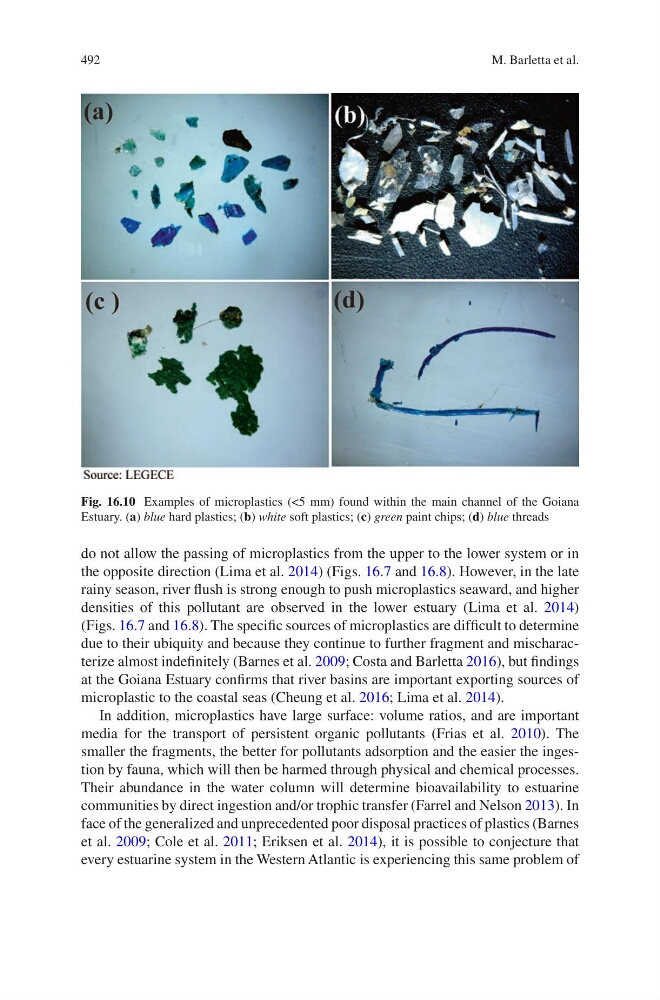
Fig. 16.10 Examples of microplastics (<5 mm) found within the main channel of the Goiana
Estuary. (a) blue hard plastics; (b) white soft plastics; (c) green paint chips; (d) blue threads
M. Barletta et al.
do not allow the passing of microplastics from the upper to the lower system or in
the opposite direction (Lima et al. 2014) (Figs. 16.7 and 16.8). However, in the late
rainy season, river flush is strong enough to push microplastics seaward, and higher
densities of this pollutant are observed in the lower estuary (Lima et al. 2014)
(Figs. 16.7 and 16.8). The specific sources of microplastics are difficult to determine
due to their ubiquity and because they continue to further fragment and mischaracterize almost indefinitely (Barnes et al. 2009; Costa and Barletta 2016), but findings
at the Goiana Estuary confirms that river basins are important exporting sources of
microplastic to the coastal seas (Cheung et al. 2016; Lima et al. 2014).
In addition, microplastics have large surface: volume ratios, and are important
media for the transport of persistent organic pollutants (Frias et al. 2010). The
smaller the fragments, the better for pollutants adsorption and the easier the ingestion by fauna, which will then be harmed through physical and chemical processes.
Their abundance in the water column will determine bioavailability to estuarine
communities by direct ingestion and/or trophic transfer (Farrel and Nelson 2013). In
face of the generalized and unprecedented poor disposal practices of plastics (Barnes
et al. 2009; Cole et al. 2011; Eriksen et al. 2014), it is possible to conjecture that
every estuarine system in the Western Atlantic is experiencing this same problem of
Fig. 16.10 Examples of microplastics (<5 mm) found within the main channel of the Goiana
Estuary. (a) blue hard plastics; (b) white soft plastics; (c) green paint chips; (d) blue threads
M. Barletta et al.