

488
2007). The former are euryhaline and exhibit wide ranges of effective estuarine use
during the entire life cycle, being less affected by ecocline heterogeneity in tropical
ecosystems (Elliott et al. 2007). Most marine and freshwater taxa are stenohaline
and remain limited to areas of coastal or river influences, respectively (Elliott et al.
2007). Migratory fishes are euryhaline species that cruise the estuarine ecocline to
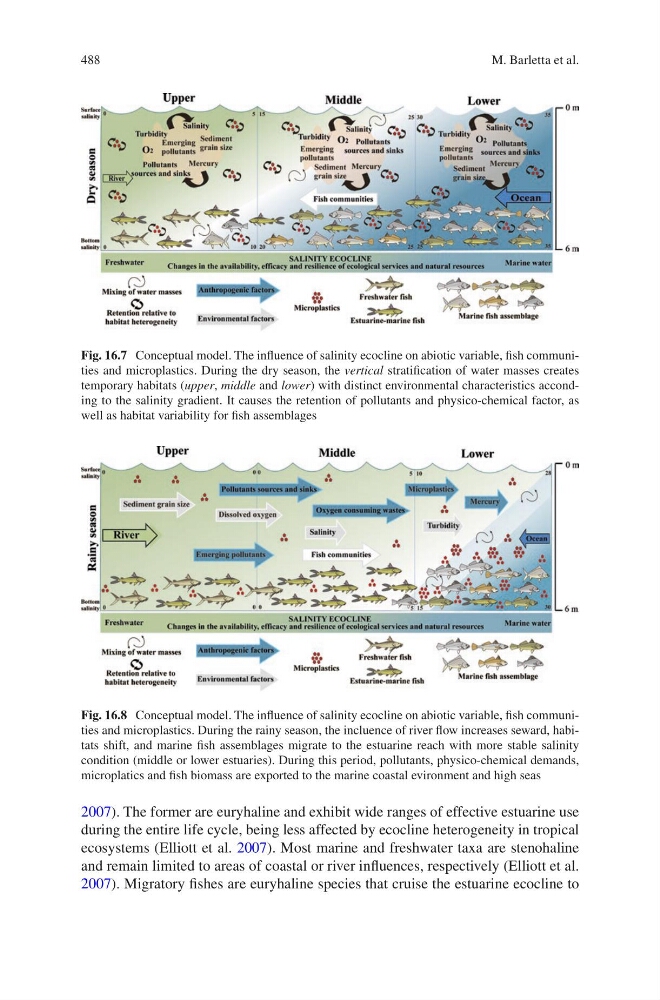
Fig. 16.7 Conceptual model. The influence of salinity ecocline on abiotic variable, fish communities and microplastics. During the dry season, the vertical stratification of water masses creates
temporary habitats (upper, middle and lower) with distinct environmental characteristics acconding to the salinity gradient. It causes the retention of pollutants and physico-chemical factor, as
well as habitat variability for fish assemblages
Fig. 16.8 Conceptual model. The influence of salinity ecocline on abiotic variable, fish communities and microplastics. During the rainy season, the incluence of river flow increases seward, habitats shift, and marine fish assemblages migrate to the estuarine reach with more stable salinity
condition (middle or lower estuaries). During this period, pollutants, physico-chemical demands,
microplatics and fish biomass are exported to the marine coastal evironment and high seas
M. Barletta et al.
2007). The former are euryhaline and exhibit wide ranges of effective estuarine use
during the entire life cycle, being less affected by ecocline heterogeneity in tropical
ecosystems (Elliott et al. 2007). Most marine and freshwater taxa are stenohaline
and remain limited to areas of coastal or river influences, respectively (Elliott et al.
2007). Migratory fishes are euryhaline species that cruise the estuarine ecocline to
Fig. 16.7 Conceptual model. The influence of salinity ecocline on abiotic variable, fish communities and microplastics. During the dry season, the vertical stratification of water masses creates
temporary habitats (upper, middle and lower) with distinct environmental characteristics acconding to the salinity gradient. It causes the retention of pollutants and physico-chemical factor, as
well as habitat variability for fish assemblages
Fig. 16.8 Conceptual model. The influence of salinity ecocline on abiotic variable, fish communities and microplastics. During the rainy season, the incluence of river flow increases seward, habitats shift, and marine fish assemblages migrate to the estuarine reach with more stable salinity
condition (middle or lower estuaries). During this period, pollutants, physico-chemical demands,
microplatics and fish biomass are exported to the marine coastal evironment and high seas
M. Barletta et al.