

458
The four informational factors of the preference matrix are coherence, legibility,
complexity, and mystery. Different environmental elements arrayed together, provide a sense of order; people would sense that environmental information with
coherent perception. When people infer the environmental information, the elements are distinctive and easily identified, forming a sense of legibility. Richness in
information offers many different kinds of distinctive elements in the environment,
which relay complexity. A natural environment with high richness and diversity of
natural landscapes would encourage people to explore it. A mysterious setting could
compel people to venture in further to gain more information.
Specific landscape types evoke different aesthetic responses. Coastal wetlands
have many forms and vary remarkably in size and character. According to the preference matrix, when environmental information is too complex, it leads to a lack of
legibility that would make people feel perplexed and anxious, such as mangrove
forest swamps. However, when information is too tidy and lacks variety, people may
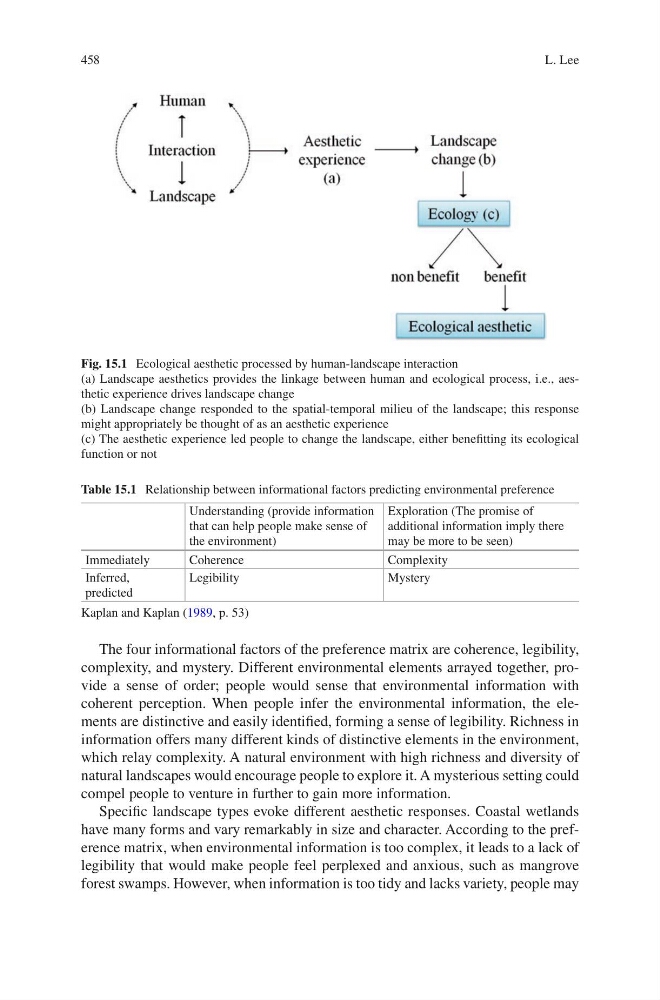
Fig. 15.1 Ecological aesthetic processed by human-landscape interaction
(a) Landscape aesthetics provides the linkage between human and ecological process, i.e., aesthetic experience drives landscape change
(b) Landscape change responded to the spatial-temporal milieu of the landscape; this response
might appropriately be thought of as an aesthetic experience
(c) The aesthetic experience led people to change the landscape, either benefitting its ecological
function or not
Table 15.1 Relationship between informational factors predicting environmental preference
Understanding (provide information
that can help people make sense of
the environment)
Exploration (The promise of
additional information imply there
may be more to be seen)
Immediately
Coherence
Complexity
Inferred,
predicted
Legibility
Mystery
Kaplan and Kaplan (1989, p. 53)
L. Lee
The four informational factors of the preference matrix are coherence, legibility,
complexity, and mystery. Different environmental elements arrayed together, provide a sense of order; people would sense that environmental information with
coherent perception. When people infer the environmental information, the elements are distinctive and easily identified, forming a sense of legibility. Richness in
information offers many different kinds of distinctive elements in the environment,
which relay complexity. A natural environment with high richness and diversity of
natural landscapes would encourage people to explore it. A mysterious setting could
compel people to venture in further to gain more information.
Specific landscape types evoke different aesthetic responses. Coastal wetlands
have many forms and vary remarkably in size and character. According to the preference matrix, when environmental information is too complex, it leads to a lack of
legibility that would make people feel perplexed and anxious, such as mangrove
forest swamps. However, when information is too tidy and lacks variety, people may
Fig. 15.1 Ecological aesthetic processed by human-landscape interaction
(a) Landscape aesthetics provides the linkage between human and ecological process, i.e., aesthetic experience drives landscape change
(b) Landscape change responded to the spatial-temporal milieu of the landscape; this response
might appropriately be thought of as an aesthetic experience
(c) The aesthetic experience led people to change the landscape, either benefitting its ecological
function or not
Table 15.1 Relationship between informational factors predicting environmental preference
Understanding (provide information
that can help people make sense of
the environment)
Exploration (The promise of
additional information imply there
may be more to be seen)
Immediately
Coherence
Complexity
Inferred,
predicted
Legibility
Mystery
Kaplan and Kaplan (1989, p. 53)
L. Lee