

18
uppermost end of the trunk serves as a succulent food when cooked properly
(Gunderson and Loftus 1993).
Using a lot of these tree species as growing foundations, a large variety the climbing plants can be found in the Everglades. Among these species are a wide array of
vines, orchids, and other epiphytes that include wild grapes, hunter’s vine (whose sap
filled stem is potable for drinking), cockspur, marsh orchids, Spanish moss, bromeliads, resurrection fern, and climbing brambles (Davis 1943; Douglas 1997).
The fauna of the Everglades is a unique collection of animals that includes multiple species of birds, mammals, fish, insects, and amphibians. However, perhaps the
creatures that conjure up an immediate image inside the mind’s eye at the mention of
the Everglades are the reptiles, the largest of which are alligators and crocodiles. For
example, American alligators (Alligator mississipiensis) found in the Everglades can
grow to 4.4 m, weigh over 450 kg, and have been known to feed on practically any
animal that passes within its reach (Mazzotti et al. 2008). Additionally, the Everglades
are also home to a wide variety of snakes (Lodge 1994). The cottonmouth, or water
moccasin (Agkistrodon piscivorus), which thrives in wet, swampy lands, is among
the most predominant. This snake contains very poisonous venom and travelers
through the glades have to be wary of its presence. The eastern diamondback
(Crotalus adamanteus) and ground (Sistrurus miliarius) rattlesnakes are also dangerous and encountered occasionally, but both of these rattler species prefer a dry ground
habitat. Garter, water, black racer, gopher, coachwhip, and green tree snakes are
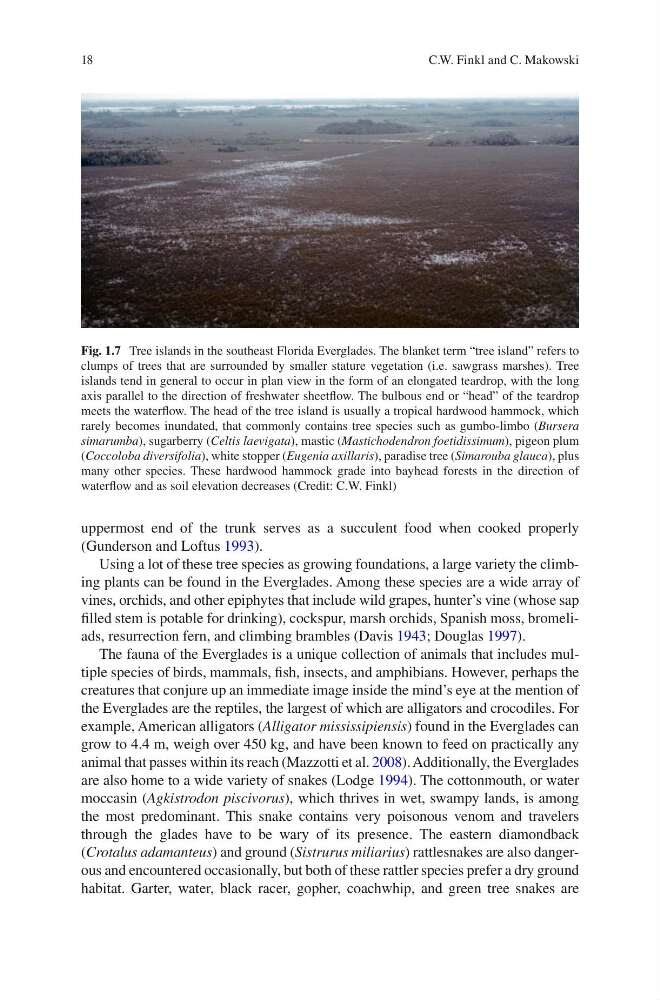
Fig. 1.7 Tree islands in the southeast Florida Everglades. The blanket term “tree island” refers to
clumps of trees that are surrounded by smaller stature vegetation (i.e. sawgrass marshes). Tree
islands tend in general to occur in plan view in the form of an elongated teardrop, with the long
axis parallel to the direction of freshwater sheetflow. The bulbous end or “head” of the teardrop
meets the waterflow. The head of the tree island is usually a tropical hardwood hammock, which
rarely becomes inundated, that commonly contains tree species such as gumbo-limbo (Bursera
simarumba), sugarberry (Celtis laevigata), mastic (Mastichodendron foetidissimum), pigeon plum
(Coccoloba diversifolia), white stopper (Eugenia axillaris), paradise tree (Simarouba glauca), plus
many other species. These hardwood hammock grade into bayhead forests in the direction of
waterflow and as soil elevation decreases (Credit: C.W. Finkl)
C.W. Finkl and C. Makowski
uppermost end of the trunk serves as a succulent food when cooked properly
(Gunderson and Loftus 1993).
Using a lot of these tree species as growing foundations, a large variety the climbing plants can be found in the Everglades. Among these species are a wide array of
vines, orchids, and other epiphytes that include wild grapes, hunter’s vine (whose sap
filled stem is potable for drinking), cockspur, marsh orchids, Spanish moss, bromeliads, resurrection fern, and climbing brambles (Davis 1943; Douglas 1997).
The fauna of the Everglades is a unique collection of animals that includes multiple species of birds, mammals, fish, insects, and amphibians. However, perhaps the
creatures that conjure up an immediate image inside the mind’s eye at the mention of
the Everglades are the reptiles, the largest of which are alligators and crocodiles. For
example, American alligators (Alligator mississipiensis) found in the Everglades can
grow to 4.4 m, weigh over 450 kg, and have been known to feed on practically any
animal that passes within its reach (Mazzotti et al. 2008). Additionally, the Everglades
are also home to a wide variety of snakes (Lodge 1994). The cottonmouth, or water
moccasin (Agkistrodon piscivorus), which thrives in wet, swampy lands, is among
the most predominant. This snake contains very poisonous venom and travelers
through the glades have to be wary of its presence. The eastern diamondback
(Crotalus adamanteus) and ground (Sistrurus miliarius) rattlesnakes are also dangerous and encountered occasionally, but both of these rattler species prefer a dry ground
habitat. Garter, water, black racer, gopher, coachwhip, and green tree snakes are
Fig. 1.7 Tree islands in the southeast Florida Everglades. The blanket term “tree island” refers to
clumps of trees that are surrounded by smaller stature vegetation (i.e. sawgrass marshes). Tree
islands tend in general to occur in plan view in the form of an elongated teardrop, with the long
axis parallel to the direction of freshwater sheetflow. The bulbous end or “head” of the teardrop
meets the waterflow. The head of the tree island is usually a tropical hardwood hammock, which
rarely becomes inundated, that commonly contains tree species such as gumbo-limbo (Bursera
simarumba), sugarberry (Celtis laevigata), mastic (Mastichodendron foetidissimum), pigeon plum
(Coccoloba diversifolia), white stopper (Eugenia axillaris), paradise tree (Simarouba glauca), plus
many other species. These hardwood hammock grade into bayhead forests in the direction of
waterflow and as soil elevation decreases (Credit: C.W. Finkl)
C.W. Finkl and C. Makowski