

233
the S. maritima zone (mean accretion rate between +10 and +27 mm year
−1
)
than in bare intertidal mudflats (−14 to +12 mm year
−1
). Thus, extensive salt
marsh plantations using S. maritima behaved in a similar way to natural preserved marshes after ca. 2 year with a relative cover of 62%, this being a useful
tool to phytostabilize eroding areas in European marshes, since they reduce erosion and increase accretion (Curado et al. 2012).
Iron, aluminum, copper and zinc were the most concentrated metals in the
restored area. Every metal, except nickel, showed higher concentration in the
root zone than in the sediment surface, with values as high as ca.70 g Fe kg
−1
(Fig. 7.11). The highest metal concentrations in S. maritima tissues were recorded
in its roots (maximum for iron in Spartina roots: 4160.2 ± 945.3 mg kg
−1
).
Moreover, concentrations of aluminum and iron in leaves and roots were higher
than in superficial sediments. Rhizosediments showed higher concentrations of
every metal than plant tissues, except for nickel. Our results showed S. maritima
to be a useful biotool for phytoremediation projects in European salt marshes
(Curado et al. 2013a). In addition, S. perennis, that was accompanying S. maritima transplants, also appeared to be a useful phytoremediation tool able to
hyperaccumulate Al, Cd, Cr, Cu, Fe, Ni, and Zn (Fig. 7.12). The highest metal
concentrations were recorded in S. perennis roots (translocation coefficient lower
than 1.0 for every metal) (Curado et al. 2014a).
In addition to metals phytostabilization and phytoextraction, the plantations of S.
maritima and S. perennis were sequestering atmospheric carbon, therefore providing some mitigation for global warming, and were capturing nitrogen, what reduces
estuarine waters eutrophication (Curado et al. 2013c, 2014a).
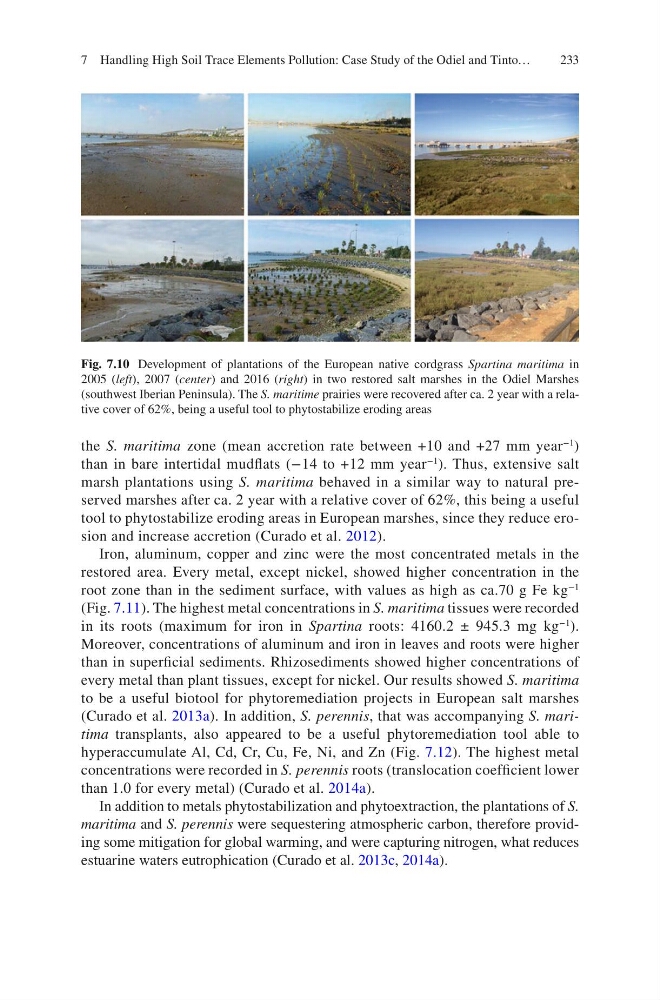
Fig. 7.10 Development of plantations of the European native cordgrass Spartina maritima in
2005 (left), 2007 (center) and 2016 (right) in two restored salt marshes in the Odiel Marshes
(southwest Iberian Peninsula). The S. maritime prairies were recovered after ca. 2 year with a relative cover of 62%, being a useful tool to phytostabilize eroding areas
7 Handling High Soil Trace Elements Pollution: Case Study of the Odiel and Tinto…
the S. maritima zone (mean accretion rate between +10 and +27 mm year
−1
)
than in bare intertidal mudflats (−14 to +12 mm year
−1
). Thus, extensive salt
marsh plantations using S. maritima behaved in a similar way to natural preserved marshes after ca. 2 year with a relative cover of 62%, this being a useful
tool to phytostabilize eroding areas in European marshes, since they reduce erosion and increase accretion (Curado et al. 2012).
Iron, aluminum, copper and zinc were the most concentrated metals in the
restored area. Every metal, except nickel, showed higher concentration in the
root zone than in the sediment surface, with values as high as ca.70 g Fe kg
−1
(Fig. 7.11). The highest metal concentrations in S. maritima tissues were recorded
in its roots (maximum for iron in Spartina roots: 4160.2 ± 945.3 mg kg
−1
).
Moreover, concentrations of aluminum and iron in leaves and roots were higher
than in superficial sediments. Rhizosediments showed higher concentrations of
every metal than plant tissues, except for nickel. Our results showed S. maritima
to be a useful biotool for phytoremediation projects in European salt marshes
(Curado et al. 2013a). In addition, S. perennis, that was accompanying S. maritima transplants, also appeared to be a useful phytoremediation tool able to
hyperaccumulate Al, Cd, Cr, Cu, Fe, Ni, and Zn (Fig. 7.12). The highest metal
concentrations were recorded in S. perennis roots (translocation coefficient lower
than 1.0 for every metal) (Curado et al. 2014a).
In addition to metals phytostabilization and phytoextraction, the plantations of S.
maritima and S. perennis were sequestering atmospheric carbon, therefore providing some mitigation for global warming, and were capturing nitrogen, what reduces
estuarine waters eutrophication (Curado et al. 2013c, 2014a).
Fig. 7.10 Development of plantations of the European native cordgrass Spartina maritima in
2005 (left), 2007 (center) and 2016 (right) in two restored salt marshes in the Odiel Marshes
(southwest Iberian Peninsula). The S. maritime prairies were recovered after ca. 2 year with a relative cover of 62%, being a useful tool to phytostabilize eroding areas
7 Handling High Soil Trace Elements Pollution: Case Study of the Odiel and Tinto…