

200
6.6.1 Present Threats of Coastal Water Resources
The Bangladesh coast constitutes the low-lying landmass of the Himalayan river
basin ecosystems (Iftekhar 2006). The formation of the delta plain commenced
some 12,000 years ago when the sea level started to rise rapidly due to the melting
of ice sheets to the north. About 6000 years ago, sea level rise slowed down and
coastal plains started to form (Islam 2001; Iftekhar 2006). The large rivers especially the Brahmaputra, Meghna and the Ganges are playing an important role in the
coastal region. Biogeographically, the coast is part of the Bay of Bengal large
marine ecosystem (Nishat et al. 2002). The Ganges fresh water plays a vital role in
coastal economy, floodplain fertility and keeps the balance of mangrove wetland
ecosystem services in south western coastal part of Bangladesh (Islam 2009a).
The Ganges River receives over 60% of its discharge from its tributaries. The
Gomti, Damodar, Yamuna Rivers, Mohananda are the major tributaries of Ganges
Rivers in the Indian portion (Helmer and Hespanhol 1997). The main distributaries
of the Ganges River in Bangladesh are the Baral, the Gorai, the Arial Khan, the
Bhairab, the Mathabhanga, the Kumar, Chitra and the Ichamati River (Miah 2001).
Their average annual combined discharge into the Bay of Bengal is 100,000–
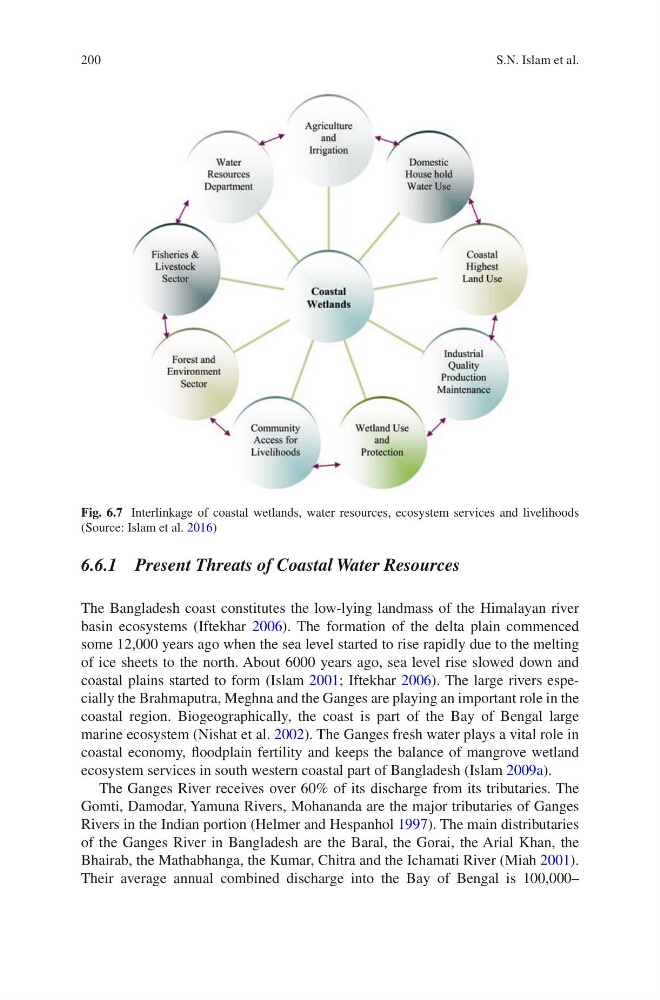
Fig. 6.7 Interlinkage of coastal wetlands, water resources, ecosystem services and livelihoods
(Source: Islam et al. 2016)
S.N. Islam et al.
6.6.1 Present Threats of Coastal Water Resources
The Bangladesh coast constitutes the low-lying landmass of the Himalayan river
basin ecosystems (Iftekhar 2006). The formation of the delta plain commenced
some 12,000 years ago when the sea level started to rise rapidly due to the melting
of ice sheets to the north. About 6000 years ago, sea level rise slowed down and
coastal plains started to form (Islam 2001; Iftekhar 2006). The large rivers especially the Brahmaputra, Meghna and the Ganges are playing an important role in the
coastal region. Biogeographically, the coast is part of the Bay of Bengal large
marine ecosystem (Nishat et al. 2002). The Ganges fresh water plays a vital role in
coastal economy, floodplain fertility and keeps the balance of mangrove wetland
ecosystem services in south western coastal part of Bangladesh (Islam 2009a).
The Ganges River receives over 60% of its discharge from its tributaries. The
Gomti, Damodar, Yamuna Rivers, Mohananda are the major tributaries of Ganges
Rivers in the Indian portion (Helmer and Hespanhol 1997). The main distributaries
of the Ganges River in Bangladesh are the Baral, the Gorai, the Arial Khan, the
Bhairab, the Mathabhanga, the Kumar, Chitra and the Ichamati River (Miah 2001).
Their average annual combined discharge into the Bay of Bengal is 100,000–
Fig. 6.7 Interlinkage of coastal wetlands, water resources, ecosystem services and livelihoods
(Source: Islam et al. 2016)
S.N. Islam et al.