

186
Ferran RodA, Xavier Mayor, Santiago Sabate and Victoria Diego
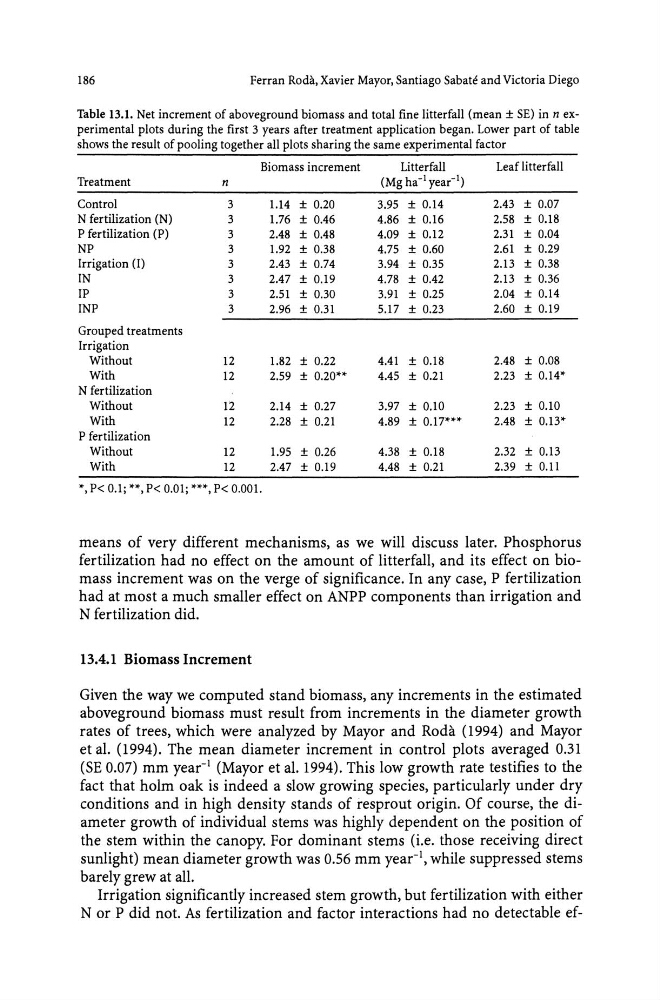
Table 13.1. Net increment of aboveground biomass and total fine litterfall (mean ± SE) in n experimental plots during the first 3 years after treatment application began. Lower part of table
shows the result of pooling together all plots sharing the same experimental factor
Biomass increment
Litterfall
Leaf litterfall
Treatment
Control
N fertilization (N)
P fertilization (P)
NP
Irrigation (I)
IN
IP
INP
Grouped treatments
Irrigation
Without
With
N fertilization
Without
With
P fertilization
Without
With
n
3
3
3
3
3
3
3
3
12
12
12
12
12
12
*, P< 0.1; **, P< 0.01; ***, P< 0.001.
1.14 ± 0.20
1.76 ± 0.46
2.48 ± 0.48
1.92 ± 0.38
2.43 ± 0.74
2.47 ± 0.19
2.51 ± 0.30
2.96 ± 0.31
1.82 ± 0.22
2.59 ± 0.20**
2.14 ± 0.27
2.28 ± 0.21
1.95 ± 0.26
2.47 ± 0.19
(Mg ha-1year- 1 )
3.95 ± 0.14
4.86 ± 0.16
4.09 ± 0.12
4.75 ± 0.60
3.94 ± 0.35
4.78 ± 0.42
3.91 ± 0.25
5.17 ± 0.23
4.41 ± 0.18
4.45 ± 0.21
3.97 ± 0.10
4.89 ± 0.17***
4.38 ± 0.18
4.48 ± 0.21
2.43
2.58
2.31
2.61
2.13
2.13
2.04
2.60
2.48
2.23
2.23
2.48
2.32
2.39
± 0.07
± 0.18
± 0.04
± 0.29
± 0.38
± 0.36
± 0.14
± 0.19
± 0.08
± 0.14*
± 0.10
± 0.13*
± 0.13
± 0.11
means of very different mechanisms, as we will discuss later. Phosphorus
fertilization had no effect on the amount of litterfall, and its effect on biomass increment was on the verge of significance. In any case, P fertilization
had at most a much smaller effect on ANPP components than irrigation and
N fertilization did.
13.4.1 Biomass Increment
Given the way we computed stand biomass, any increments in the estimated
aboveground biomass must result from increments in the diameter growth
rates of trees, which were analyzed by Mayor and Roda (1994) and Mayor
et al. (1994). The mean diameter increment in control plots averaged 0.31
(SE 0.07) mm year-) (Mayor et al. 1994). This low growth rate testifies to the
fact that holm oak is indeed a slow growing species, particularly under dry
conditions and in high density stands of resprout origin. Of course, the diameter growth of individual stems was highly dependent on the position of
the stem within the canopy. For dominant stems (i.e. those receiving direct
sunlight) mean diameter growth was 0.56 mm year-), while suppressed stems
barely grew at all.
Irrigation significantly increased stem growth, but fertilization with either
N or P did not. As fertilization and factor interactions had no detectable ef-
Ferran RodA, Xavier Mayor, Santiago Sabate and Victoria Diego
Table 13.1. Net increment of aboveground biomass and total fine litterfall (mean ± SE) in n experimental plots during the first 3 years after treatment application began. Lower part of table
shows the result of pooling together all plots sharing the same experimental factor
Biomass increment
Litterfall
Leaf litterfall
Treatment
Control
N fertilization (N)
P fertilization (P)
NP
Irrigation (I)
IN
IP
INP
Grouped treatments
Irrigation
Without
With
N fertilization
Without
With
P fertilization
Without
With
n
3
3
3
3
3
3
3
3
12
12
12
12
12
12
*, P< 0.1; **, P< 0.01; ***, P< 0.001.
1.14 ± 0.20
1.76 ± 0.46
2.48 ± 0.48
1.92 ± 0.38
2.43 ± 0.74
2.47 ± 0.19
2.51 ± 0.30
2.96 ± 0.31
1.82 ± 0.22
2.59 ± 0.20**
2.14 ± 0.27
2.28 ± 0.21
1.95 ± 0.26
2.47 ± 0.19
(Mg ha-1year- 1 )
3.95 ± 0.14
4.86 ± 0.16
4.09 ± 0.12
4.75 ± 0.60
3.94 ± 0.35
4.78 ± 0.42
3.91 ± 0.25
5.17 ± 0.23
4.41 ± 0.18
4.45 ± 0.21
3.97 ± 0.10
4.89 ± 0.17***
4.38 ± 0.18
4.48 ± 0.21
2.43
2.58
2.31
2.61
2.13
2.13
2.04
2.60
2.48
2.23
2.23
2.48
2.32
2.39
± 0.07
± 0.18
± 0.04
± 0.29
± 0.38
± 0.36
± 0.14
± 0.19
± 0.08
± 0.14*
± 0.10
± 0.13*
± 0.13
± 0.11
means of very different mechanisms, as we will discuss later. Phosphorus
fertilization had no effect on the amount of litterfall, and its effect on biomass increment was on the verge of significance. In any case, P fertilization
had at most a much smaller effect on ANPP components than irrigation and
N fertilization did.
13.4.1 Biomass Increment
Given the way we computed stand biomass, any increments in the estimated
aboveground biomass must result from increments in the diameter growth
rates of trees, which were analyzed by Mayor and Roda (1994) and Mayor
et al. (1994). The mean diameter increment in control plots averaged 0.31
(SE 0.07) mm year-) (Mayor et al. 1994). This low growth rate testifies to the
fact that holm oak is indeed a slow growing species, particularly under dry
conditions and in high density stands of resprout origin. Of course, the diameter growth of individual stems was highly dependent on the position of
the stem within the canopy. For dominant stems (i.e. those receiving direct
sunlight) mean diameter growth was 0.56 mm year-), while suppressed stems
barely grew at all.
Irrigation significantly increased stem growth, but fertilization with either
N or P did not. As fertilization and factor interactions had no detectable ef-