

315
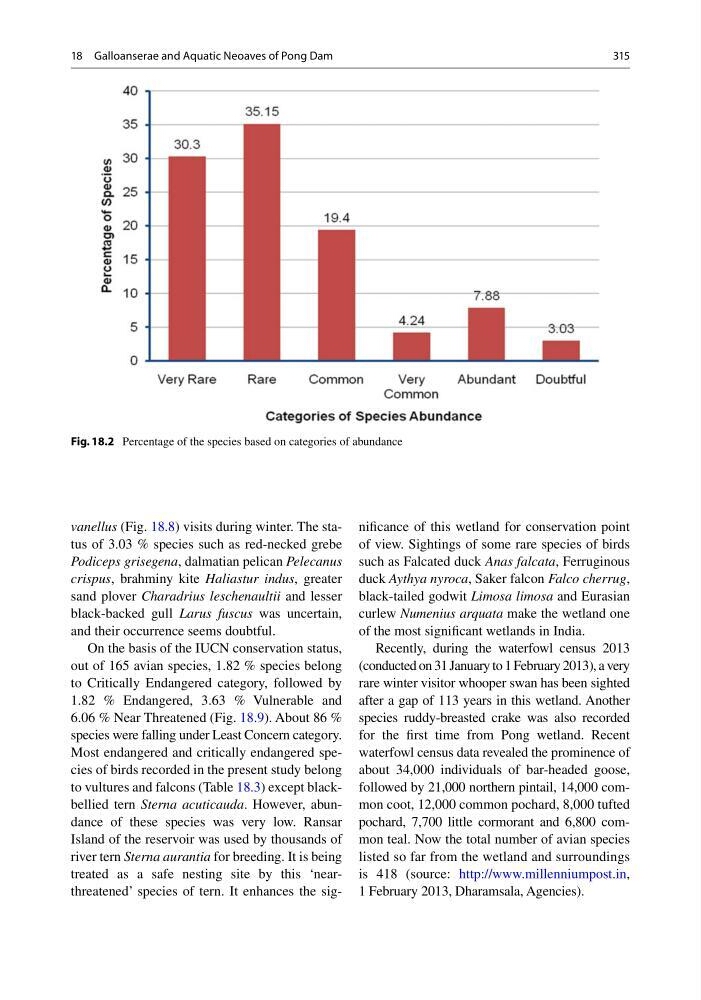
Fig. 18.2 Percentage of the species based on categories of abundance
vanellus (Fig. 18.8 ) visits during winter. The status of 3.03 % species such as red-necked grebe
Podiceps grisegena , dalmatian pelican Pelecanus
crispus , brahminy kite Haliastur indus , greater
sand plover Charadrius leschenaultii and lesser
black-backed gull Larus fuscus was uncertain,
and their occurrence seems doubtful.
On the basis of the IUCN conservation status,
out of 165 avian species, 1.82 % species belong
to Critically Endangered category, followed by
1.82 % Endangered, 3.63 % Vulnerable and
6.06 % Near Threatened (Fig. 18.9 ). About 86 %
species were falling under Least Concern category.
Most endangered and critically endangered species of birds recorded in the present study belong
to vultures and falcons (Table 18.3 ) except blackbellied tern Sterna acuticauda . However, abundance of these species was very low. Ransar
Island of the reservoir was used by thousands of
river tern Sterna aurantia for breeding. It is being
treated as a safe nesting site by this ‘nearthreatened’ species of tern. It enhances the signifi cance of this wetland for conservation point
of view. Sightings of some rare species of birds
such as Falcated duck Anas falcata , Ferruginous
duck Aythya nyroca , Saker falcon Falco cherrug ,
black-tailed godwit Limosa limosa and Eurasian
curlew Numenius arquata make the wetland one
of the most signifi cant wetlands in India.
Recently, during the waterfowl census 2013
(conducted on 31 January to 1 February 2013), a very
rare winter visitor whooper swan has been sighted
after a gap of 113 years in this wetland. Another
species ruddy-breasted crake was also recorded
for the fi rst time from Pong wetland. Recent
waterfowl census data revealed the prominence of
about 34,000 individuals of bar-headed goose,
followed by 21,000 northern pintail, 14,000 common coot, 12,000 common pochard, 8,000 tufted
pochard, 7,700 little cormorant and 6,800 common teal. Now the total number of avian species
listed so far from the wetland and surroundings
is 418 (source: http://www.millenniumpost.in ,
1 February 2013, Dharamsala, Agencies).
18 Galloanserae and Aquatic Neoaves of Pong Dam
Fig. 18.2 Percentage of the species based on categories of abundance
vanellus (Fig. 18.8 ) visits during winter. The status of 3.03 % species such as red-necked grebe
Podiceps grisegena , dalmatian pelican Pelecanus
crispus , brahminy kite Haliastur indus , greater
sand plover Charadrius leschenaultii and lesser
black-backed gull Larus fuscus was uncertain,
and their occurrence seems doubtful.
On the basis of the IUCN conservation status,
out of 165 avian species, 1.82 % species belong
to Critically Endangered category, followed by
1.82 % Endangered, 3.63 % Vulnerable and
6.06 % Near Threatened (Fig. 18.9 ). About 86 %
species were falling under Least Concern category.
Most endangered and critically endangered species of birds recorded in the present study belong
to vultures and falcons (Table 18.3 ) except blackbellied tern Sterna acuticauda . However, abundance of these species was very low. Ransar
Island of the reservoir was used by thousands of
river tern Sterna aurantia for breeding. It is being
treated as a safe nesting site by this ‘nearthreatened’ species of tern. It enhances the signifi cance of this wetland for conservation point
of view. Sightings of some rare species of birds
such as Falcated duck Anas falcata , Ferruginous
duck Aythya nyroca , Saker falcon Falco cherrug ,
black-tailed godwit Limosa limosa and Eurasian
curlew Numenius arquata make the wetland one
of the most signifi cant wetlands in India.
Recently, during the waterfowl census 2013
(conducted on 31 January to 1 February 2013), a very
rare winter visitor whooper swan has been sighted
after a gap of 113 years in this wetland. Another
species ruddy-breasted crake was also recorded
for the fi rst time from Pong wetland. Recent
waterfowl census data revealed the prominence of
about 34,000 individuals of bar-headed goose,
followed by 21,000 northern pintail, 14,000 common coot, 12,000 common pochard, 8,000 tufted
pochard, 7,700 little cormorant and 6,800 common teal. Now the total number of avian species
listed so far from the wetland and surroundings
is 418 (source: http://www.millenniumpost.in ,
1 February 2013, Dharamsala, Agencies).
18 Galloanserae and Aquatic Neoaves of Pong Dam