

Structure,
Long-term
storage, and
Local order
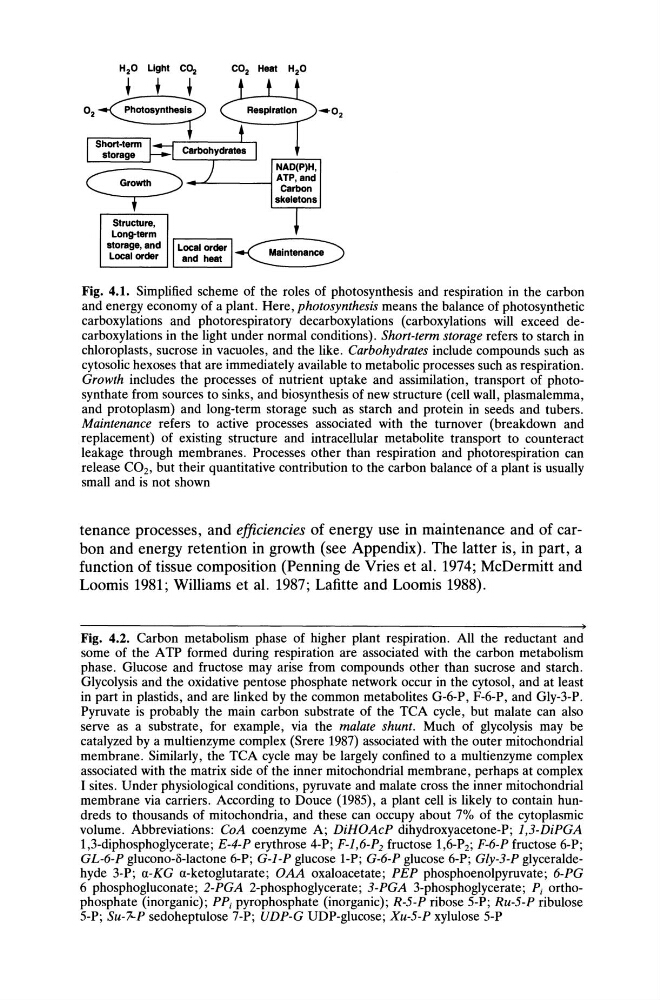
Fig. 4.1. Simplified scheme of the roles of photosynthesis and respiration in the carbon
and energy economy of a plant. Here, photosynthesis means the balance of photosynthetic
carboxylations and photorespiratory decarboxylations (carboxylations will exceed decarboxylations in the light under normal conditions). Short-term storage refers to starch in
chloroplasts, sucrose in vacuoles, and the like. Carbohydrates include compounds such as
cytosolic hexoses that are immediately available to metabolic processes such as respiration.
Growth includes the processes of nutrient uptake and assimilation, transport of photosynthate from sources to sinks, and biosynthesis of new structure (cell wall, plasmalemma,
and protoplasm) and long-term storage such as starch and protein in seeds and tubers.
Maintenance refers to active processes associated with the turnover (breakdown and
replacement) of existing structure and intracellular metabolite transport to counteract
leakage through membranes. Processes other than respiration and photorespiration can
release CO2, but their quantitative contribution to the carbon balance of a plant is usually
small and is not shown
tenance processes, and efficiencies of energy use in maintenance and of carbon and energy retention in growth (see Appendix). The latter is, in part, a
function of tissue composition (Penning de Vries et al. 1974; McDermitt and
Loomis 1981; Williams et al. 1987; Lafitte and Loomis 1988).
Fig. 4.2. Carbon metabolism phase of higher plant respiration. All the reductant and
some of the ATP formed during respiration are associated with the carbon metabolism
phase. Glucose and fructose may arise from compounds other than sucrose and starch.
Glycolysis and the oxidative pentose phosphate network occur in the cytosol, and at least
in part in plastids, and are linked by the common metabolites G-6-P, F-6-P, and Gly-3-P.
Pyruvate is probably the main carbon substrate of the TCA cycle, but malate can also
serve as a substrate, for example, via the malate shunt. Much of glycolysis may be
catalyzed by a multienzyme complex (Srere 1987) associated with the outer mitochondrial
membrane. Similarly, the TCA cycle may be largely confined to a multienzyme complex
associated with the matrix side of the inner mitochondrial membrane, perhaps at complex
I sites. Under physiological conditions, pyruvate and malate cross the inner mitochondrial
membrane via carriers. According to Douce (1985), a plant cell is likely to contain hundreds to thousands of mitochondria, and these can occupy about 7% of the cytoplasmic
volume. Abbreviations: CoA coenzyme A; DiHOAcP dihydroxyacetone-P; 1,3-DiPGA
1,3-diphosphoglycerate; E-4-P erythrose 4-P; F-l,6-P2 fructose 1,6-P2; F-6-P fructose 6-P;
GL-6-P glucono-li-lactone 6-P; G-I-P glucose I-P; G-6-P glucose 6-P; Gly-3-P glyceraldehyde 3-P; a-KG a-ketoglutarate; OAA oxaloacetate; PEP phosphoenolpyruvate; 6-PG
6 phosphogluconate; 2-PGA 2-phosphoglycerate; 3-PGA 3-phosphoglycerate; Pi orthophosphate (inorganic); PPi pyrophosphate (inorganic); R-5-P ribose 5-P; Ru-5-P ribulose
5-P; Su-J...P sedoheptulose 7-P; UDP-G UDP-glucose; Xu-5-P xylulose 5-P
Long-term
storage, and
Local order
Fig. 4.1. Simplified scheme of the roles of photosynthesis and respiration in the carbon
and energy economy of a plant. Here, photosynthesis means the balance of photosynthetic
carboxylations and photorespiratory decarboxylations (carboxylations will exceed decarboxylations in the light under normal conditions). Short-term storage refers to starch in
chloroplasts, sucrose in vacuoles, and the like. Carbohydrates include compounds such as
cytosolic hexoses that are immediately available to metabolic processes such as respiration.
Growth includes the processes of nutrient uptake and assimilation, transport of photosynthate from sources to sinks, and biosynthesis of new structure (cell wall, plasmalemma,
and protoplasm) and long-term storage such as starch and protein in seeds and tubers.
Maintenance refers to active processes associated with the turnover (breakdown and
replacement) of existing structure and intracellular metabolite transport to counteract
leakage through membranes. Processes other than respiration and photorespiration can
release CO2, but their quantitative contribution to the carbon balance of a plant is usually
small and is not shown
tenance processes, and efficiencies of energy use in maintenance and of carbon and energy retention in growth (see Appendix). The latter is, in part, a
function of tissue composition (Penning de Vries et al. 1974; McDermitt and
Loomis 1981; Williams et al. 1987; Lafitte and Loomis 1988).
Fig. 4.2. Carbon metabolism phase of higher plant respiration. All the reductant and
some of the ATP formed during respiration are associated with the carbon metabolism
phase. Glucose and fructose may arise from compounds other than sucrose and starch.
Glycolysis and the oxidative pentose phosphate network occur in the cytosol, and at least
in part in plastids, and are linked by the common metabolites G-6-P, F-6-P, and Gly-3-P.
Pyruvate is probably the main carbon substrate of the TCA cycle, but malate can also
serve as a substrate, for example, via the malate shunt. Much of glycolysis may be
catalyzed by a multienzyme complex (Srere 1987) associated with the outer mitochondrial
membrane. Similarly, the TCA cycle may be largely confined to a multienzyme complex
associated with the matrix side of the inner mitochondrial membrane, perhaps at complex
I sites. Under physiological conditions, pyruvate and malate cross the inner mitochondrial
membrane via carriers. According to Douce (1985), a plant cell is likely to contain hundreds to thousands of mitochondria, and these can occupy about 7% of the cytoplasmic
volume. Abbreviations: CoA coenzyme A; DiHOAcP dihydroxyacetone-P; 1,3-DiPGA
1,3-diphosphoglycerate; E-4-P erythrose 4-P; F-l,6-P2 fructose 1,6-P2; F-6-P fructose 6-P;
GL-6-P glucono-li-lactone 6-P; G-I-P glucose I-P; G-6-P glucose 6-P; Gly-3-P glyceraldehyde 3-P; a-KG a-ketoglutarate; OAA oxaloacetate; PEP phosphoenolpyruvate; 6-PG
6 phosphogluconate; 2-PGA 2-phosphoglycerate; 3-PGA 3-phosphoglycerate; Pi orthophosphate (inorganic); PPi pyrophosphate (inorganic); R-5-P ribose 5-P; Ru-5-P ribulose
5-P; Su-J...P sedoheptulose 7-P; UDP-G UDP-glucose; Xu-5-P xylulose 5-P