

Leaf Diffusive Conductances in the Major Vegetation Types of the Globe
469
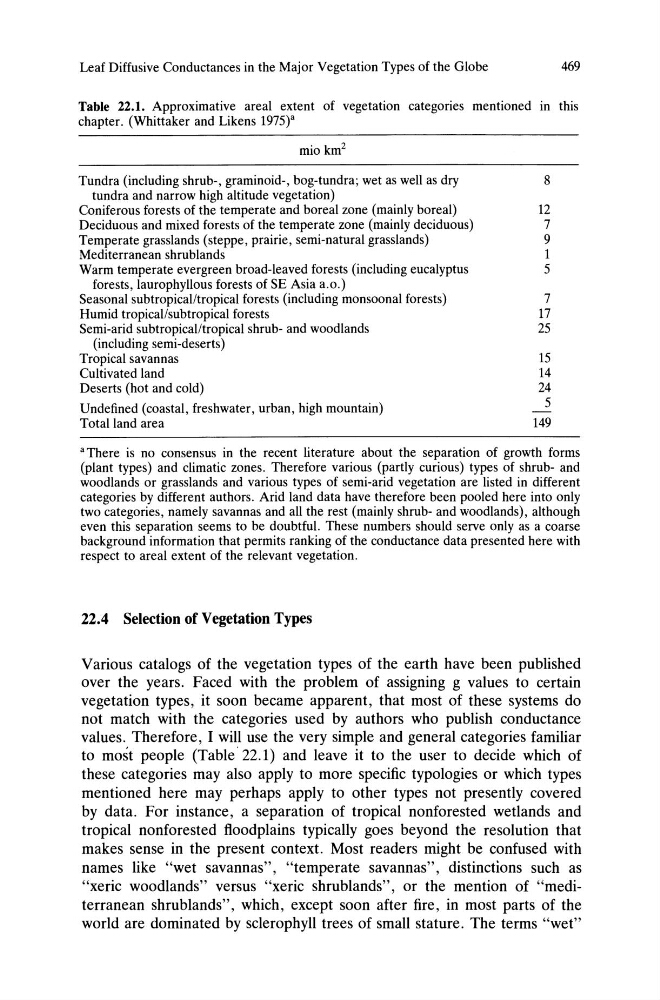
Table 22.1. Approximative areal extent of vegetation categories mentioned In this
chapter. (Whittaker and Likens 1975)a
Tundra (including shrub-, graminoid-, bog-tundra; wet as well as dry
tundra and narrow high altitude vegetation)
Coniferous forests of the temperate and boreal zone (mainly boreal)
Deciduous and mixed forests of the temperate zone (mainly deciduous)
Temperate grasslands (steppe, prairie, semi-natural grasslands)
Mediterranean shrub lands
Warm temperate evergreen broad-leaved forests (including eucalyptus
forests, laurophyllous forests of SE Asia a.o.)
Seasonal subtropical/tropical forests (including monsoonal forests)
Humid tropical/subtropical forests
Semi-arid subtropical/tropical shrub- and woodlands
(including semi-deserts)
Tropical savannas
Cultivated land
Deserts (hot and cold)
Undefined (coastal, freshwater, urban, high mountain)
Total land area
8
12
7
9
1
5
7
17
25
15
14
24
5
149
aThere is no consensus in the recent literature about the separation of growth forms
(plant types) and climatic zones. Therefore various (partly curious) types of shrub- and
woodlands or grasslands and various types of semi-arid vegetation are listed in different
categories by different authors. Arid land data have therefore been pooled here into only
two categories, namely savannas and all the rest (mainly shrub- and woodlands), although
even this separation seems to be doubtful. These numbers should serve only as a coarse
background information that permits ranking of the conductance data presented here with
respect to areal extent of the relevant vegetation.
22.4 Selection of Vegetation Types
Various catalogs of the vegetation types of the earth have been published
over the years. Faced with the problem of assigning g values to certain
vegetation types, it soon became apparent, that most of these systems do
not match with the categories used by authors who publish conductance
values. Therefore, I will use the very simple and general categories familiar
to most people (Table' 22.1) and leave it to the user to decide which of
these categories may also apply to more specific typologies or which types
mentioned here may perhaps apply to other types not presently covered
by data. For instance, a separation of tropical nonforested wetlands and
tropical nonforested floodplains typically goes beyond the resolution that
makes sense in the present context. Most readers might be confused with
names like "wet savannas", "temperate savannas", distinctions such as
"xeric woodlands" versus "xeric shrub lands" , or the mention of "mediterranean shrub lands" , which, except soon after fire, in most parts of the
world are dominated by sclerophyll trees of small stature. The terms "wet"
469
Table 22.1. Approximative areal extent of vegetation categories mentioned In this
chapter. (Whittaker and Likens 1975)a
Tundra (including shrub-, graminoid-, bog-tundra; wet as well as dry
tundra and narrow high altitude vegetation)
Coniferous forests of the temperate and boreal zone (mainly boreal)
Deciduous and mixed forests of the temperate zone (mainly deciduous)
Temperate grasslands (steppe, prairie, semi-natural grasslands)
Mediterranean shrub lands
Warm temperate evergreen broad-leaved forests (including eucalyptus
forests, laurophyllous forests of SE Asia a.o.)
Seasonal subtropical/tropical forests (including monsoonal forests)
Humid tropical/subtropical forests
Semi-arid subtropical/tropical shrub- and woodlands
(including semi-deserts)
Tropical savannas
Cultivated land
Deserts (hot and cold)
Undefined (coastal, freshwater, urban, high mountain)
Total land area
8
12
7
9
1
5
7
17
25
15
14
24
5
149
aThere is no consensus in the recent literature about the separation of growth forms
(plant types) and climatic zones. Therefore various (partly curious) types of shrub- and
woodlands or grasslands and various types of semi-arid vegetation are listed in different
categories by different authors. Arid land data have therefore been pooled here into only
two categories, namely savannas and all the rest (mainly shrub- and woodlands), although
even this separation seems to be doubtful. These numbers should serve only as a coarse
background information that permits ranking of the conductance data presented here with
respect to areal extent of the relevant vegetation.
22.4 Selection of Vegetation Types
Various catalogs of the vegetation types of the earth have been published
over the years. Faced with the problem of assigning g values to certain
vegetation types, it soon became apparent, that most of these systems do
not match with the categories used by authors who publish conductance
values. Therefore, I will use the very simple and general categories familiar
to most people (Table' 22.1) and leave it to the user to decide which of
these categories may also apply to more specific typologies or which types
mentioned here may perhaps apply to other types not presently covered
by data. For instance, a separation of tropical nonforested wetlands and
tropical nonforested floodplains typically goes beyond the resolution that
makes sense in the present context. Most readers might be confused with
names like "wet savannas", "temperate savannas", distinctions such as
"xeric woodlands" versus "xeric shrub lands" , or the mention of "mediterranean shrub lands" , which, except soon after fire, in most parts of the
world are dominated by sclerophyll trees of small stature. The terms "wet"