

438
J.D. Tenhunen et al.
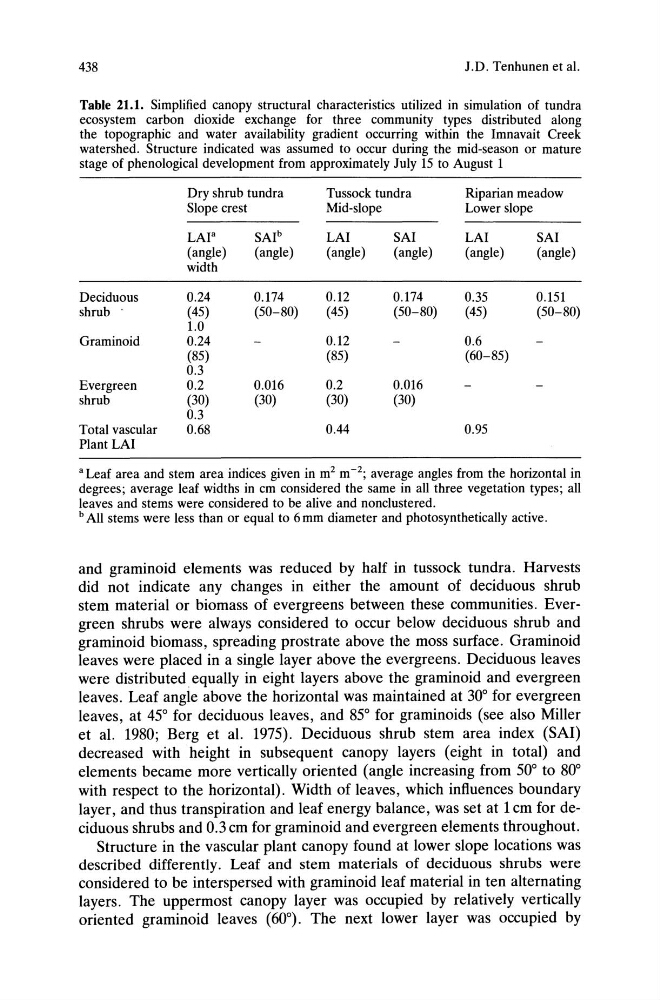
Table 21.1. Simplified canopy structural characteristics utilized in simulation of tundra
ecosystem carbon dioxide exchange for three community types distributed along
the topographic and water availability gradient occurring within the Imnavait Creek
watershed. Structure indicated was assumed to occur during the mid-season or mature
stage of phenological development from approximately July 15 to August 1
Deciduous
shrub
Graminoid
Evergreen
shrub
Total vascular
Plant LAI
Dry shrub tundra
Slope crest
LAI"
(angle)
width
0.24
(45)
1.0
0.24
(85)
0.3
0.2
(30)
0.3
0.68
SAl b
(angle)
0.174
(50-80)
0.016
(30)
Tussock tundra
Mid-slope
LAI
SAl
(angle)
(angle)
0.12
0.174
(45)
(50-80)
0.12
(85)
0.2
0.016
(30)
(30)
0.44
Riparian meadow
Lower slope
LAI
SAl
(angle)
(angle)
0.35
0.151
(45)
(50-80)
0.6
(60-85)
0.95
"Leaf area and stem area indices given in m 2 m- 2 ; average angles from the horizontal in
degrees; average leaf widths in cm considered the same in all three vegetation types; all
leaves and stems were considered to be alive and nonclustered.
b All stems were less than or equal to 6mm diameter and photosynthetically active.
and graminoid elements was reduced by half in tussock tundra. Harvests
did not indicate any changes in either the amount of deciduous shrub
stem material or biomass of evergreens between these communities. Evergreen shrubs were always considered to occur below deciduous shrub and
graminoid biomass, spreading prostrate above the moss surface. Graminoid
leaves were placed in a single layer above the evergreens. Deciduous leaves
were distributed equally in eight layers above the graminoid and evergreen
leaves. Leaf angle above the horizontal was maintained at 30° for evergreen
leaves, at 45° for deciduous leaves, and 85° for graminoids (see also Miller
et al. 1980; Berg et al. 1975). Deciduous shrub stem area index (SAl)
decreased with height in subsequent canopy layers (eight in total) and
elements became more vertically oriented (angle increasing from 50° to 80°
with respect to the horizontal). Width of leaves, which influences boundary
layer, and thus transpiration and leaf energy balance, was set at 1 cm for deciduous shrubs and 0.3 cm for graminoid and evergreen elements throughout.
Structure in the vascular plant canopy found at lower slope locations was
described differently. Leaf and stem materials of deciduous shrubs were
considered to be interspersed with graminoid leaf material in ten alternating
layers. The uppermost canopy layer was occupied by relatively vertically
oriented graminoid leaves (60°). The next lower layer was occupied by
J.D. Tenhunen et al.
Table 21.1. Simplified canopy structural characteristics utilized in simulation of tundra
ecosystem carbon dioxide exchange for three community types distributed along
the topographic and water availability gradient occurring within the Imnavait Creek
watershed. Structure indicated was assumed to occur during the mid-season or mature
stage of phenological development from approximately July 15 to August 1
Deciduous
shrub
Graminoid
Evergreen
shrub
Total vascular
Plant LAI
Dry shrub tundra
Slope crest
LAI"
(angle)
width
0.24
(45)
1.0
0.24
(85)
0.3
0.2
(30)
0.3
0.68
SAl b
(angle)
0.174
(50-80)
0.016
(30)
Tussock tundra
Mid-slope
LAI
SAl
(angle)
(angle)
0.12
0.174
(45)
(50-80)
0.12
(85)
0.2
0.016
(30)
(30)
0.44
Riparian meadow
Lower slope
LAI
SAl
(angle)
(angle)
0.35
0.151
(45)
(50-80)
0.6
(60-85)
0.95
"Leaf area and stem area indices given in m 2 m- 2 ; average angles from the horizontal in
degrees; average leaf widths in cm considered the same in all three vegetation types; all
leaves and stems were considered to be alive and nonclustered.
b All stems were less than or equal to 6mm diameter and photosynthetically active.
and graminoid elements was reduced by half in tussock tundra. Harvests
did not indicate any changes in either the amount of deciduous shrub
stem material or biomass of evergreens between these communities. Evergreen shrubs were always considered to occur below deciduous shrub and
graminoid biomass, spreading prostrate above the moss surface. Graminoid
leaves were placed in a single layer above the evergreens. Deciduous leaves
were distributed equally in eight layers above the graminoid and evergreen
leaves. Leaf angle above the horizontal was maintained at 30° for evergreen
leaves, at 45° for deciduous leaves, and 85° for graminoids (see also Miller
et al. 1980; Berg et al. 1975). Deciduous shrub stem area index (SAl)
decreased with height in subsequent canopy layers (eight in total) and
elements became more vertically oriented (angle increasing from 50° to 80°
with respect to the horizontal). Width of leaves, which influences boundary
layer, and thus transpiration and leaf energy balance, was set at 1 cm for deciduous shrubs and 0.3 cm for graminoid and evergreen elements throughout.
Structure in the vascular plant canopy found at lower slope locations was
described differently. Leaf and stem materials of deciduous shrubs were
considered to be interspersed with graminoid leaf material in ten alternating
layers. The uppermost canopy layer was occupied by relatively vertically
oriented graminoid leaves (60°). The next lower layer was occupied by