

Variation in Gas Exchange Characteristics Among Desert Plants
I hydraulic conductance
/
embolism
4 - - xylem analomy
"
sapwood alea
.... 1 - - - - - - - soil water availability
375
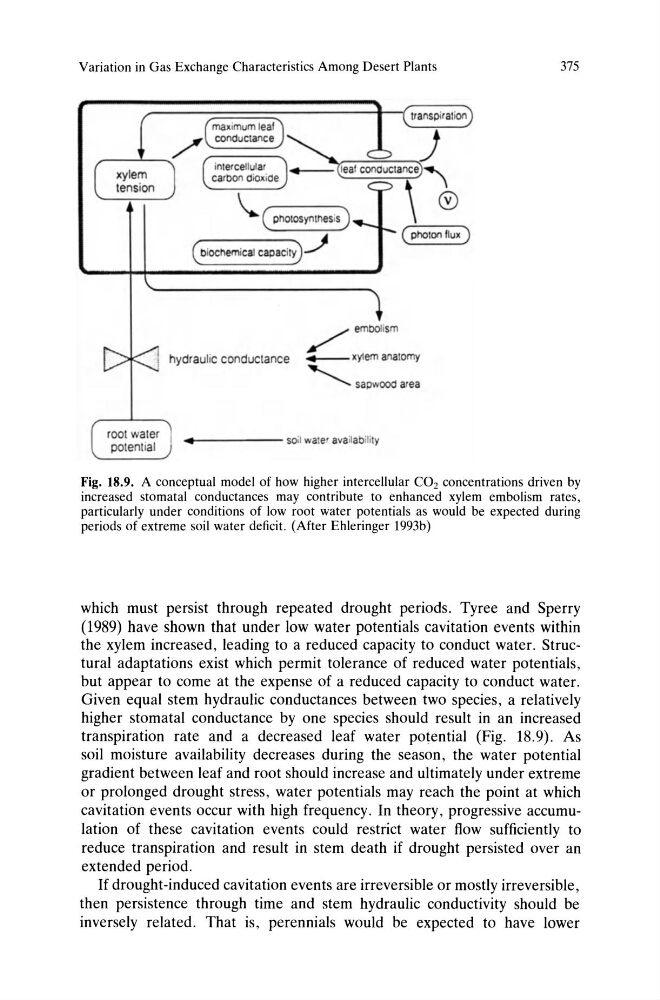
Fig. 18.9. A conceptual model of how higher intercellular CO2 concentrations driven by
increased stomatal conductances may contribute to enhanced xylem embolism rates,
particularly under conditions of low root water potentials as would be expected during
periods of extreme soil water deficit. (After Ehleringer 1993b)
which must persist through repeated drought periods. Tyree and Sperry
(1989) have shown that under low water potentials cavitation events within
the xylem increased, leading to a reduced capacity to conduct water. Structural adaptations exist which permit tolerance of reduced water potentials,
but appear to come at the expense of a reduced capacity to conduct water.
Given equal stem hydraulic conductances between two species, a relatively
higher stomatal conductance by one species should result in an increased
transpiration rate and a decreased leaf water potential (Fig. 18.9). As
soil moisture availability decreases during the season, the water potential
gradient between leaf and root should increase and ultimately under extreme
or prolonged drought stress, water potentials may reach the point at which
cavitation events occur with high frequency. In theory, progressive accumulation of these cavitation events could restrict water flow sufficiently to
reduce transpiration and result in stem death if drought persisted over an
extended period.
If drought-induced cavitation events are irreversible or mostly irreversible,
then persistence through time and stem hydraulic conductivity should be
inversely related. That is, perennials would be expected to have lower
I hydraulic conductance
/
embolism
4 - - xylem analomy
"
sapwood alea
.... 1 - - - - - - - soil water availability
375
Fig. 18.9. A conceptual model of how higher intercellular CO2 concentrations driven by
increased stomatal conductances may contribute to enhanced xylem embolism rates,
particularly under conditions of low root water potentials as would be expected during
periods of extreme soil water deficit. (After Ehleringer 1993b)
which must persist through repeated drought periods. Tyree and Sperry
(1989) have shown that under low water potentials cavitation events within
the xylem increased, leading to a reduced capacity to conduct water. Structural adaptations exist which permit tolerance of reduced water potentials,
but appear to come at the expense of a reduced capacity to conduct water.
Given equal stem hydraulic conductances between two species, a relatively
higher stomatal conductance by one species should result in an increased
transpiration rate and a decreased leaf water potential (Fig. 18.9). As
soil moisture availability decreases during the season, the water potential
gradient between leaf and root should increase and ultimately under extreme
or prolonged drought stress, water potentials may reach the point at which
cavitation events occur with high frequency. In theory, progressive accumulation of these cavitation events could restrict water flow sufficiently to
reduce transpiration and result in stem death if drought persisted over an
extended period.
If drought-induced cavitation events are irreversible or mostly irreversible,
then persistence through time and stem hydraulic conductivity should be
inversely related. That is, perennials would be expected to have lower