

Photosynthesis in Poi kilo hydric Plants: A Comparison of Lichens and Bryophytes
329
BRVOPHYTES
ECTOHYDRIC +
j
*Aint/A
1 to 2,·2
"LAI
1 (lhalloid liverwort)
tO~18 (129)(mosses)4.5 .•
VENTILATED ++
ENDOHYDRIC
r. ~ 2!ZZZl l?ZZllZZZI Epidermis
I
I
; : mli ;~;;;,~9'
1 (Marchantia)
to 19 (Polytrichales) 1
LlCHEN+++
: : , I 'c", ..
~ Ph,lob;,",
rm I CD @ © :
+ i Medulla
r, I
I
ii' --; t- IT - ~ Cortex
~ - ~-L -~ "(lower)
I
1 (Foliose)
to 19 (Fructicose) 8
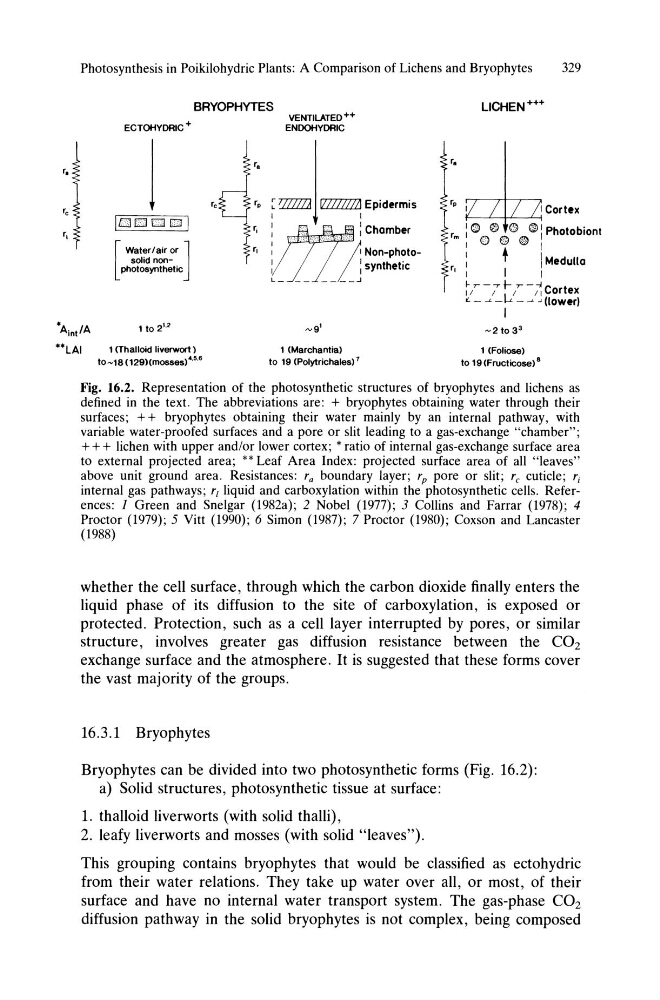
Fig. 16.2. Representation of the photosynthetic structures of bryophytes and lichens as
defined in the text. The abbreviations are: + bryophytes obtaining water through their
surfaces; + + bryophytes obtaining their water mainly by an internal pathway, with
variable water-proofed surfaces and a pore or slit leading to a gas-exchange "chamber";
+ + + lichen with upper and/or lower cortex; * ratio of internal gas-exchange surface area
to external projected area; ** Leaf Area Index: projected surface area of all "leaves"
above unit ground area. Resistances: ra boundary layer; rp pore or slit; rc cuticle; ri
internal gas pathways; rl liquid and carboxylation within the photosynthetic cells. References: 1 Green and Snelgar (1982a); 2 Nobel (1977); 3 Collins and Farrar (1978); 4
Proctor (1979); 5 Vitt (1990); 6 Simon (1987); 7 Proctor (1980); Coxson and Lancaster
(1988)
whether the cell surface, through which the carbon dioxide finally enters the
liquid phase of its diffusion to the site of carboxylation, is exposed or
protected. Protection, such as a cell layer interrupted by pores, or similar
structure, involves greater gas diffusion resistance between the CO 2
exchange surface and the atmosphere. It is suggested that these forms cover
the vast majority of the groups.
16.3.1 Bryophytes
Bryophytes can be divided into two photosynthetic forms (Fig. 16.2):
a) Solid structures, photosynthetic tissue at surface:
1. thalloid liverworts (with solid thalli),
2. leafy liverworts and mosses (with solid "leaves").
This grouping contains bryophytes that would be classified as ectohydric
from their water relations. They take up water over all, or most, of their
surface and have no internal water transport system. The gas-phase CO 2
diffusion pathway in the solid bryophytes is not complex, being composed
329
BRVOPHYTES
ECTOHYDRIC +
j
*Aint/A
1 to 2,·2
"LAI
1 (lhalloid liverwort)
tO~18 (129)(mosses)4.5 .•
VENTILATED ++
ENDOHYDRIC
r. ~ 2!ZZZl l?ZZllZZZI Epidermis
I
I
; : mli ;~;;;,~9'
1 (Marchantia)
to 19 (Polytrichales) 1
LlCHEN+++
: : , I 'c", ..
~ Ph,lob;,",
rm I CD @ © :
+ i Medulla
r, I
I
ii' --; t- IT - ~ Cortex
~ - ~-L -~ "(lower)
I
1 (Foliose)
to 19 (Fructicose) 8
Fig. 16.2. Representation of the photosynthetic structures of bryophytes and lichens as
defined in the text. The abbreviations are: + bryophytes obtaining water through their
surfaces; + + bryophytes obtaining their water mainly by an internal pathway, with
variable water-proofed surfaces and a pore or slit leading to a gas-exchange "chamber";
+ + + lichen with upper and/or lower cortex; * ratio of internal gas-exchange surface area
to external projected area; ** Leaf Area Index: projected surface area of all "leaves"
above unit ground area. Resistances: ra boundary layer; rp pore or slit; rc cuticle; ri
internal gas pathways; rl liquid and carboxylation within the photosynthetic cells. References: 1 Green and Snelgar (1982a); 2 Nobel (1977); 3 Collins and Farrar (1978); 4
Proctor (1979); 5 Vitt (1990); 6 Simon (1987); 7 Proctor (1980); Coxson and Lancaster
(1988)
whether the cell surface, through which the carbon dioxide finally enters the
liquid phase of its diffusion to the site of carboxylation, is exposed or
protected. Protection, such as a cell layer interrupted by pores, or similar
structure, involves greater gas diffusion resistance between the CO 2
exchange surface and the atmosphere. It is suggested that these forms cover
the vast majority of the groups.
16.3.1 Bryophytes
Bryophytes can be divided into two photosynthetic forms (Fig. 16.2):
a) Solid structures, photosynthetic tissue at surface:
1. thalloid liverworts (with solid thalli),
2. leafy liverworts and mosses (with solid "leaves").
This grouping contains bryophytes that would be classified as ectohydric
from their water relations. They take up water over all, or most, of their
surface and have no internal water transport system. The gas-phase CO 2
diffusion pathway in the solid bryophytes is not complex, being composed