

310
J.A. Raven
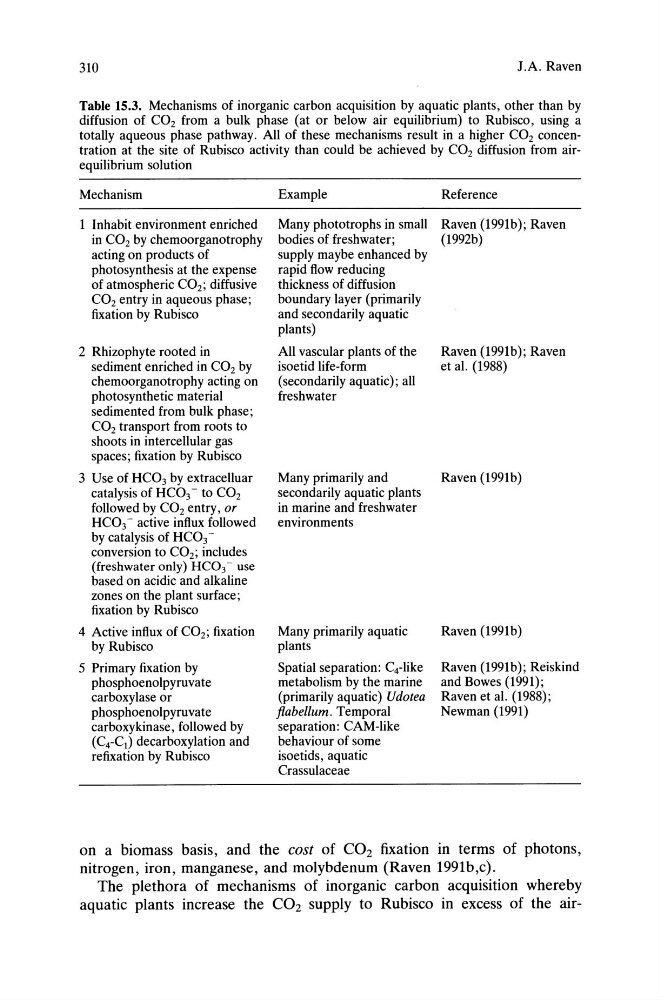
Table 15.3. Mechanisms of inorganic carbon acquisition by aquatic plants, other than by
diffusion of CO2 from a bulk phase (at or below air equilibrium) to Rubisco, using a
totally aqueous phase pathway. All of these mechanisms result in a higher CO2 concentration at the site of Rubisco activity than could be achieved by CO2 diffusion from airequilibrium solution
Mechanism
Example
Reference
1 Inhabit environment enriched
Many phototrophs in small Raven (1991b); Raven
in CO2 by chemoorganotrophy bodies of freshwater;
(1992b)
acting on products of
supply maybe enhanced by
photosynthesis at the expense
rapid flow reducing
of atmospheric CO2 ; diffusive
thickness of diffusion
CO2 entry in aqueous phase;
boundary layer (primarily
fixation by Rubisco
and secondarily aquatic
plants)
2 Rhizophyte rooted in
All vascular plants of the
Raven (1991b); Raven
sediment enriched in CO2 by
isoetid life-form
et al. (1988)
chemoorganotrophy acting on
(secondarily aquatic); all
photosynthetic material
freshwater
sedimented from bulk phase;
CO2 transport from roots to
shoots in intercellular gas
spaces; fixation by Rubisco
3 Use of HC03 by extracelluar
Many primarily and
Raven (1991b)
catalysis of HC03 - to CO2
secondarily aquatic plants
followed by CO2 entry, or
in marine and freshwater
HC03 - active influx followed
environments
by catalysis of HC0 3 -
conversion to CO2 ; includes
(freshwater only) HC03 - use
based on acidic and alkaline
zones on the plant surface;
fixation by Rubisco
4 Active influx of CO2 ; fixation
Many primarily aquatic
Raven (1991b)
by Rubisco
plants
5 Primary fixation by
Spatial separation: C4-like Raven (1991b); Reiskind
phosphoenolpyruvate
metabolism by the marine and Bowes (1991);
carboxylase or
(primarily aquatic) Udotea Raven et al. (1988);
phosphoenolpyruvate
flabellum. Temporal
Newman (1991)
carboxykinase, followed by
separation: CAM-like
(C4-C1) decarboxylation and
behaviour of some
refixation by Rubisco
isoetids, aquatic
Crassulaceae
on a biomass basis, and the cost of CO2 fixation in terms of photons,
nitrogen, iron, manganese, and molybdenum (Raven 1991b,c).
The plethora of mechanisms of inorganic carbon acquisition whereby
aquatic plants increase the CO2 supply to Rubisco in excess of the air-
J.A. Raven
Table 15.3. Mechanisms of inorganic carbon acquisition by aquatic plants, other than by
diffusion of CO2 from a bulk phase (at or below air equilibrium) to Rubisco, using a
totally aqueous phase pathway. All of these mechanisms result in a higher CO2 concentration at the site of Rubisco activity than could be achieved by CO2 diffusion from airequilibrium solution
Mechanism
Example
Reference
1 Inhabit environment enriched
Many phototrophs in small Raven (1991b); Raven
in CO2 by chemoorganotrophy bodies of freshwater;
(1992b)
acting on products of
supply maybe enhanced by
photosynthesis at the expense
rapid flow reducing
of atmospheric CO2 ; diffusive
thickness of diffusion
CO2 entry in aqueous phase;
boundary layer (primarily
fixation by Rubisco
and secondarily aquatic
plants)
2 Rhizophyte rooted in
All vascular plants of the
Raven (1991b); Raven
sediment enriched in CO2 by
isoetid life-form
et al. (1988)
chemoorganotrophy acting on
(secondarily aquatic); all
photosynthetic material
freshwater
sedimented from bulk phase;
CO2 transport from roots to
shoots in intercellular gas
spaces; fixation by Rubisco
3 Use of HC03 by extracelluar
Many primarily and
Raven (1991b)
catalysis of HC03 - to CO2
secondarily aquatic plants
followed by CO2 entry, or
in marine and freshwater
HC03 - active influx followed
environments
by catalysis of HC0 3 -
conversion to CO2 ; includes
(freshwater only) HC03 - use
based on acidic and alkaline
zones on the plant surface;
fixation by Rubisco
4 Active influx of CO2 ; fixation
Many primarily aquatic
Raven (1991b)
by Rubisco
plants
5 Primary fixation by
Spatial separation: C4-like Raven (1991b); Reiskind
phosphoenolpyruvate
metabolism by the marine and Bowes (1991);
carboxylase or
(primarily aquatic) Udotea Raven et al. (1988);
phosphoenolpyruvate
flabellum. Temporal
Newman (1991)
carboxykinase, followed by
separation: CAM-like
(C4-C1) decarboxylation and
behaviour of some
refixation by Rubisco
isoetids, aquatic
Crassulaceae
on a biomass basis, and the cost of CO2 fixation in terms of photons,
nitrogen, iron, manganese, and molybdenum (Raven 1991b,c).
The plethora of mechanisms of inorganic carbon acquisition whereby
aquatic plants increase the CO2 supply to Rubisco in excess of the air-