

Chapter 3 . Applications of Genetic Aigorithms
37
Early classic models that have contributed greatly to ecological theory included
the Lotka-Volterra (Lotka 1925, Volterra 1926) predator-prey population model
and H.T. Odum's (1957) Silver Spring ecosystem energy flow model. These and
other traditional ecological models are procedural, equation-based models. State
variables, equations, and parameters are explicitly coded into the model.
Equations and parameters are typically static with only the state variables
changing over time. These types of models have done much to help us test
ecological theory by determining if the observed system pattern could be produced
by equations representing the biological processes and interactions. An ability to
recreate the reflection teIls us that the proposed interactions and mechanisms are
plausible. These models paved the way for predictive models designed to
simulate how the effect of a stressor (e.g., nutrient loading) might change the
environment.
Major advances have been made in the field of ecology through ecological
modelling. However, the discovery of new theoretical breakthroughs via
traditional ecological modelling has been limited in the past decade. Jorgensen, in
his paper on the state-of-the-art of ecological modelling (1999), suggests that
ecological modelling has two primary difficulties that limit its effectiveness:
obtaining reliable parameters and how to build ecosystem properties into the
models. Constructing an ecosystem model requires a detailed understanding of
ecosystem function in order to determine the appropriate level of complexity. Yet,
even with reliable parameters and good model structure, traditional ecosystem
models don't represent system properties of adaptation. As a result, ecosystem
models base their analysis on parameters and structure at time t but attempt to
predict ecosystem function at time t+ 1 (Jorgensen 1999). This failure to
incorporate the dynamic structural aspects of ecological systems into oUf models
limits both oUf ability to understand governing mechanisms and oUf ability to
develop predictive models.
Genetic Aigorithms can substantiate ecological
theory by recreating it based on fundamental
rules (i.e. dynamic induction).
Ecological Rules
Models
1
Induction?
Ecological Principles and Patterns
If A+B+C yields 0
Then model A+B+C =
D?=pattern?,process?
Specles composltlon
Sustainability
Behavlor
Evolution
Dlverslty
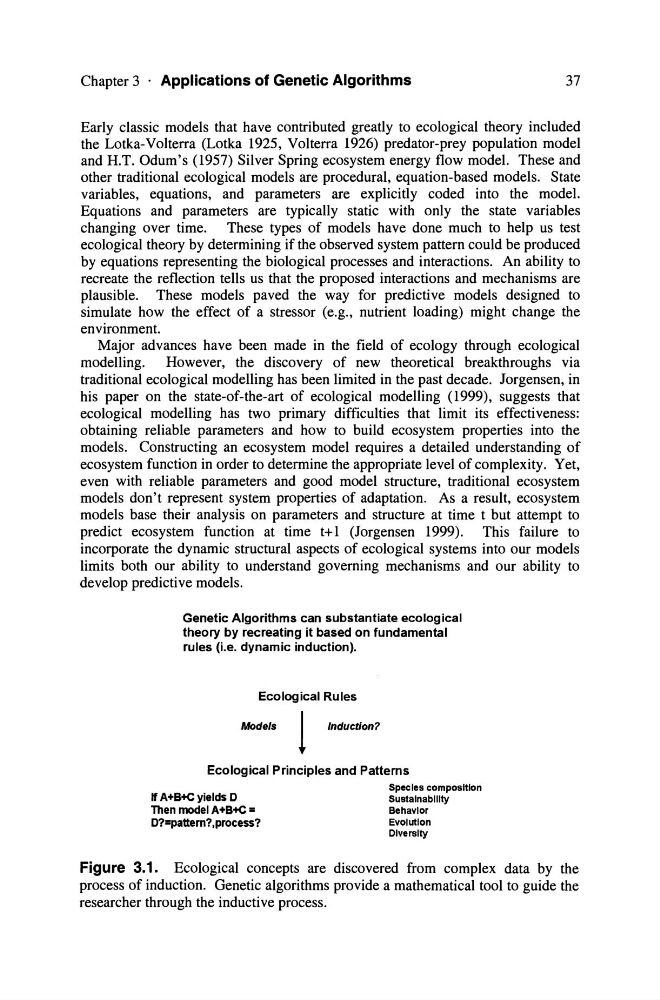
Figure 3.1. Ecological concepts are discovered from complex data by the
process of induction. Genetic algorithms provide a mathematical tool to guide the
researcher through the inductive process.
37
Early classic models that have contributed greatly to ecological theory included
the Lotka-Volterra (Lotka 1925, Volterra 1926) predator-prey population model
and H.T. Odum's (1957) Silver Spring ecosystem energy flow model. These and
other traditional ecological models are procedural, equation-based models. State
variables, equations, and parameters are explicitly coded into the model.
Equations and parameters are typically static with only the state variables
changing over time. These types of models have done much to help us test
ecological theory by determining if the observed system pattern could be produced
by equations representing the biological processes and interactions. An ability to
recreate the reflection teIls us that the proposed interactions and mechanisms are
plausible. These models paved the way for predictive models designed to
simulate how the effect of a stressor (e.g., nutrient loading) might change the
environment.
Major advances have been made in the field of ecology through ecological
modelling. However, the discovery of new theoretical breakthroughs via
traditional ecological modelling has been limited in the past decade. Jorgensen, in
his paper on the state-of-the-art of ecological modelling (1999), suggests that
ecological modelling has two primary difficulties that limit its effectiveness:
obtaining reliable parameters and how to build ecosystem properties into the
models. Constructing an ecosystem model requires a detailed understanding of
ecosystem function in order to determine the appropriate level of complexity. Yet,
even with reliable parameters and good model structure, traditional ecosystem
models don't represent system properties of adaptation. As a result, ecosystem
models base their analysis on parameters and structure at time t but attempt to
predict ecosystem function at time t+ 1 (Jorgensen 1999). This failure to
incorporate the dynamic structural aspects of ecological systems into oUf models
limits both oUf ability to understand governing mechanisms and oUf ability to
develop predictive models.
Genetic Aigorithms can substantiate ecological
theory by recreating it based on fundamental
rules (i.e. dynamic induction).
Ecological Rules
Models
1
Induction?
Ecological Principles and Patterns
If A+B+C yields 0
Then model A+B+C =
D?=pattern?,process?
Specles composltlon
Sustainability
Behavlor
Evolution
Dlverslty
Figure 3.1. Ecological concepts are discovered from complex data by the
process of induction. Genetic algorithms provide a mathematical tool to guide the
researcher through the inductive process.