

34.4 Conclusion
34.3.4 Ecological Integrity and Social
and Economic Resiliency
The components of the assessment produced large
amounts of information describing different attributes of the basin. These separate analyses were
combined to provide integrity and resiliency estimates for 164 river subbasins, ranging from
325,000 to 400,000 ha in size. The ratings were
based on data and analysis, empirical models, trend
analysis, and expert judgement. Forests and rangelands exhibiting high integrity were defined as having a mosaic of plant and animal communities consisting of well-connected, high-quality habitats that
support a diverse assemblage of native and desired
nonnative species, the full expression of potential
life histories and taxonomic lineages, and the taxonomic and genetic diversity necessary for longterm persistence and adaptation in a variable environment (Quigley et aI., 1996). Areas exhibiting the
most elements of a system with high integrity were
rated as high, and those with the fewest elements
were rated low; the medium rating fell in between
(Figure 34.7). Similar approaches were used to develop integrity ratings for the hydrologic and
aquatic components of the basin (Figure 34.8).
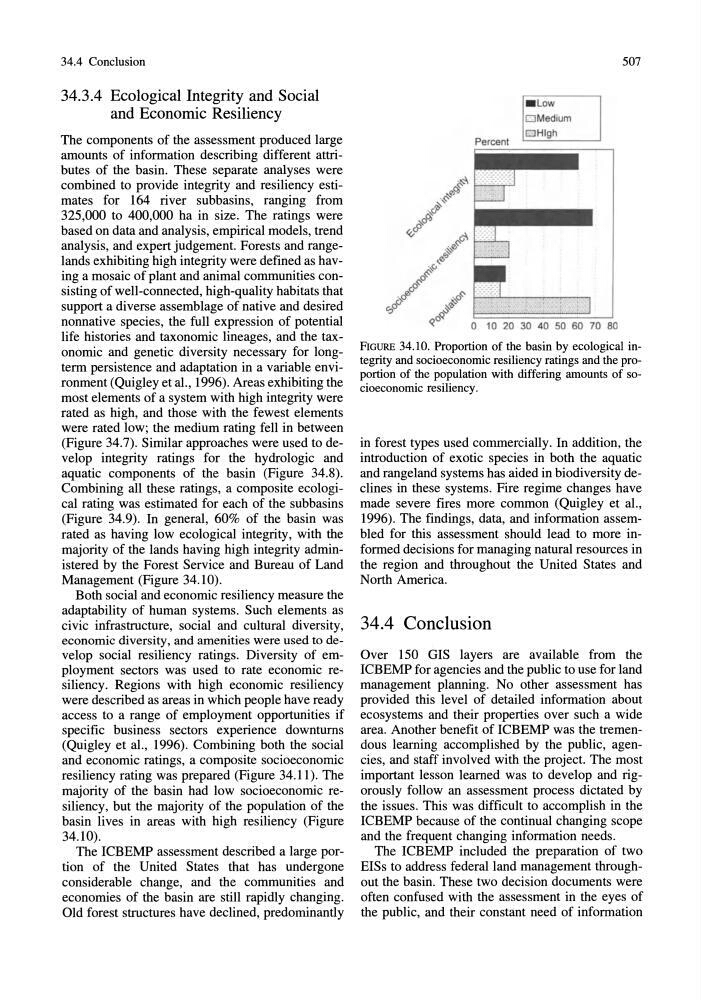
Combining all these ratings, a composite ecological rating was estimated for each of the subbasins
(Figure 34.9). In general, 60% of the basin was
rated as having low ecological integrity, with the
majority of the lands having high integrity administered by the Forest Service and Bureau of Land
Management (Figure 34.10).
Both social and economic resiliency measure the
adaptability of human systems. Such elements as
civic infrastructure, social and cultural diversity,
economic diversity, and amenities were used to develop social resiliency ratings. Diversity of employment sectors was used to rate economic resiliency. Regions with high economic resiliency
were described as areas in which people have ready
access to a range of employment opportunities if
specific business sectors experience downturns
(Quigley et aI., 1996). Combining both the social
and economic ratings, a composite socioeconomic
resiliency rating was prepared (Figure 34.11). The
majority of the basin had low socioeconomic resiliency, but the majority of the population of the
basin lives in areas with high resiliency (Figure
34.10).
The ICBEMP assessment described a large portion of the United States that has undergone
considerable change, and the communities and
economies of the basin are still rapidly changing.
Old forest structures have declined, predominantly
Percent
• Low
OMedium
OHlgh
o 10 20 30 40 50 60 70 80
507
FIGURE 34.10. Proportion of the basin by ecological integrity and socioeconomic resiliency ratings and the proportion of the population with differing amounts of socioeconomic resiliency.
in forest types used commercially. In addition, the
introduction of exotic species in both the aquatic
and rangeland systems has aided in biodiversity declines in these systems. Fire regime changes have
made severe fires more common (Quigley et al.,
1996). The findings, data, and information assembled for this assessment should lead to more informed decisions for managing natural resources in
the region and throughout the United States and
North America.
34.4 Conclusion
Over 150 GIS layers are available from the
ICBEMP for agencies and the public to use for land
management planning. No other assessment has
provided this level of detailed information about
ecosystems and their properties over such a wide
area. Another benefit of ICBEMP was the tremendous learning accomplished by the public, agencies, and staff involved with the project. The most
important lesson learned was to develop and rigorously follow an assessment process dictated by
the issues. This was difficult to accomplish in the
ICBEMP because of the continual changing scope
and the frequent changing information needs.
The ICBEMP included the preparation of two
EISs to address federal land management throughout the basin. These two decision documents were
often confused with the assessment in the eyes of
the public, and their constant need of information
34.3.4 Ecological Integrity and Social
and Economic Resiliency
The components of the assessment produced large
amounts of information describing different attributes of the basin. These separate analyses were
combined to provide integrity and resiliency estimates for 164 river subbasins, ranging from
325,000 to 400,000 ha in size. The ratings were
based on data and analysis, empirical models, trend
analysis, and expert judgement. Forests and rangelands exhibiting high integrity were defined as having a mosaic of plant and animal communities consisting of well-connected, high-quality habitats that
support a diverse assemblage of native and desired
nonnative species, the full expression of potential
life histories and taxonomic lineages, and the taxonomic and genetic diversity necessary for longterm persistence and adaptation in a variable environment (Quigley et aI., 1996). Areas exhibiting the
most elements of a system with high integrity were
rated as high, and those with the fewest elements
were rated low; the medium rating fell in between
(Figure 34.7). Similar approaches were used to develop integrity ratings for the hydrologic and
aquatic components of the basin (Figure 34.8).
Combining all these ratings, a composite ecological rating was estimated for each of the subbasins
(Figure 34.9). In general, 60% of the basin was
rated as having low ecological integrity, with the
majority of the lands having high integrity administered by the Forest Service and Bureau of Land
Management (Figure 34.10).
Both social and economic resiliency measure the
adaptability of human systems. Such elements as
civic infrastructure, social and cultural diversity,
economic diversity, and amenities were used to develop social resiliency ratings. Diversity of employment sectors was used to rate economic resiliency. Regions with high economic resiliency
were described as areas in which people have ready
access to a range of employment opportunities if
specific business sectors experience downturns
(Quigley et aI., 1996). Combining both the social
and economic ratings, a composite socioeconomic
resiliency rating was prepared (Figure 34.11). The
majority of the basin had low socioeconomic resiliency, but the majority of the population of the
basin lives in areas with high resiliency (Figure
34.10).
The ICBEMP assessment described a large portion of the United States that has undergone
considerable change, and the communities and
economies of the basin are still rapidly changing.
Old forest structures have declined, predominantly
Percent
• Low
OMedium
OHlgh
o 10 20 30 40 50 60 70 80
507
FIGURE 34.10. Proportion of the basin by ecological integrity and socioeconomic resiliency ratings and the proportion of the population with differing amounts of socioeconomic resiliency.
in forest types used commercially. In addition, the
introduction of exotic species in both the aquatic
and rangeland systems has aided in biodiversity declines in these systems. Fire regime changes have
made severe fires more common (Quigley et al.,
1996). The findings, data, and information assembled for this assessment should lead to more informed decisions for managing natural resources in
the region and throughout the United States and
North America.
34.4 Conclusion
Over 150 GIS layers are available from the
ICBEMP for agencies and the public to use for land
management planning. No other assessment has
provided this level of detailed information about
ecosystems and their properties over such a wide
area. Another benefit of ICBEMP was the tremendous learning accomplished by the public, agencies, and staff involved with the project. The most
important lesson learned was to develop and rigorously follow an assessment process dictated by
the issues. This was difficult to accomplish in the
ICBEMP because of the continual changing scope
and the frequent changing information needs.
The ICBEMP included the preparation of two
EISs to address federal land management throughout the basin. These two decision documents were
often confused with the assessment in the eyes of
the public, and their constant need of information