

32
(a)
A Theoretical Framework for Ecological Assessment
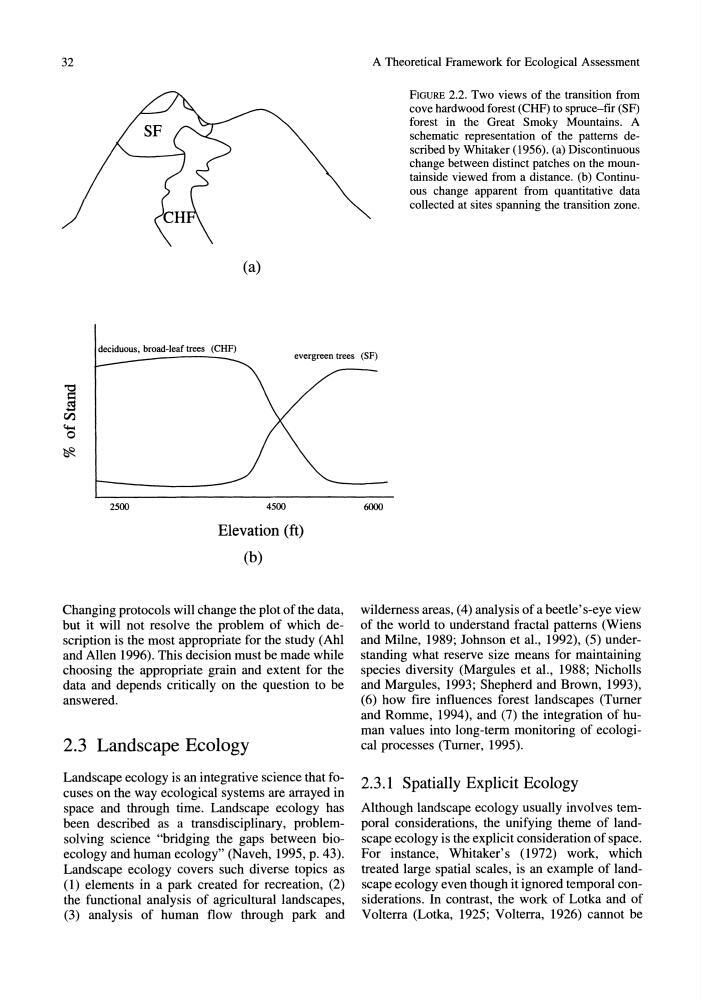
FIGURE 2.2. Two views of the transition from
cove hardwood forest (CHF) to spruce-fir (SF)
forest in the Great Smoky Mountains. A
schematic representation of the patterns described by Whitaker (1956). (a) Discontinuous
change between distinct patches on the mountainside viewed from a distance. (b) Continuous change apparent from quantitative data
collected at sites spanning the transition zone.
deciduous, broad-leaf trees (CHF)
evergreen trees (SF)
2500
4500
Elevation (ft)
(b)
Changing protocols will change the plot of the data,
but it will not resolve the problem of which description is the most appropriate for the study (Ahl
and Allen 1996). This decision must be made while
choosing the appropriate grain and extent for the
data and depends critically on the question to be
answered.
2.3 Landscape Ecology
Landscape ecology is an integrative science that focuses on the way ecological systems are arrayed in
space and through time. Landscape ecology has
been described as a transdisciplinary, problemsolving science "bridging the gaps between bioecology and human ecology" (Naveh, 1995, p. 43).
Landscape ecology covers such diverse topics as
(1) elements in a park created for recreation, (2)
the functional analysis of agricultural landscapes,
(3) analysis of human flow through park and
6000
wilderness areas, (4) analysis of a beetle' s-eye view
of the world to understand fractal patterns (Wiens
and Milne, 1989; Johnson et al., 1992), (5) understanding what reserve size means for maintaining
species diversity (Margules et al., 1988; Nicholls
and Margules, 1993; Shepherd and Brown, 1993),
(6) how fire influences forest landscapes (Turner
and Romme, 1994), and (7) the integration of human values into long-term monitoring of ecological processes (Turner, 1995).
2.3.1 Spatially Explicit Ecology
Although landscape ecology usually involves temporal considerations, the unifying theme of landscape ecology is the explicit consideration of space.
For instance, Whitaker's (1972) work, which
treated large spatial scales, is an example of landscape ecology even though it ignored temporal considerations. In contrast, the work of Lotka and of
Volterra (Lotka, 1925; Volterra, 1926) cannot be
(a)
A Theoretical Framework for Ecological Assessment
FIGURE 2.2. Two views of the transition from
cove hardwood forest (CHF) to spruce-fir (SF)
forest in the Great Smoky Mountains. A
schematic representation of the patterns described by Whitaker (1956). (a) Discontinuous
change between distinct patches on the mountainside viewed from a distance. (b) Continuous change apparent from quantitative data
collected at sites spanning the transition zone.
deciduous, broad-leaf trees (CHF)
evergreen trees (SF)
2500
4500
Elevation (ft)
(b)
Changing protocols will change the plot of the data,
but it will not resolve the problem of which description is the most appropriate for the study (Ahl
and Allen 1996). This decision must be made while
choosing the appropriate grain and extent for the
data and depends critically on the question to be
answered.
2.3 Landscape Ecology
Landscape ecology is an integrative science that focuses on the way ecological systems are arrayed in
space and through time. Landscape ecology has
been described as a transdisciplinary, problemsolving science "bridging the gaps between bioecology and human ecology" (Naveh, 1995, p. 43).
Landscape ecology covers such diverse topics as
(1) elements in a park created for recreation, (2)
the functional analysis of agricultural landscapes,
(3) analysis of human flow through park and
6000
wilderness areas, (4) analysis of a beetle' s-eye view
of the world to understand fractal patterns (Wiens
and Milne, 1989; Johnson et al., 1992), (5) understanding what reserve size means for maintaining
species diversity (Margules et al., 1988; Nicholls
and Margules, 1993; Shepherd and Brown, 1993),
(6) how fire influences forest landscapes (Turner
and Romme, 1994), and (7) the integration of human values into long-term monitoring of ecological processes (Turner, 1995).
2.3.1 Spatially Explicit Ecology
Although landscape ecology usually involves temporal considerations, the unifying theme of landscape ecology is the explicit consideration of space.
For instance, Whitaker's (1972) work, which
treated large spatial scales, is an example of landscape ecology even though it ignored temporal considerations. In contrast, the work of Lotka and of
Volterra (Lotka, 1925; Volterra, 1926) cannot be