

424
Assessing Human Processes in Society-Environment Interactions
"'C
C
til
o
:5
Qj
Co
&.
Stage 1
.
High
Stationary
.o •
.. ..
. .,.. .. ~ ..
" . " ...
.. " . .. .
..
'.
. .
Stage 2
Early
Expanding
. ............... .
•• . . •• ' . ". .' . . • • • ..
Stage 3
Late
Expanding
. .
\ ..
' . \
'.
Stage 4
Low
Stationary
Stage 5
Steady or
Declining
..... ~ ........... .
.'", ·4fJ"1 ,.. """"
,,"
..
.." .1,4/."" V·""" """" .....,. .... .:.:.:::"
Death Rate
Time
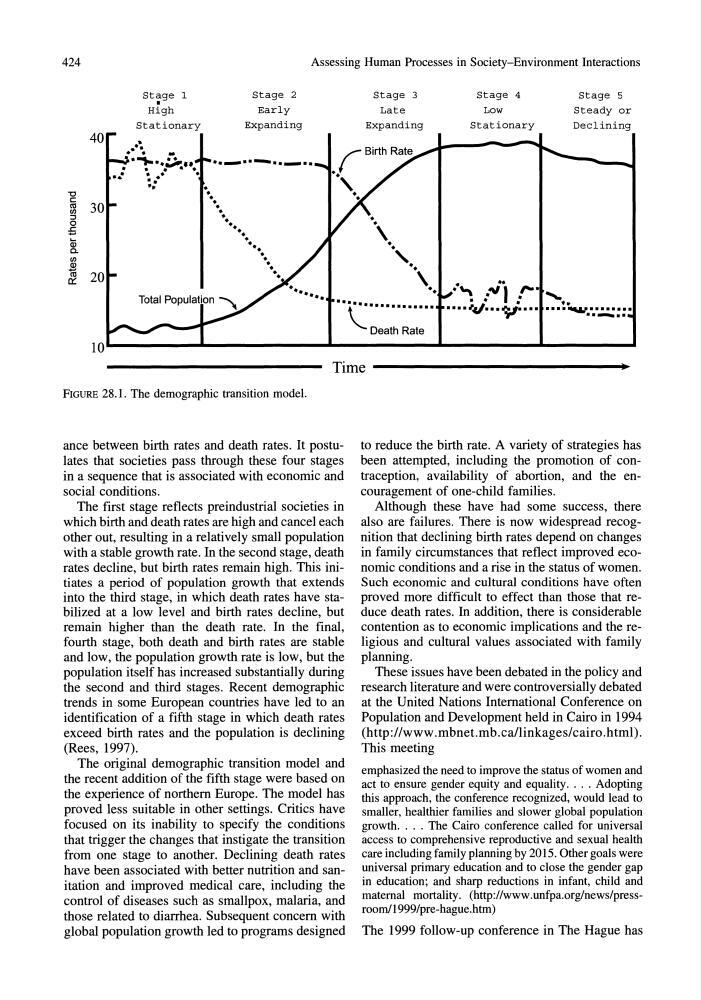
FIGURE 28.1. The demographic transition model.
ance between birth rates and death rates. It postulates that societies pass through these four stages
in a sequence that is associated with economic and
social conditions.
The first stage reflects preindustrial societies in
which birth and death rates are high and cancel each
other out, resulting in a relatively small population
with a stable growth rate. In the second stage, death
rates decline, but birth rates remain high. This initiates a period of population growth that extends
into the third stage, in which death rates have stabilized at a low level and birth rates decline, but
remain higher than the death rate. In the final,
fourth stage, both death and birth rates are stable
and low, the population growth rate is low, but the
population itself has increased substantially during
the second and third stages. Recent demographic
trends in some European countries have led to an
identification of a fifth stage in which death rates
exceed birth rates and the population is declining
(Rees, 1997).
The original demographic transition model and
the recent addition of the fifth stage were based on
the experience of northern Europe. The model has
proved less suitable in other settings. Critics have
focused on its inability to specify the conditions
that trigger the changes that instigate the transition
from one stage to another. Declining death rates
have been associated with better nutrition and sanitation and improved medical care, including the
control of diseases such as smallpox, malaria, and
those related to diarrhea. Subsequent concern with
global population growth led to programs designed
to reduce the birth rate. A variety of strategies has
been attempted, including the promotion of contraception, availability of abortion, and the encouragement of one-child families.
Although these have had some success, there
also are failures. There is now widespread recognition that declining birth rates depend on changes
in family circumstances that reflect improved economic conditions and a rise in the status of women.
Such economic and cultural conditions have often
proved more difficult to effect than those that reduce death rates. In addition, there is considerable
contention as to economic implications and the religious and cultural values associated with family
planning.
These issues have been debated in the policy and
research literature and were controversially debated
at the United Nations International Conference on
Population and Development held in Cairo in 1994
(http://www.mbnet.mb.ca/linkages/cairo.html).
This meeting
emphasized the need to improve the status of women and
act to ensure gender equity and equality. . . . Adopting
this approach, the conference recognized, would lead to
smaller, healthier families and slower global popUlation
growth .... The Cairo conference called for universal
access to comprehensive reproductive and sexual health
care including family planning by 2015. Other goals were
universal primary education and to close the gender gap
in education; and sharp reductions in infant, child and
maternal mortality. (http://www.unfpa.org/news/pressroomlI999/pre-hague.htm)
The 1999 follow-up conference in The Hague has
Assessing Human Processes in Society-Environment Interactions
"'C
C
til
o
:5
Qj
Co
&.
Stage 1
.
High
Stationary
.o •
.. ..
. .,.. .. ~ ..
" . " ...
.. " . .. .
..
'.
. .
Stage 2
Early
Expanding
. ............... .
•• . . •• ' . ". .' . . • • • ..
Stage 3
Late
Expanding
. .
\ ..
' . \
'.
Stage 4
Low
Stationary
Stage 5
Steady or
Declining
..... ~ ........... .
.'", ·4fJ"1 ,.. """"
,,"
..
.." .1,4/."" V·""" """" .....,. .... .:.:.:::"
Death Rate
Time
FIGURE 28.1. The demographic transition model.
ance between birth rates and death rates. It postulates that societies pass through these four stages
in a sequence that is associated with economic and
social conditions.
The first stage reflects preindustrial societies in
which birth and death rates are high and cancel each
other out, resulting in a relatively small population
with a stable growth rate. In the second stage, death
rates decline, but birth rates remain high. This initiates a period of population growth that extends
into the third stage, in which death rates have stabilized at a low level and birth rates decline, but
remain higher than the death rate. In the final,
fourth stage, both death and birth rates are stable
and low, the population growth rate is low, but the
population itself has increased substantially during
the second and third stages. Recent demographic
trends in some European countries have led to an
identification of a fifth stage in which death rates
exceed birth rates and the population is declining
(Rees, 1997).
The original demographic transition model and
the recent addition of the fifth stage were based on
the experience of northern Europe. The model has
proved less suitable in other settings. Critics have
focused on its inability to specify the conditions
that trigger the changes that instigate the transition
from one stage to another. Declining death rates
have been associated with better nutrition and sanitation and improved medical care, including the
control of diseases such as smallpox, malaria, and
those related to diarrhea. Subsequent concern with
global population growth led to programs designed
to reduce the birth rate. A variety of strategies has
been attempted, including the promotion of contraception, availability of abortion, and the encouragement of one-child families.
Although these have had some success, there
also are failures. There is now widespread recognition that declining birth rates depend on changes
in family circumstances that reflect improved economic conditions and a rise in the status of women.
Such economic and cultural conditions have often
proved more difficult to effect than those that reduce death rates. In addition, there is considerable
contention as to economic implications and the religious and cultural values associated with family
planning.
These issues have been debated in the policy and
research literature and were controversially debated
at the United Nations International Conference on
Population and Development held in Cairo in 1994
(http://www.mbnet.mb.ca/linkages/cairo.html).
This meeting
emphasized the need to improve the status of women and
act to ensure gender equity and equality. . . . Adopting
this approach, the conference recognized, would lead to
smaller, healthier families and slower global popUlation
growth .... The Cairo conference called for universal
access to comprehensive reproductive and sexual health
care including family planning by 2015. Other goals were
universal primary education and to close the gender gap
in education; and sharp reductions in infant, child and
maternal mortality. (http://www.unfpa.org/news/pressroomlI999/pre-hague.htm)
The 1999 follow-up conference in The Hague has