

418
Assessing Human Processes in Society-Environment Interactions
etal and biophysical systems. These include the following:
1. The role of power in determining outcomes of
interaction.
2. Awareness that social heterogeneity, in terms of
categories such as social and economic class,
gender, and age, is reflected in access to and in
the distribution and use of resources. Processes
that contribute to changing landscape patterns
may be perceived differently by various groups
and may affect them in unique ways. Understanding such variability contributes to an assessment of landscape change.
3. Understanding that interactions take place over
time. Different processes have different dynamics and thus interactions over time are often
fraught with uncertainty, rather than being predictable. Furthermore, some processes have immediate consequences, such as land clearance,
while others, such as reforestation, may take
longer and some impacts are temporary while
others will be long lasting.
4. Awareness that interactions between scales,
from the village to the nation and the world, determine patterns of resource use. While each
level is linked, it is also to some extent independent. Imagination is needed to interpret the
processes acting both within and between levels because "the interactions between areas or
across scales are not limited to one sector; environmental change can influence economic
outcomes and political decisions can alter social
conditions. Interactions are therefore not unilinear, but rather form a spiral of interconnected
impulses" (Campbell and Olson, 1991, p. 17).
5. Recognition that the complexity and levels of
uncertainty and unpredictability in interactions
between societal and biophysical systems call
for a methodological pluralism (Norgaard,
1989) to the collection, analysis, and interpretation of information. Posturing over the relative
scientific status of qualitative and quantitative
approaches has become detrimental to the
search for inclusive approaches that respect the
scientific accomplishments of both.
6. When policy implications are drawn, this uncertainty should be considered. Clarity in terms
of objectives, projected gains and losses,
ecosystem impact and options for remediation,
and social impact differentiated by societal
groups will contribute to policies that promote
flexibility in future options.
28.3 Modeling Social and
Biophysical Processes
Analytical models of the complex interactions between human and biophysical systems have been developed (NASA, 1988; CIESIN, 1992). These indicate the wide range of variables and processes that
characterize interactions between the human and the
physical systems. However, the processes that link
them are less clearly articulated than the components
of the systems themselves. Yet it is this juncture between the societal and the environmental systems that
is crucial to an understanding of human interactions
with ecological systems. Where the farmer breaks the
ground with her hoe in rural settings or where the
smokestack reaches into the atmosphere in industrial
areas are critical points of confluence between societal decisions and environmental systems.
How can the detailed models of environmental
and social scientists be linked in ways that both
promote scientific understanding of the interaction
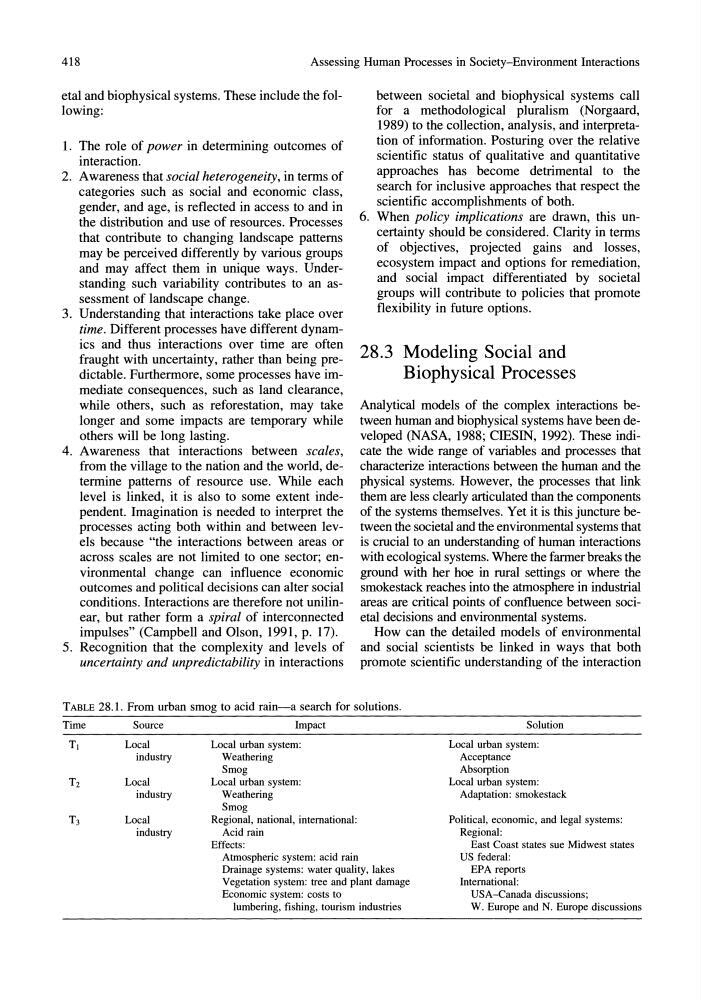
TABLE 28.1. From urban smog to acid rain-a search for solutions.
Time
Source
Local
industry
Local
industry
Local
industry
Impact
Local urban system:
Weathering
Smog
Local urban system:
Weathering
Smog
Regional, national, international:
Acid rain
Effects:
Atmospheric system: acid rain
Drainage systems: water quality, lakes
Vegetation system: tree and plant damage
Economic system: costs to
lumbering, fishing, tourism industries
Solution
Local urban system:
Acceptance
Absorption
Local urban system:
Adaptation: smokestack
Political, economic, and legal systems:
Regional:
East Coast states sue Midwest states
US federal:
EPA reports
International:
USA-Canada discussions;
W. Europe and N. Europe discussions
Assessing Human Processes in Society-Environment Interactions
etal and biophysical systems. These include the following:
1. The role of power in determining outcomes of
interaction.
2. Awareness that social heterogeneity, in terms of
categories such as social and economic class,
gender, and age, is reflected in access to and in
the distribution and use of resources. Processes
that contribute to changing landscape patterns
may be perceived differently by various groups
and may affect them in unique ways. Understanding such variability contributes to an assessment of landscape change.
3. Understanding that interactions take place over
time. Different processes have different dynamics and thus interactions over time are often
fraught with uncertainty, rather than being predictable. Furthermore, some processes have immediate consequences, such as land clearance,
while others, such as reforestation, may take
longer and some impacts are temporary while
others will be long lasting.
4. Awareness that interactions between scales,
from the village to the nation and the world, determine patterns of resource use. While each
level is linked, it is also to some extent independent. Imagination is needed to interpret the
processes acting both within and between levels because "the interactions between areas or
across scales are not limited to one sector; environmental change can influence economic
outcomes and political decisions can alter social
conditions. Interactions are therefore not unilinear, but rather form a spiral of interconnected
impulses" (Campbell and Olson, 1991, p. 17).
5. Recognition that the complexity and levels of
uncertainty and unpredictability in interactions
between societal and biophysical systems call
for a methodological pluralism (Norgaard,
1989) to the collection, analysis, and interpretation of information. Posturing over the relative
scientific status of qualitative and quantitative
approaches has become detrimental to the
search for inclusive approaches that respect the
scientific accomplishments of both.
6. When policy implications are drawn, this uncertainty should be considered. Clarity in terms
of objectives, projected gains and losses,
ecosystem impact and options for remediation,
and social impact differentiated by societal
groups will contribute to policies that promote
flexibility in future options.
28.3 Modeling Social and
Biophysical Processes
Analytical models of the complex interactions between human and biophysical systems have been developed (NASA, 1988; CIESIN, 1992). These indicate the wide range of variables and processes that
characterize interactions between the human and the
physical systems. However, the processes that link
them are less clearly articulated than the components
of the systems themselves. Yet it is this juncture between the societal and the environmental systems that
is crucial to an understanding of human interactions
with ecological systems. Where the farmer breaks the
ground with her hoe in rural settings or where the
smokestack reaches into the atmosphere in industrial
areas are critical points of confluence between societal decisions and environmental systems.
How can the detailed models of environmental
and social scientists be linked in ways that both
promote scientific understanding of the interaction
TABLE 28.1. From urban smog to acid rain-a search for solutions.
Time
Source
Local
industry
Local
industry
Local
industry
Impact
Local urban system:
Weathering
Smog
Local urban system:
Weathering
Smog
Regional, national, international:
Acid rain
Effects:
Atmospheric system: acid rain
Drainage systems: water quality, lakes
Vegetation system: tree and plant damage
Economic system: costs to
lumbering, fishing, tourism industries
Solution
Local urban system:
Acceptance
Absorption
Local urban system:
Adaptation: smokestack
Political, economic, and legal systems:
Regional:
East Coast states sue Midwest states
US federal:
EPA reports
International:
USA-Canada discussions;
W. Europe and N. Europe discussions