

in Wisconsin and Michigan each exceeded 200 wolves (U.S. Department of
the Interior 2000). The great increases in wolf numbers and range raised
new issues about controlling negative impacts from wolves, including depredation on livestock and pets, which could be explored through modeling
(Haight and Mech 1997).
Because of the growth and recovery of wolf populations in the Lake
States, the U.S. Fish and Wildlife Service has proposed reclassifying the gray
wolf from endangered to threatened in the western Great Lakes region.
Full removal of this population from the federal list of endangered and
threatened species is expected to follow within a few years. When the gray
wolf is delisted, responsibility for wolf management will be transferred from
the federal government to the states. To facilitate federal delisting and
to guide state governments as they prepare to assume wolf management
responsibilities, state agencies developed management plans with the
primary goal of ensuring the long-term survival of the wolf while addressing concerns about wolf range expansion into agricultural areas and animal
damage control. The modeling projects we describe addressed specific
questions about managing wolves during the recovery process.
26
Jean Fitts Cochrane et al.
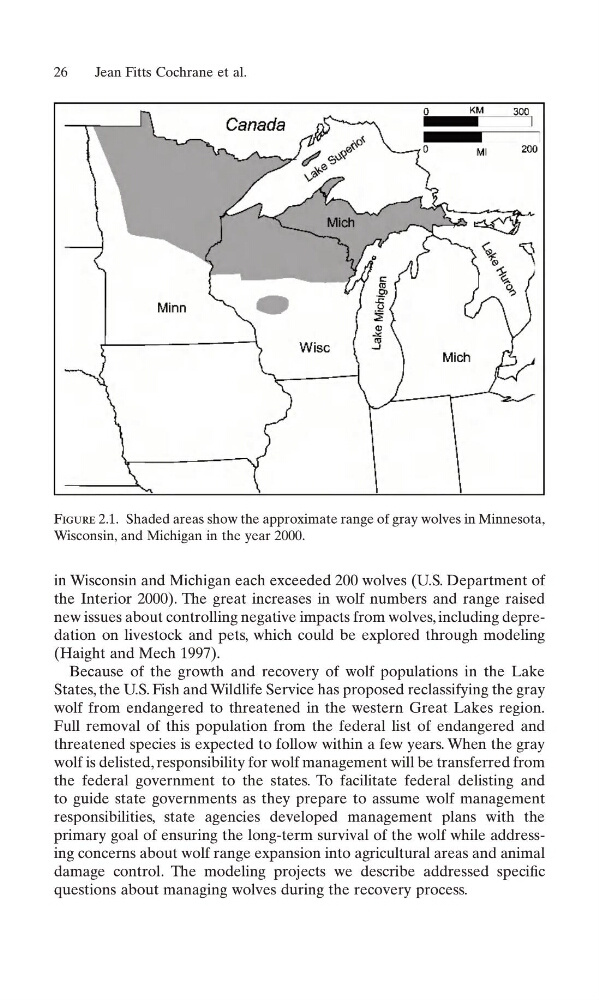
Figure 2.1. Shaded areas show the approximate range of gray wolves in Minnesota,
Wisconsin, and Michigan in the year 2000.
the Interior 2000). The great increases in wolf numbers and range raised
new issues about controlling negative impacts from wolves, including depredation on livestock and pets, which could be explored through modeling
(Haight and Mech 1997).
Because of the growth and recovery of wolf populations in the Lake
States, the U.S. Fish and Wildlife Service has proposed reclassifying the gray
wolf from endangered to threatened in the western Great Lakes region.
Full removal of this population from the federal list of endangered and
threatened species is expected to follow within a few years. When the gray
wolf is delisted, responsibility for wolf management will be transferred from
the federal government to the states. To facilitate federal delisting and
to guide state governments as they prepare to assume wolf management
responsibilities, state agencies developed management plans with the
primary goal of ensuring the long-term survival of the wolf while addressing concerns about wolf range expansion into agricultural areas and animal
damage control. The modeling projects we describe addressed specific
questions about managing wolves during the recovery process.
26
Jean Fitts Cochrane et al.
Figure 2.1. Shaded areas show the approximate range of gray wolves in Minnesota,
Wisconsin, and Michigan in the year 2000.